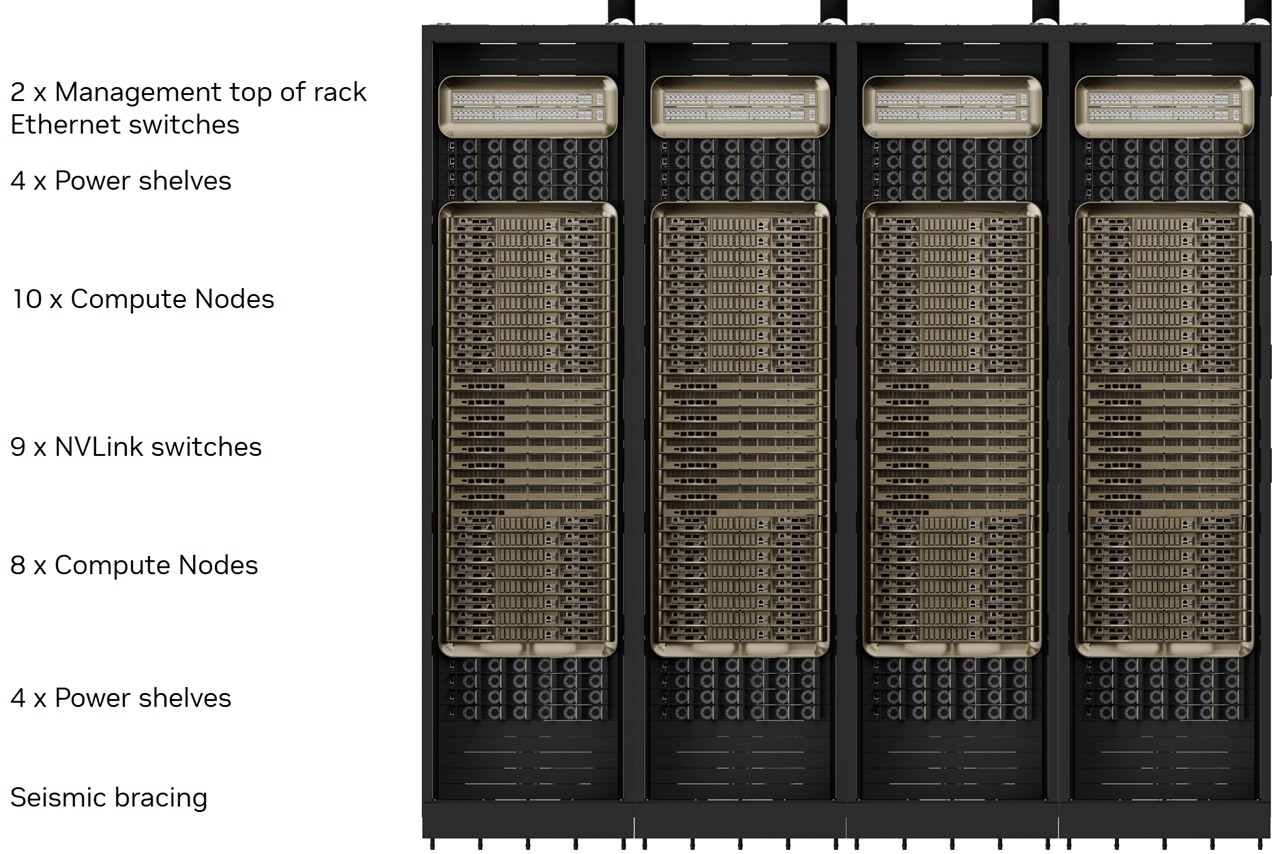
Taiwan AI server suppliers saw broad revenue growth in June, with rail-kit and server-chassis makers posting the strongest year-over-year gains. This reflects ongoing demand for rack-scale systems—integrated, large-scale AI servers like Nvidia's GB200 NVL72—which require specialized mechanical components alongside processors.
Summaries like this, in your inbox every morning.
Sign up free →What happened
Taiwan suppliers in the AI server market reported broad revenue growth in June, with rail-kit and server-chassis makers recording the fastest year-over-year gains as demand for rack-scale systems continued to drive mechanical components.
Why it matters
Rack-scale systems like Nvidia's GB200 NVL72 require specialized mechanical infrastructure—rail kits and chassis—beyond just chips, so strength in these component categories signals robust underlying demand for complete, integrated AI server systems across the industry.
What to watch
The continued lift in mechanical-component demand suggests OEMs and cloud providers are not just buying processors but committing to full-system deployments, a sign of sustained capital investment in AI infrastructure beyond cyclical chip procurement.
Taiwan's AI server suppliers reported broad revenue growth in June, with the sector's most striking performance coming from makers of rail kits and server chassis. These mechanical-component suppliers recorded the fastest year-over-year revenue gains, a trend driven by persistent demand for rack-scale systems—large, integrated AI server solutions designed to process enormous workloads. The Nvidia GB200 NVL72 rack-scale system exemplifies the type of infrastructure fueling this demand: such systems require not just processors but also specialized mechanical infrastructure to house, cool, and connect multiple GPUs and processors in a single coordinated unit. The acceleration in rail-kit and chassis orders signals that cloud providers and AI system integrators are not simply adding chips incrementally but are making substantial capital commitments to complete, factory-integrated server systems. This pattern of demand across multiple component categories—not just CPUs or GPUs—underscores the scale of the AI infrastructure expansion and suggests that the build-out is reaching maturity, where buyers prioritize end-to-end system performance rather than individual component substitution.
Taiwan's role as a major supplier of mechanical components for AI servers reveals how the expansion of AI infrastructure extends far beyond chip design. While semiconductor manufacturers command headline attention, the strength in rail kits and chassis orders indicates that system integrators and cloud providers are actively building out full-scale AI server deployments. The fact that mechanical components are outpacing other supplier categories suggests that demand is not limited to cyclical chip procurement but reflects sustained, multi-component purchasing of complete rack-scale systems. This breadth of component demand supports the notion that the AI infrastructure build-out remains robust across the supply chain.
AI-summarized, only the topics you pick — one digest a day via Email, Slack, or Discord.
Free · takes 30 seconds · unsubscribe anytime
No discussion yet for this article
Get curated AI news from 200+ sources delivered daily to your inbox. Free to use.
Get Started FreeFree · takes 30 seconds · unsubscribe anytime
1 minute a day. The AI essentials.
200+ sources · Email / LINE / Slack
