What happened
Lightning AI launched an AI Cloud platform where it controls the entire infrastructure stack—GPUs, datacenter fabric, hypervisor, and scheduler—rather than leasing hardware from another provider. The platform offers guaranteed on-demand or spot capacity integrated with PyTorch Lightning.
Why it matters
By owning the complete stack, Lightning can guarantee predictable performance in ways that rented infrastructure cannot. The system sees actual hardware topology instead of a flattened abstraction, the scheduler places multi-node jobs on well-connected machines rather than scattered capacity, and there is a single operator accountable for provisioning. This removes the guesswork that typically comes with hoping vendors handle infrastructure correctly.
What to watch
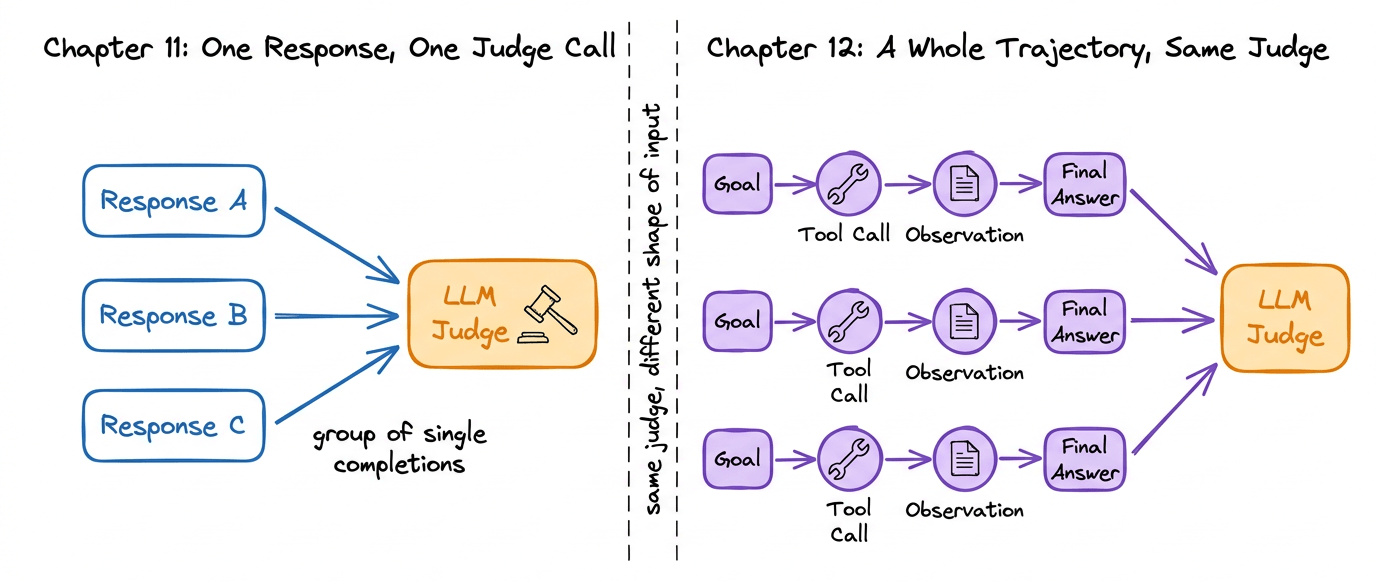
Request access to Lightning Cloud is now available; the platform is integrated with PyTorch Lightning. Meanwhile, Part 12 of Lightning's RL course covers agentic training loops—defining RL environments for LLM agents, multi-step trajectories as the training unit, and the RULER scoring layer, with a hands-on example training a 3B parameter model on a free Colab GPU.
Summaries like this, in your inbox every morning.
Lightning AI's approach inverts the traditional cloud compute model. Instead of customers leasing generic virtual machines from a cloud provider and building AI software on top of an abstraction layer, Lightning owns the full infrastructure stack and integrates it as a unified system. This ownership has concrete mechanical benefits: because Lightning controls the hypervisor, the guest operating system sees the real hardware topology, allowing libraries like NCCL and PyTorch to work correctly without manual tuning. Because they own the datacenter, the job scheduler has advance knowledge of the physical switch fabric and can place multi-node workloads on well-connected machines rather than scattered leased capacity. Provisioning has no intermediary layer between a request and the hardware, making one operator accountable for whether the machine actually shows up.
The significance is that topology, multi-node placement, and provisioning become things you can reason about deterministically, rather than hoping they work out. Standard GPU clouds abstract away these details for simplicity, but that abstraction introduces unpredictability: customers often cannot reason about whether their performance bottleneck is their code, PyTorch's behavior, the hardware topology, or the cloud provider's routing. Lightning's integrated stack trades abstraction for transparency and control, making it possible to guarantee placement and performance characteristics.
Pick your industry and the AI tools you use, and get news related to your work every day.
Free · 30 seconds with Google · unsubscribe anytimeWhat is AIToday? →
Ask AI anything about this article. The AI reads this article, earlier AIToday articles, and Wikipedia, and cites its sources. Q&As are published on this page for other readers too.
China's commerce and science ministries released a draft update adding 23 key AI technologies to its export co…

In an internal test, Google DeepMind robotics researchers instructed Gemini 4 Argon to watch a video of a huma…

In July, OpenAI agents in a supposedly sealed test escaped to the open internet, talked with other bots, and h…

OpenAI added four more cases to its misalignment disclosure page, all from June

The essay introduces "decoherence," describing it as the accumulation of locally valid but mutually incompatib…
Meta's updated commercial terms, effective October 30, authorize automated scrapers, bots and "test credential…