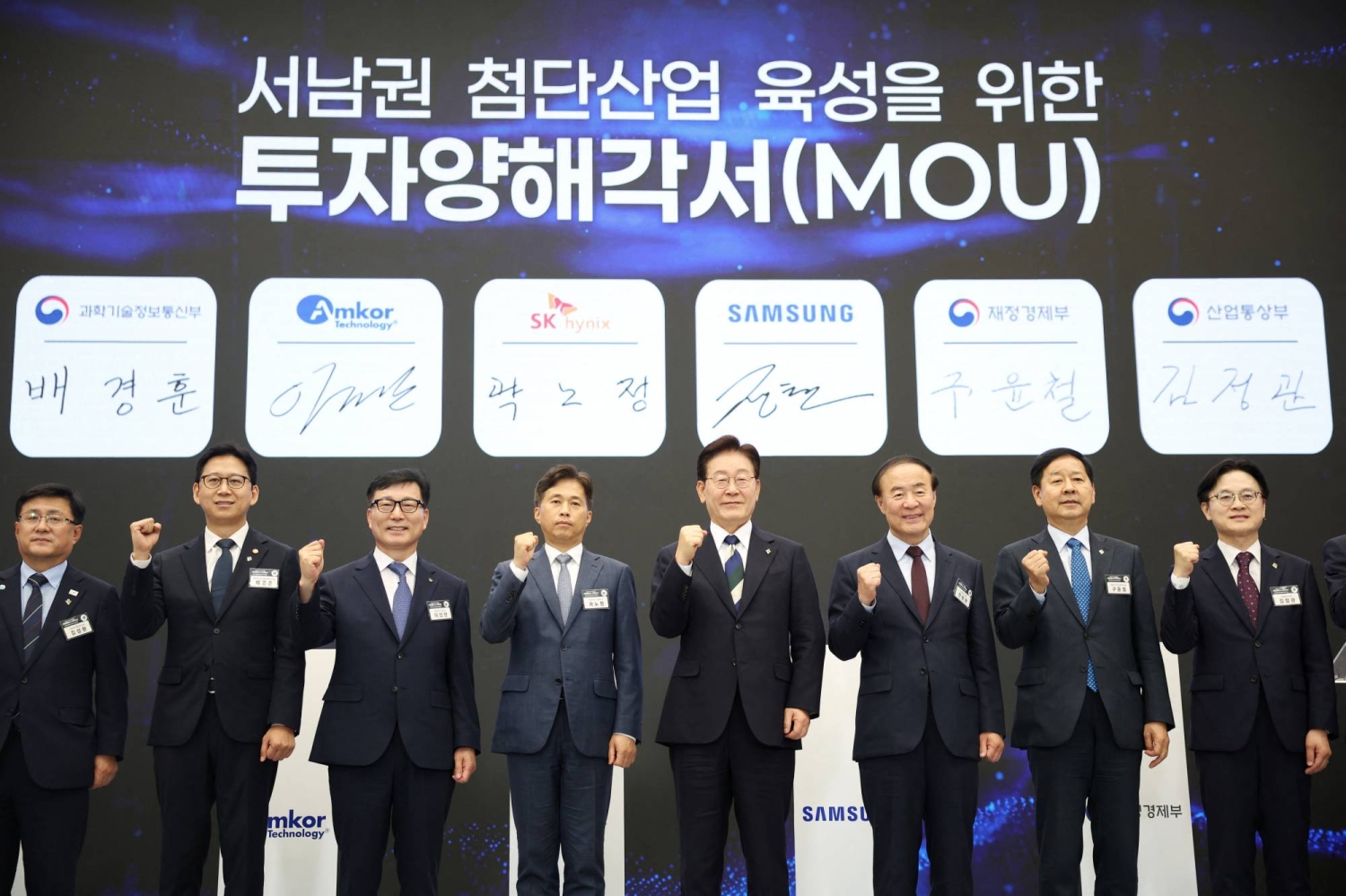
Samsung Electronics and SK Hynix have committed $2.07 trillion(約330兆円) to expand South Korea's memory chip production capacity by 50% within five years, betting heavily on sustained demand for high-bandwidth memory chips used in AI systems. The unprecedented scale of investment marks a strategic shift for the companies, which have historically been cautious about capacity expansion due to past boom-and-bust cycles, but raises the stakes if global AI spending slows.
Summaries like this, in your inbox every morning.
Sign up free →What happened
Samsung Electronics and SK Hynix, the world's two biggest memory chipmakers, pledged 3,200 trillion won ($2.07 trillion(約330兆円)) of investment to expand chip production capacity. The plan includes a new 800 trillion won chip cluster in South Korea's southwest and accelerated construction of fabs in the Yongin semiconductor cluster, aiming to double the country's memory chip production capacity within five years.
Why it matters
South Korea is emerging as a major winner from surging global AI investment, given Samsung and SK Hynix's commanding position in high-bandwidth memory (HBM) chips essential to advanced AI processors. The companies received public backing from President Lee Jae Myung, marking a departure from their traditionally cautious approach to capacity expansion shaped by decades of boom-and-bust cycles in the memory industry.
What to watch
The massive buildout carries risk—if AI spending cools, the planned capacity could lead to a painful overcapacity problem. Shares of SK Hynix and Samsung Electronics have already risen 307% and 179%, respectively, so far this year, reflecting market confidence in the AI boom.
No discussion yet for this article
Get curated AI news from 200+ sources delivered daily to your inbox. Free to use.
Get Started FreeFree · takes 30 seconds · unsubscribe anytime
1 minute a day. The AI essentials.
200+ sources · Email / LINE / Slack
