Palantir's CEO has publicly criticized OpenAI and Anthropic, arguing that the true battleground in AI competition is shifting toward 'invisible infrastructure'—the underlying technical systems that enable AI models—rather than the models themselves.
This reflects a strategic view that long-term advantage in AI will accrue to companies that control foundational infrastructure rather than those that merely publish large language models.
What happened
Palantir's CEO publicly criticized OpenAI and Anthropic, arguing that the real competition in AI is moving toward what he calls 'invisible infrastructure' — the underlying systems that support AI models rather than the models themselves.
Why it matters
The criticism suggests a fundamental shift in how the AI industry will compete. If infrastructure becomes the differentiator, companies building foundational systems may gain more durable competitive advantage than those focusing solely on large language models. This reshapes where business investment and technical talent may flow.
What to watch
The debate over whether AI leadership lies in model capability or infrastructure control will likely intensify as companies race to build proprietary systems that competitors cannot easily replicate.
Ask the AI about this article →
The CEO's remarks point to an emerging divergence in AI strategy: one camp prioritizes the development and distribution of large language models as the core product, while another argues that sustainable competitive advantage lies in the infrastructure layer—the data pipelines, compute orchestration, security systems, and integration frameworks that make AI models practical for real-world use. This distinction echoes earlier waves of technology competition, where platform winners often emerged not from having the best consumer-facing software but from owning the foundational system that other players depended on. Palantir's history as a data integration and analysis company positions it to benefit from such a shift, which may explain both the motivation for and the credibility of the criticism. The debate is likely to shape not only where major tech companies invest capital, but also which technical roles and skills command premium salaries in the coming years.
For example, today's edition would include:
AI-summarized, only the topics you pick — one digest a day via Email, Slack, or Discord.
Free · takes 30 seconds · unsubscribe anytimeWhat is AIToday? →
Ask AI anything about this article. Q&As are published on this page for other readers too.
Israeli startup DataAgent Ltd

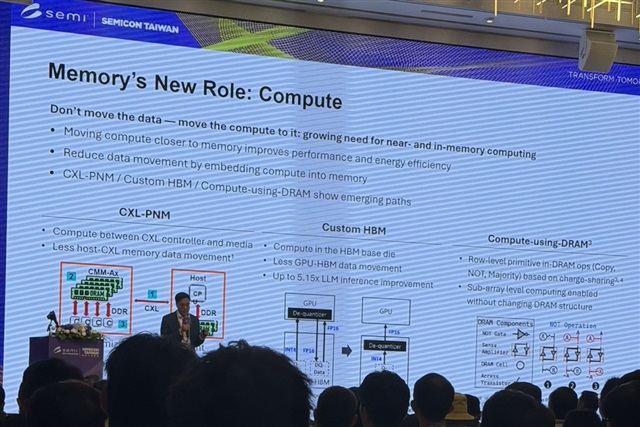
SK Hynix presented a custom HBM concept at SEMICON Taiwan 2026, where compute functions are placed in the base…
Taoyuan is positioning itself as a northern hub for AI data centers (AIDC), citing the Tatan area and an LNG c…
The U.S. Department of Defense announced on August 31 that it has deployed ChatGPT Mil, a customized version o…

Nvidia reported earnings that were both remarkable and boring, reflecting its focus on avoiding a consolidated…

Anthropic has agreed to a $35bn cloud-computing contract with Lambda, a Nvidia-backed cloud provider