What happened
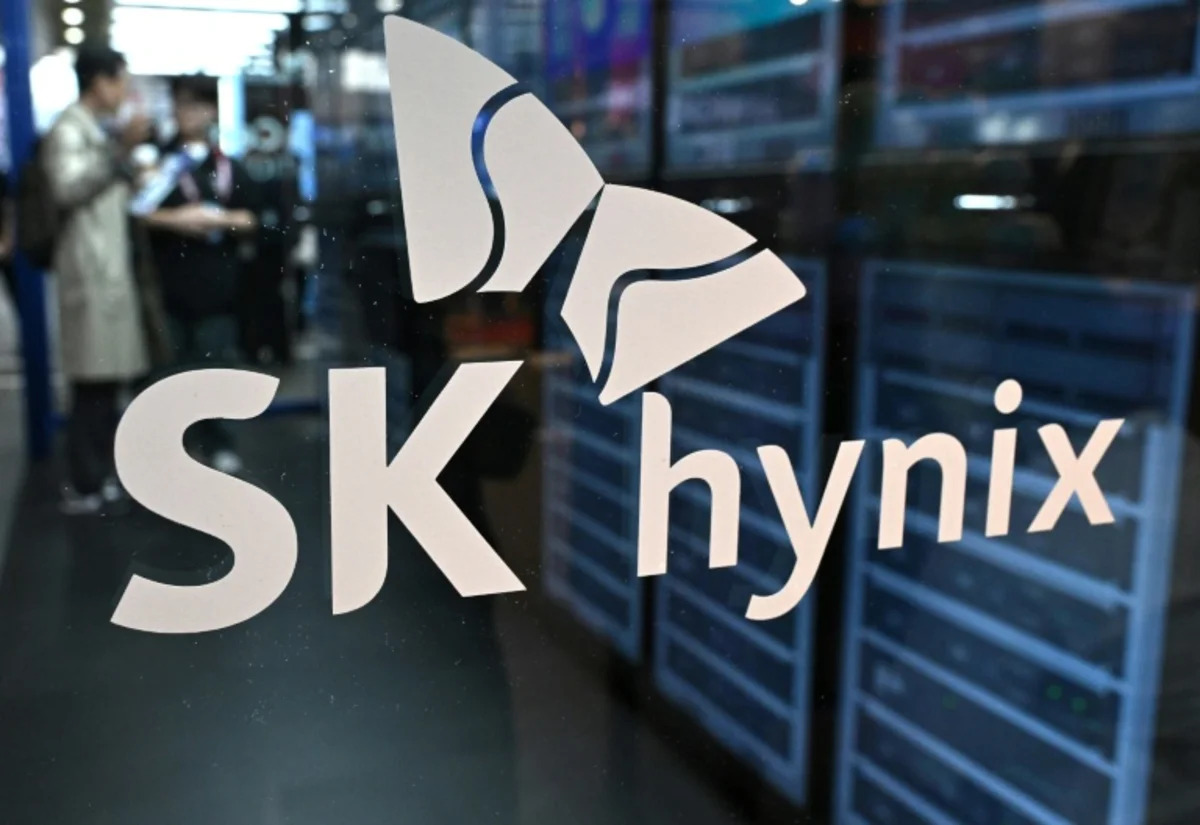
South Korean chipmaker SK hynix listed its American depositary shares on Nasdaq on Friday, with shares closing at $168 after being priced at $149, raising $26.5 billion(約4.2兆円). The listing was more than seven times oversubscribed.
Why it matters
SK hynix supplies advanced memory chips to Nvidia and has seen profits skyrocket thanks to global AI data center buildouts. The listing is one of the world's biggest ever stock sales and signals that the memory sector is attracting significant capital investment as companies bet on sustained AI infrastructure spending.
What to watch
SK hynix's market capitalization on Seoul's Kospi index soared past $1 trillion(約160兆円) in May, joining Samsung Electronics and Micron in an exclusive club of around a dozen companies. The company, along with Samsung and Micron, dominates the global market for high-bandwidth memory used in AI servers.
Summaries like this, every morning.
SK hynix's debut reflects a broader shift in investor appetite toward semiconductor suppliers serving AI infrastructure. The company, along with domestic rival Samsung Electronics and US chipmaker Micron, has become a pillar of the AI boom: all three have crossed the $1 trillion(約160兆円) market capitalization mark—a milestone recently achieved by SK hynix in May—and together they dominate the global market for high-bandwidth memory components critical to AI servers. The oversubscription of the offering (more than seven times) suggests that despite recent tech stock volatility and questions about when AI spending will generate returns, institutional investors remain confident in the durability of memory-chip demand.
For SK hynix specifically, the Nasdaq listing broadens its capital base and signals validation of the company's strategic position. The listing comes as SK hynix shares have already soared more than 220 percent in 2024 on the Seoul exchange, driven by surging profits tied to Nvidia's and other hyperscalers' race to build data centers. Analysts, including research strategist Dilin Wu at Pepperstone, have framed the move as confirmation that "the AI memory cycle is real, the earnings are real"—a reassurance to markets concerned about whether AI capital expenditure can justify valuations.
Pick your industry and the AI tools you use, and get news related to your work every day.
Free · 30 seconds with Google · unsubscribe anytimeWhat is AIToday? →
Ask AI anything about this article. The AI reads this article, earlier AIToday articles, and Wikipedia, and cites its sources. Q&As are published on this page for other readers too.
Anthropic says a single agent that loads context on demand often beats multi-agent setups on quality, cost and…

Rippling CEO Parker Conrad said OpenAI's share of its coding workload rose from 16 to 52 percent, while Anthro…
Jack Clark, who co-founded Anthropic, now believes recursive self-improvement could become possible as early a…

With garak 0.17.1, two encoding probes each sent 256 prompts to a vulnerable mock app; the DecodeApprox detect…

Thariq Shihipar, a public face of Claude Code, said he left after more than a year, and Anthony Morris, creato…

The author sketched an experiment with four memory conditions (no explanation, 'scolding is love', 'insults ca…