AIToday

Pichai defends Google's AI strategy as Gemini 3.5 Pro delay stokes investor concern

Yahoo Finance AI2h ago
Pichai defends Google's AI strategy as Gemini 3.5 Pro delay stokes investor concern

Key takeaway

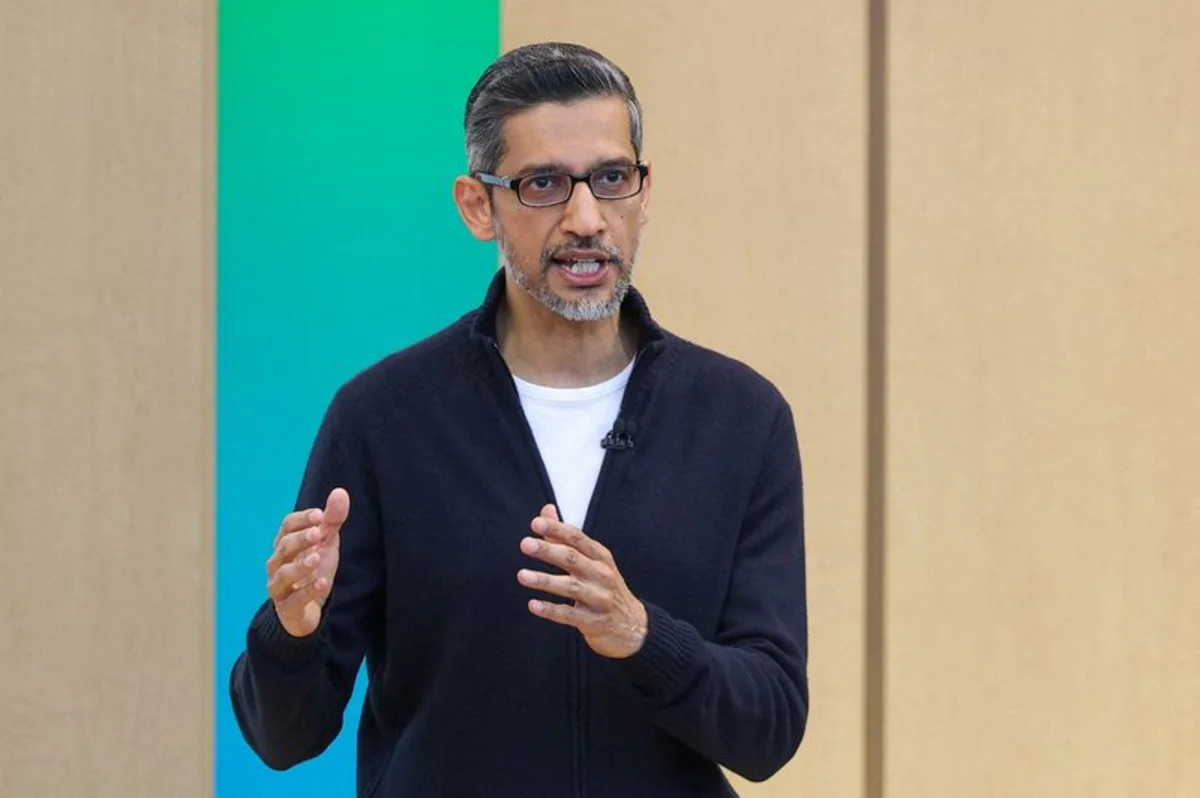
Alphabet CEO Sundar Pichai defended Google's AI strategy on Wednesday's earnings call, pushing back on investor concerns that the company has fallen behind rivals following the delay of Gemini 3.5 Pro and weakness in AI coding. Rather than dwell on the delay, Pichai highlighted Gemini 3.6 Flash, released this week with more than 10 points improvement on a coding benchmark, and disclosed that Gemini 4's roadmap includes rolling out models almost at a monthly cadence. He stressed that Google is training a significantly larger frontier model and remains "very committed and very confident" about staying at the leading edge of AI development.

Summaries like this, in your inbox every morning.

Sign up free →

3 Key Points

  • What happened

    Alphabet CEO Sundar Pichai pushed back on investor worries during Wednesday's earnings call that Google is falling behind rivals after delaying Gemini 3.5 Pro—a model originally slated for June—and losing ground in AI coding and autonomous agent tasks. Instead, he highlighted Gemini 3.6 Flash, released this week, which improved by more than 10 points on a coding benchmark compared with the previous version while using fewer tokens, and disclosed that Gemini 4's roadmap includes rolling out models almost at a monthly cadence.

  • Why it matters

    Investors have grown uneasy as OpenAI, Anthropic, and Chinese rivals accelerate their model release pace, raising questions about Google's ability to compete at the cutting edge. Pichai acknowledged that coding and agentic coding are areas where Google needs to improve, but stressed the company remains committed to staying at the leading edge with a "very ambitious effort" in Gemini 4, a significantly larger model designed to compete at the frontier.

  • What to watch

    Google is keeping Gemini 3.5 Pro in partner testing while rolling out other models this week—Gemini 3.5 Flash-Lite and a cybersecurity-focused Flash Cyber model. Pichai said investors "will be pleased" when Gemini 4 is unveiled, and the company's monthly cadence roadmap will be a key indicator of whether it can sustain momentum against competitors.

In Depth

Alphabet's CEO Sundar Pichai took the earnings call stage on Wednesday to address growing investor unease about Google's position in the AI race. The core concern centers on Gemini 3.5 Pro, a flagship model originally scheduled for release in June that investors believed would strengthen Google's competitive standing in two high-stakes domains: AI coding and autonomous agent tasks. The delay of this model, combined with faster release cycles from OpenAI, Anthropic, and Chinese competitors, has fueled worries that Google is losing momentum in frontier AI development—the most visible and strategically important segment of the generative AI market.

Rather than dwelling on the Gemini 3.5 Pro delay or defending the company's release pace head-on, Pichai pivoted the conversation toward Gemini Flash, Google's lower-cost, faster workhorse model family. He highlighted Gemini 3.6 Flash, released this week, as concrete evidence of technical progress in an area where Google has publicly struggled: coding. The model achieved improvements of more than 10 points on a coding benchmark compared with its predecessor while consuming fewer tokens—a meaningful efficiency gain that underscores Google's capacity to innovate rapidly even without unveiling a heavyweight new model. This week also saw the company roll out Gemini 3.5 Flash-Lite and introduce a cybersecurity-focused Flash Cyber variant, demonstrating a widening portfolio strategy across cheaper, specialized models. Gemini 3.5 Pro itself remains in partner testing, suggesting the company is still refining the product before broader release.

When pressed by JPMorgan analyst Doug Anmuth on whether Gemini could remain competitive at the frontier and whether Google's slower release cadence posed a long-term risk, Pichai acknowledged a genuine vulnerability: coding and agentic coding are areas where the company needs to improve. However, he pivoted to a forward-looking defense, describing Gemini 4 as a "very ambitious effort" and stating that Google is training a significantly larger model explicitly designed to compete at the frontier when released. To Barclays analyst Ross Sandler's concerns about model release pace, Pichai made a critical disclosure: Gemini 4's roadmap includes rolling out models "almost at a monthly cadence," a rhythm that would match or exceed competitor release speeds. Pichai concluded by asserting that investors "will be pleased" when Gemini 4 is unveiled and reaffirmed that the company remains "very committed and very confident" about staying at the leading edge of AI development. This dual messaging—acknowledging near-term weaknesses while projecting confidence in the company's frontier roadmap—reflects Google's attempt to stabilize investor sentiment during a period when perception of competitive advantage in AI carries outsized weight for the stock.

Context & Analysis

Google's AI leadership has come under investor scrutiny as the company grapples with a slower release cadence relative to competitors like OpenAI and Anthropic, as well as emerging Chinese rivals. The delay of Gemini 3.5 Pro—originally targeted for June—hit a particularly sensitive nerve because the model was expected to bolster Google's standing in AI coding and autonomous agent tasks, two of the industry's most fiercely contested areas. By delaying a flagship product in a sector where speed to market signals competitive strength, Google inadvertently amplified concerns that it is losing momentum at a critical inflection point for frontier AI development.

Pichai's response on the earnings call revealed a deliberate strategic pivot away from the delay narrative. Rather than defending the postponement, he reframed the conversation around Gemini Flash—the company's cheaper, faster model line—and highlighted concrete technical gains: Gemini 3.6 Flash's improvement of more than 10 points on coding benchmarks while reducing token usage signals that Google is making progress where it has publicly acknowledged weakness. This focus on incremental, rapid releases within the Flash family suggests Google is betting on a high-volume strategy to maintain relevance even while its most ambitious model (Gemini 4) remains in development. The disclosed monthly cadence for Gemini 4 releases, if executed, could demonstrate that the company can operate at the pace investors expect from a leader in frontier AI.

FAQ

What happened to Gemini 3.5 Pro?
Gemini 3.5 Pro was originally slated for June but has been delayed. The company is currently keeping it in partner testing while rolling out other models this week.
What is Google's plan to address investor concerns about falling behind?
Pichai highlighted Gemini 3.6 Flash, which improved by more than 10 points on a coding benchmark compared with the previous version while using fewer tokens, and disclosed that Gemini 4's roadmap includes rolling out models almost at a monthly cadence.
What areas has Pichai acknowledged Google needs to improve in?
Pichai acknowledged that coding and agentic coding are examples of areas where Google needs to improve.

Get the latest Large Language Models news every morning

AI-summarized, only the topics you pick — one digest a day via Email, Slack, or Discord.

Free · takes 30 seconds · unsubscribe anytime

Discussion

No comments yet. Be the first to share your thoughts!

Log in to join the discussion

Related Articles

Stay ahead with AI news

Get curated AI news from 200+ sources delivered daily to your inbox. Free to use.

Get Started Free

Free · takes 30 seconds · unsubscribe anytime

1 minute a day. The AI essentials.

200+ sources · Email / LINE / Slack

Get it free →