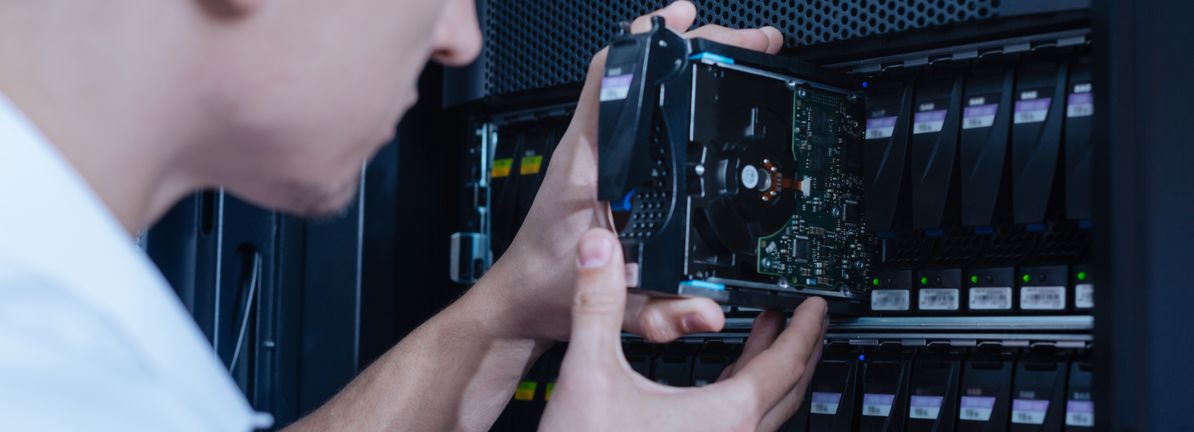
SanDisk has unveiled a new 9th generation 2Tb QLC 3D flash memory platform with Kioxia targeting AI cloud workloads, with the stock up 490.68% year to date.
The move has sparked fresh debate over the company's valuation, with one analyst narrative suggesting the stock is 8.3% undervalued at a fair value of $1,772.91, while a discounted cash flow model indicates potential downside if growth assumptions weaken.
The investment case hinges on tight NAND supply and sustained data center AI expansion.
What happened
SanDisk unveiled a 9th generation 2Tb QLC 3D flash memory platform developed with Kioxia, designed for AI-heavy cloud workloads. The stock has surged 27.91% in the past 7 days and 490.68% year to date, though it declined 9.01% in a single recent session.
Why it matters
The new platform targets rapid data center NAND exabyte growth driven by AI and cloud expansion, positioning SanDisk's enterprise SSD portfolio to benefit from sustained revenue acceleration and higher pricing power. However, valuation analysts diverge sharply: one narrative pegs fair value at $1,772.91 (suggesting 8.3% upside from the $1,625.78 close), while a discounted cash flow model values the stock at $1,202.86 (suggesting potential downside if growth or margins soften).
What to watch
The thesis depends on tight NAND supply and strong data center AI demand; any oversupply or slower AI buildout could undermine the case for the higher valuation. Investors should weigh the 3 key rewards and 2 important warning signs outlined in the full analysis before taking a position.
Ask the AI about this article →
SanDisk's latest announcement arrives at a moment of extreme momentum—the stock has climbed 490.68% year to date and 27.91% in the past week alone. The 9th generation flash platform with Kioxia is positioned to capitalize on rapid data center NAND exabyte growth driven by AI and cloud workload expansion, a trend the company argues will drive sustained revenue acceleration and structurally higher pricing power for its enterprise SSD business and hyperscaler engagements.
Yet the sharp rally has created a valuation puzzle. The most-cited analyst narrative projects a fair value of $1,772.91, implying the stock at $1,625.78 trades 8.3% below intrinsic value—arguing that the combination of faster revenue growth, rising margins, and favorable earnings multiples justifies the premium. However, Simply Wall St's discounted cash flow analysis yields $1,202.86, flagging potential downside if growth or margins disappoint. This gap reflects a core tension: SanDisk's AI storage story rests on tight NAND supply and ambitious data center demand assumptions. If either condition falters—oversupply emerges or AI buildout slows—the case for premium valuation weakens significantly.
For example, today's edition would include:
AI-summarized, only the topics you pick — one digest a day via Email, Slack, or Discord.
Free · takes 30 seconds · unsubscribe anytimeWhat is AIToday? →
Ask AI anything about this article. Q&As are published on this page for other readers too.
Israeli startup DataAgent Ltd
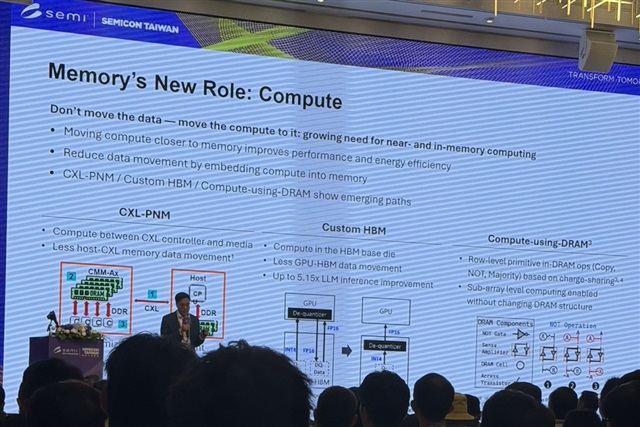
SK Hynix presented a custom HBM concept at SEMICON Taiwan 2026, where compute functions are placed in the base…
Taoyuan is positioning itself as a northern hub for AI data centers (AIDC), citing the Tatan area and an LNG c…
The U.S. Department of Defense announced on August 31 that it has deployed ChatGPT Mil, a customized version o…

Nvidia reported earnings that were both remarkable and boring, reflecting its focus on avoiding a consolidated…

Anthropic has agreed to a $35bn cloud-computing contract with Lambda, a Nvidia-backed cloud provider