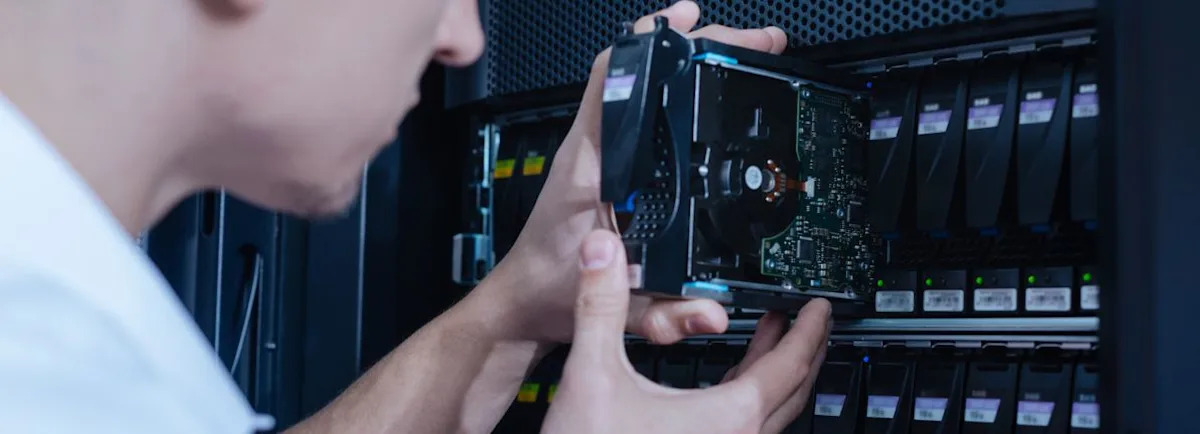
SanDisk and Kioxia have unveiled a 9th generation QLC 3D flash memory platform and released a High Bandwidth Flash technical specification designed to meet the storage demands of AI data centers.
The move targets higher bit density, power efficiency, and performance for large-scale infrastructure.
For investors, this ties SanDisk's growth prospects to enterprise and cloud storage demand driven by AI workloads, rather than consumer devices alone.
What happened
SanDisk and Kioxia announced a new 9th generation QLC 3D flash memory platform designed for AI and data-intensive workloads, along with a High Bandwidth Flash (HBF) technical specification released through the Open Compute Project to support AI infrastructure storage standards.
Why it matters
SanDisk is positioning itself directly in the high-capacity, high-throughput storage segment that AI data centers rely on. The move aligns with expected shifts in NAND demand toward higher-performance enterprise and storage-class SSDs, potentially allowing SanDisk to gain share against competitors like Samsung and Micron in a segment where density and energy efficiency are key.
What to watch
The open HBF specification could drive adoption across the industry, but may also limit SanDisk's pricing power over time if industry capacity expands and more suppliers adopt the standard.
Ask the AI about this article →
SanDisk's launch of 9th generation QLC 3D flash and the High Bandwidth Flash specification signals a strategic deepening into AI-focused data center storage. The company is betting that AI-driven demand will sustain tight supply conditions for high-density NAND products, supporting stronger product mix and margins. The move targets a specific market shift: enterprise and cloud providers are moving toward higher-performance storage-class SSDs, including QLC-based high-capacity drives, creating an opening for SanDisk to gain market share against established competitors like Samsung and Micron.
However, the decision to release HBF as an open standard through the Open Compute Project presents a trade-off. While standardization could accelerate industry adoption and validate the importance of the technology, it also introduces pricing pressure. If more suppliers adopt HBF and industry capacity grows, SanDisk's ability to command a premium for its storage solutions may diminish over time. The company is thus betting that volume growth and market-share gains in a rapidly expanding AI data center segment will offset any margin compression from commoditization.
For example, today's edition would include:
AI-summarized, only the topics you pick — one digest a day via Email, Slack, or Discord.
Free · takes 30 seconds · unsubscribe anytimeWhat is AIToday? →
Ask AI anything about this article. Q&As are published on this page for other readers too.
Visko raised $10 million in pre-seed funding from Llama Ventures and opened public access to its first foundat…
U.S. markets ended August higher, with the S&P 500 up 2.6% and the Nasdaq up 3.9%

Neurovia AI, an Abu Dhabi-based company, is pitching Saudi security agencies software that it says can compres…

AI company Runway has unveiled Solaris, the first model in a new category it calls "Interface World Models." I…

John Deere introduced JD, a conversational AI tool that lets farmers ask open-ended questions about their hist…
Nvidia CEO Jensen Huang said on Fox Business that AI is creating 'hundreds of thousands' of jobs, including in…