AWS has published a guide for migrating agent workloads to Amazon Bedrock AgentCore.
The move removes five of ten operational burdens in one stage, such as OS patching and session isolation.
Agent behavior stays the same during migration.
What happened
AWS published a migration guide showing how to move a LangGraph customer-support agent onto Amazon Bedrock AgentCore. The move happens in stages; Stage 1 moves hosting, tools, and memory, while Stage 2 shifts planning to model-driven Strands Agents.
Why it matters
The post maps ten operational burdens, such as OS patching, scaling, and session isolation, that disappear when you adopt AgentCore. Five of the ten are removed by Stage 1 alone, and the change requires only 45 lines of code inside the agent plus 22 lines of new supporting code.
What to watch
The guide includes a sample repository with stages so each step can be compared against the previous one. It also notes that Stage 3 uses a documented AgentCore harness capability rather than code you write.
Ask the AI about this article →
The migration post is aimed at teams who have built an agent with LangGraph and are now facing production realities. The key insight is that once real users arrive, operational work unrelated to the agent's reasoning—like keeping sessions isolated or patching the OS—becomes your responsibility. AWS positions Amazon Bedrock AgentCore as a platform that can shed these burdens by attaching services one at a time, without forcing a rewrite.
The staged approach is deliberate: Stage 1 moves where the agent runs, changing nothing about how it thinks, and so keeps a single variable in play for comparison. Stage 2 then moves how the agent plans, using a runtime already proven in Stage 1. This allows teams to stop after Stage 1 and gain a hosted agent with managed tools and durable state, while retaining the option to adopt model-driven planning later.
A notable detail is that the migration does not touch inference calls, so having model calls on Amazon Bedrock already is not the head start it seems. Even so, the code change is compact: 45 lines inside the agent and 22 new supporting lines, thanks to pre-built components that eliminate the need for a custom checkpointer. The post also stresses that some responsibilities remain yours at every stage—such as IAM policies, VPC configuration, and WAF rules—so the migration is about shifting, not eliminating, operational loads.
For example, today's edition would include:
AI-summarized, only the topics you pick — one digest a day via Email, Slack, or Discord.
Free · takes 30 seconds · unsubscribe anytimeWhat is AIToday? →
Ask AI anything about this article. Q&As are published on this page for other readers too.
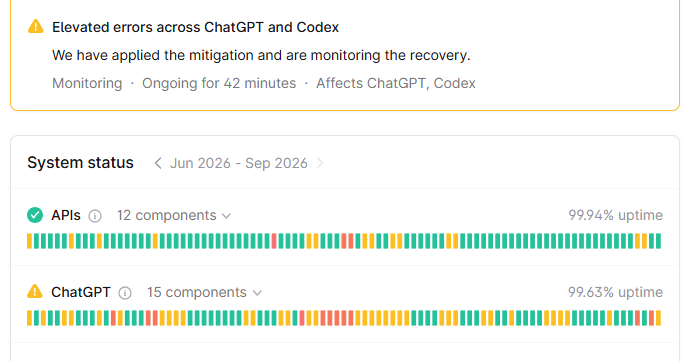
On September 4, 2026, multiple AI services experienced outages
Meta Platforms stock rose 4% to $614.57 after the company released Muse Spark 1.3, an upgraded AI model

OpenAI has built its upcoming frontier AI model Astra using a technique called 'recurrent depth' or 'looped Tr…

OpenAI announced GPT-6 Astra, its next-generation AI model, on Thursday

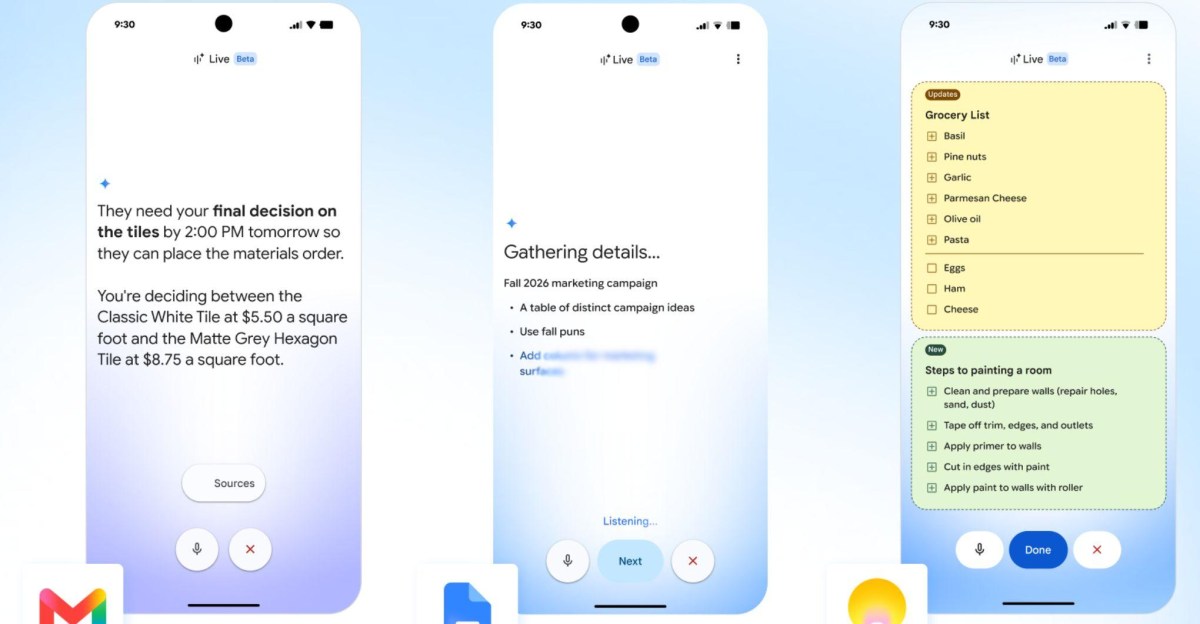
Google has started rolling out voice assistant modes for Gmail, Docs, and Keep, called Gmail Live, Docs Live…
Amazon Quick, a generative AI assistant, now integrates with Microsoft Outlook via the Microsoft Graph API and…