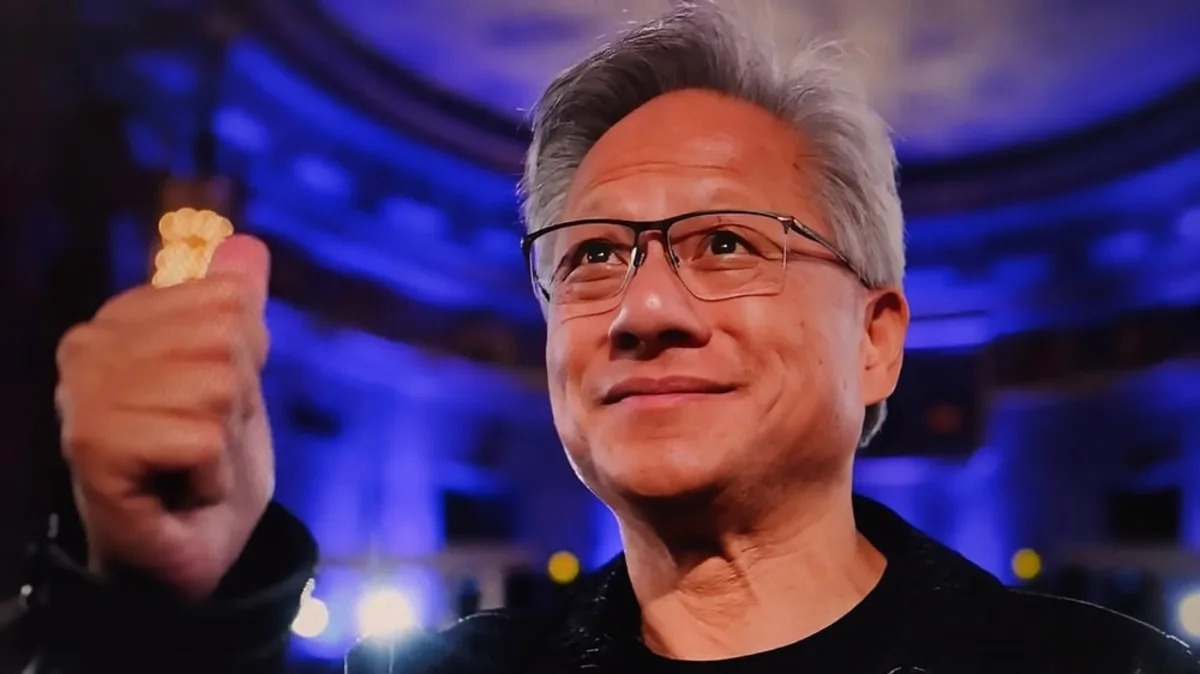
Nvidia CEO Jensen Huang dismissed reports of delays in the Vera Rubin AI hardware rollout, stating on Wednesday that production remains on track for delivery at "giant" volumes, though he did not specify a timeframe. His statement comes after KeyBanc analyst cited potential thermal issues with memory components that could cause slight delays, and after SemiAnalysis reported that Nvidia's Kyber NVL144 could be delayed by over 12 months to 2028, with another architecture reportedly cancelled. Huang's affirmation signals confidence in near-term delivery, though the conflicting signals from analysts underscore uncertainty in the supply chain.
Summaries like this, in your inbox every morning.
Sign up free →What happened
Nvidia CEO Jensen Huang stated on Wednesday in Tokyo that the company's high-end AI accelerator systems are on track for delivery to customers on "giant" production volumes, dismissing recent reports of delays in the Vera Rubin hardware rollout. Huang did not specify a timeframe for the deliveries.
Why it matters
Huang's statement directly contradicts recent analyst warnings of delays—KeyBanc noted potential thermal issues with SK Hynix's HBM4 memory that could postpone Vera Rubin, while SemiAnalysis reported that Nvidia's Kyber NVL144 faced "major setbacks" and would be delayed by over 12 months to 2028. For Nvidia customers and investors, clarity on production timelines is critical to procurement and financial planning.
What to watch
KeyBanc raised its price target to $330 from $310 and increased its 2027 CoWoS supply forecast to 1.1 million interposers, citing stronger-than-expected demand—a signal that confidence in Nvidia's capacity remains high despite the delay reports.
Nvidia CEO Jensen Huang used a Wednesday appearance in Tokyo—focused on the company's role in advancing Japan's AI ambitions—to push back against recent reports of delays affecting the company's Vera Rubin AI hardware rollout. According to Bloomberg's report of his remarks, Huang stated that the company's high-end AI accelerator systems remain on track for delivery to customers on "giant" production volumes. Notably, he provided no specific timeframe for those deliveries.
This statement came in direct response to a cascade of recent analyst warnings about supply-chain and technical obstacles. On Tuesday, KeyBanc analyst John Vinh reported that Nvidia's Vera Rubin rollout could face slight delays due to thermal heat lid issues in SK Hynix's HBM4 memory qualification. Despite identifying this risk, Vinh saw minimal impact on Nvidia's financial estimates, expecting the company to offset any delay by shipping more B300 GPUs in place of delayed R200 chips. KeyBanc also used the occasion to raise its price target on Nvidia stock to $330 from $310, citing stronger-than-expected demand and increasing its 2027 CoWoS supply forecast to 1.1 million interposers—a modular component used in advanced chip packaging.
More starkly, research firm SemiAnalysis had reported earlier in July that Nvidia's Kyber NVL144 faced "major setbacks" and would be delayed by over 12 months, pushing delivery into 2028. The firm also stated that Nvidia's NVL72x2 back-to-back rack architecture had been "cancelled," leaving Rubin Ultra with a "limited scale-up domain." SemiAnalysis noted that this delay came just three months after Huang had demonstrated the Kyber NVL144 system at GTC (Nvidia's annual developer conference).
Huang's earlier public statements, from June, had already claimed that Vera Rubin was in full production, with high-bandwidth memory (HBM) from Samsung Electronics, SK Hynix, and Micron Technology incorporated into the platform. His latest remarks in Tokyo reassert that commitment to on-time delivery, though the absence of a specific timeframe leaves room for interpretation about what "on track" actually means in the context of the competing claims from analysts.
Jensen Huang's Wednesday dismissal of Vera Rubin delays reflects a pattern of public confidence from Nvidia leadership despite mounting technical concerns surfaced by analysts. Earlier in June, Huang had already stated that Vera Rubin was in full production with integrated HBM from three major suppliers—Samsung, SK Hynix, and Micron—suggesting the company has been messaging stability for months. However, the recent analyst reports reveal concrete supply-chain friction: KeyBanc's John Vinh flagged thermal issues with SK Hynix's HBM4 memory qualification as a specific risk, while SemiAnalysis went further, claiming that Kyber NVL144 (a system Huang demonstrated just three months prior at GTC) faces delays exceeding 12 months and that the companion NVL72x2 architecture has been cancelled entirely.
Huang's refusal to specify a delivery timeframe during his Tokyo remarks stands out as notable caution. Rather than committing to a date, he chose to emphasize volume—a rhetorical move that may reflect either genuine confidence in ramp or deliberate vagueness to preserve flexibility. KeyBanc's decision to raise its price target to $330 from $310 and boost its 2027 CoWoS supply forecast to 1.1 million interposers suggests that Wall Street's base case still assumes Nvidia can absorb any near-term slippage by shifting customer orders to alternative chips (such as the B300 GPU in place of delayed R200 chips). The divergence between Huang's public posture and the specific technical concerns raised by analysts indicates that Nvidia's supply chain faces real execution risks, even if the company believes it can ultimately meet demand.
AI-summarized, only the topics you pick — one digest a day via Email, Slack, or Discord.
Free · takes 30 seconds · unsubscribe anytime
No discussion yet for this article
Get curated AI news from 200+ sources delivered daily to your inbox. Free to use.
Get Started FreeFree · takes 30 seconds · unsubscribe anytime
1 minute a day. The AI essentials.
200+ sources · Email / LINE / Slack
