U.S. venture funding surged to $412.7 billion(約66兆円) in the first half of 2026, nearly 30% above the prior full year, with artificial intelligence companies capturing 86% of all venture dollars spent.
Giant funding rounds of $100 million(約160億円) or more now dominate the market, accounting for 87.5% of capital deployed, while smaller deals shrink to just 12.5% of total value.
PitchBook analysts warn that this concentrated, AI-heavy market faces correction risk if growth or returns disappoint, since even winning AI companies will see outsized returns flow to a small cluster of winners.
What happened
U.S. venture capital deal value reached $412.7 billion(約66兆円) in the first half of 2026, nearly 30% more than the entire previous year. Artificial intelligence companies claimed $355.9 billion(約57兆円), or 86% of all venture spending in the period. Seven mega-rounds of $1 billion(約1600億円) or more closed in Q2 alone, led by Anthropic's $65 billion(約10兆円) funding that lifted its valuation to $965 billion(約150兆円), ahead of OpenAI.
Why it matters
The concentration of capital at the top is accelerating. Rounds of $100 million(約160億円) or more now account for 87.5% of all deployed capital, while smaller deals dropped to 12.5% of total value — down from 43.8% in 2024. PitchBook views this shift as structural: AI coding tools and foundation models are lowering the cost to build software, letting founders skip building their own systems from scratch.
What to watch
Exit activity reached record levels, but hinged almost entirely on one name — SpaceX's $1.7 trillion(約270兆円) IPO in Q2 generated more value than every U.S. venture-backed exit of the past decade combined. Analysts caution that a market this dependent on AI theme faces broad correction risk if AI growth or returns disappoint, and warn that even successful AI companies will see returns concentrate in a few winners, leaving many companies that raised at elevated prices exposed.
Ask the AI about this article →
The first half of 2026 marks a structural shift in venture capital, with artificial intelligence companies capturing an overwhelming share of the market and mega-rounds of $100 million(約160億円) or more defining the landscape. This concentration reflects PitchBook's assessment that AI has lowered the cost and complexity of software development: coding tools and foundation models provide a base layer that founders no longer need to build themselves, enabling larger raises and faster scaling at the top end. Meanwhile, smaller deals—still numerous but declining in total value—are being starved of capital, a trend that has accelerated dramatically since 2024.
The market's dependence on a single theme creates acute risk, according to PitchBook's analysts. SpaceX exemplified the outsized role of a few names: the company's $1.7 trillion(約270兆円) IPO, $250 billion(約40兆円) acquisition of xAI, and pending $60 billion(約9.6兆円) deal for Cursor together dominated exit and M&A activity for the period. Without SpaceX, the venture landscape would look far more constrained. Even among traditional venture fundraising, concentration was striking—Andreessen Horowitz, Thrive Capital, and Founders Fund together raised $34.8 billion(約5.6兆円), or 48% of all venture fundraising dollars in the half. This power law dynamic means that if AI growth or returns disappoint, the broad correction risk is compounded by the fact that even successful AI companies will see returns concentrate in a handful of winners, leaving many companies that raised at inflated valuations exposed to downside pressure.
For example, today's edition would include:
AI-summarized, only the topics you pick — one digest a day via Email, Slack, or Discord.
Free · takes 30 seconds · unsubscribe anytimeWhat is AIToday? →
Ask AI anything about this article. Q&As are published on this page for other readers too.
Israeli startup DataAgent Ltd
Taoyuan is positioning itself as a northern hub for AI data centers (AIDC), citing the Tatan area and an LNG c…
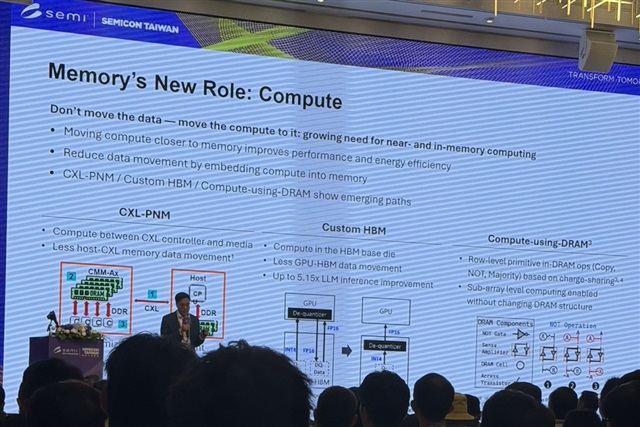
SK Hynix presented a custom HBM concept at SEMICON Taiwan 2026, where compute functions are placed in the base…
The U.S. Department of Defense announced on August 31 that it has deployed ChatGPT Mil, a customized version o…

Nvidia reported earnings that were both remarkable and boring, reflecting its focus on avoiding a consolidated…

Anthropic has agreed to a $35bn cloud-computing contract with Lambda, a Nvidia-backed cloud provider