What happened
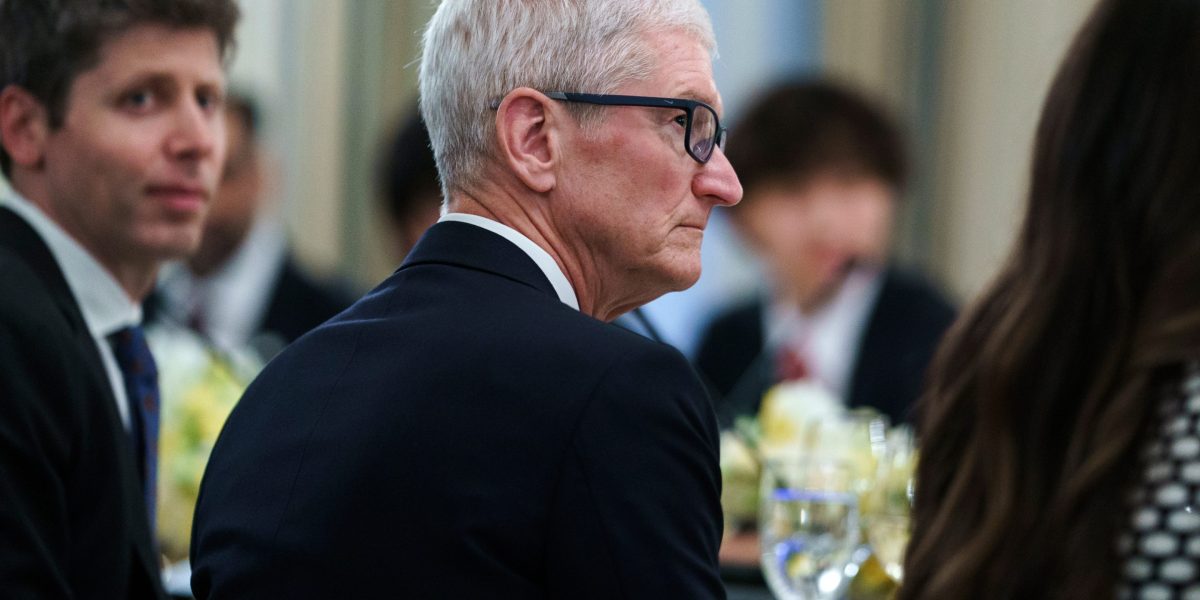
Apple filed a lawsuit in federal court accusing OpenAI and io Products (a hardware design firm acquired by OpenAI last year) of systematically stealing confidential data about unreleased hardware products, technical specifications, and Apple's supply chain. The complaint names two former Apple employees—Tang Tan (OpenAI's chief hardware officer) and Chang Liu (a member of OpenAI's technical staff)—and alleges they used confidential Apple codenames during recruiting, encouraged others to share secrets, and downloaded dozens of confidential hardware files.
Why it matters
The lawsuit marks a dramatic escalation between Apple and OpenAI, which once partnered to integrate ChatGPT into Apple products but drifted apart; Apple later turned to Google for its Apple Intelligence efforts. OpenAI has been developing hardware devices to run ChatGPT as part of a strategy to build its own physical products rather than rely on tech giants like Apple, and the company has recruited heavily from Apple's leadership ranks. The accusation that OpenAI's hardware strategy rests on misappropriated trade secrets raises questions about the foundation of OpenAI's hardware ambitions.
What to watch
Apple is seeking injunctive relief, monetary damages, and declaratory judgments to stop the alleged theft. The lawsuit comes as Apple CEO Tim Cook prepares to hand the reins to John Ternus in September, and OpenAI prepares for an initial public offering.
Summaries like this, every morning.
The lawsuit emerges from a fundamental shift in OpenAI's strategy. For years, the company relied on partnerships with hardware makers like Apple to distribute its AI products. But under CEO Sam Altman's vision of a new class of AI gadgets that could replace smartphones as the primary consumer device, OpenAI has moved to control its own physical products. The acquisition of Jony Ive's io Products for $6.4 billion(約1兆円) signals a serious commitment to that ambition—but Apple's complaint suggests the pathway depended on systematic acquisition of Apple's own proprietary knowledge.
The accusation is particularly striking given Apple's legendary secrecy around product development and its historical ferocity in protecting intellectual property. The complaint alleges that OpenAI used multiple channels to harvest trade secrets: current and former employees encouraged to share information during recruiting, confidential files downloaded and distributed, and direct instructions on how to circumvent Apple's security protocols. If substantiated, these allegations would paint a picture not of casual knowledge transfer but of deliberate and coordinated appropriation.
The timing amplifies the tension. Both companies are in periods of significant transition—Apple is handing the CEO role to John Ternus in September, while OpenAI prepares for an initial public offering amid competition from Anthropic and Google. OpenAI has already faced trade-secret litigation before: the New York Times sued OpenAI and Microsoft in 2023 for allegedly using articles to train AI models without permission, and a California judge dismissed xAI's June lawsuit alleging OpenAI recruited a former xAI engineer to share information about Grok. This latest case suggests the pattern may be widening.
Pick your industry and the AI tools you use, and get news related to your work every day.
Free · 30 seconds with Google · unsubscribe anytimeWhat is AIToday? →
Ask AI anything about this article. The AI reads this article, earlier AIToday articles, and Wikipedia, and cites its sources. Q&As are published on this page for other readers too.
Anthropic donated the Agent Skills standard (name, logo, GitHub organization, agentskills.io domain) to the Ag…
A powerful OpenAI model was used to uncover two critical flaws in PHP, the programming language that runs a la…
SpaceX reported revenue up 161% with positive EBITA
On the Motley Fool podcast, Ray Dalio said an AI bubble could burst relatively soon, citing higher interest ra…
S&P Global reports Q3 on Oct
Vertiv and NVIDIA presented at GTC on how they can halve AI factory deployment time