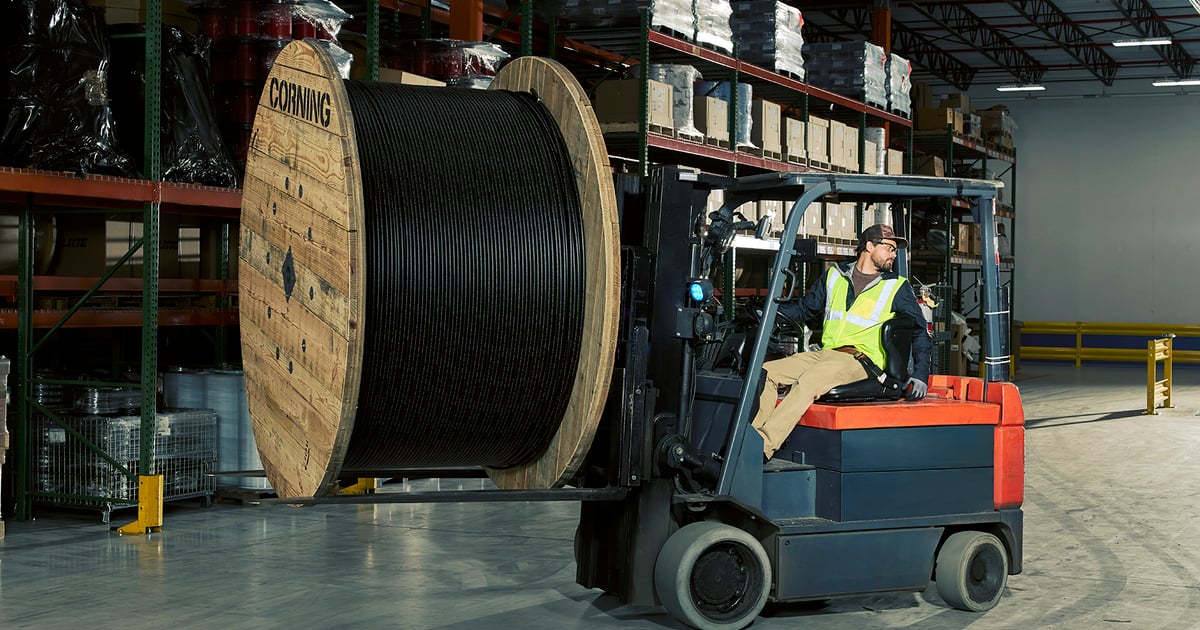
Corning, traditionally a glassmaker, has become a key AI infrastructure supplier after signing major deals with Amazon and Nvidia to expand optical fiber and communications equipment. Hyperscalers are now treating optical connectivity as a strategic dependency, locking in long-term manufacturing commitments years in advance rather than purchasing it as a commodity. This reflects a broader shift in the AI buildout: while chips and accelerators get most attention, the physical systems—power, cooling, and networking—are equally critical and represent a new class of industrial winners.
Summaries like this, in your inbox every morning.
Sign up free →What happened
Corning secured multibillion-dollar supply agreements with Amazon and a partnership with Nvidia to expand optical manufacturing capacity, including three new plants and more than 3,000 jobs. The company's Optical Communications segment grew 36% year over year in the first quarter of 2026, and Corning now expects to build a $10 billion(約1.6兆円) photonics business by 2030.
Why it matters
AI systems require thousands of accelerators working together, creating demand for high-density optical networks that connect increasingly large clusters. Hyperscalers now view optical infrastructure as strategic capacity rather than a commodity, planning manufacturing capacity and supply commitments 5 to 10 years ahead. For businesses building AI infrastructure, this signals that securing connectivity is as critical as securing chips.
What to watch
Corning is targeting a $40 billion(約6.4兆円) annualized sales run rate by 2030 under its upgraded Springboard growth plan. The shift reflects a broader reality: while Nvidia and chip suppliers dominate headlines, companies supplying power equipment, cooling systems, and networking hardware are emerging as major AI beneficiaries.
No comments yet. Be the first to share your thoughts!
Log in to join the discussion
Get curated AI news from 200+ sources delivered daily to your inbox. Free to use.
Get Started FreeFree · takes 30 seconds · unsubscribe anytime
5 minutes a day. The AI essentials.
200+ sources · Email / LINE / Slack
