Cisco's security division posted a 14% revenue increase to $2.2 billion in its latest quarter, capitalizing on surging demand for defenses against AI-driven cyberattacks.
IBM research shows AI-enabled attacks rose 56% year-over-year and now account for one in four breaches, with average costs reaching $6 million per incident.
The threat environment is expanding rapidly as artificial intelligence agents become more sophisticated, creating both urgency and opportunity for security vendors.
What happened
Cisco's security revenue rose 14% in its fiscal 2026 fourth quarter to $2.2 billion, driven by demand for tools to protect against threats enabled by artificial intelligence agents. More than 1,500 customers purchased new Cisco security products including Secure Access and Hypershield, and firewall orders grew more than 30%.
Why it matters
IBM's 2026 Cost of a Data Breach study found that one in four malicious attacks are now AI-enabled, up 56% from the prior year, with an average breach cost of $6 million. Incode estimates publicly documented AI-enabled fraud grew more than fivefold between 2023 and 2025, with reported losses approaching $900 million. CEO Chuck Robbins characterized the evolving threat landscape as presenting a unique business opportunity for Cisco.
What to watch
Cisco reported total revenue of $17.3 billion for the quarter ended July 25, an 18% year-over-year increase. The company is emphasizing a unified security approach across users, applications, and agents to address customer demand for AI security capabilities.
Ask the AI about this article →
The surge in Cisco's security revenue reflects a fundamental shift in the threat landscape driven by artificial intelligence. According to IBM's recent research, AI-enabled attacks have nearly doubled year-over-year and now represent one in four malicious incidents globally. These attacks are characterized by faster deployment, lower launch costs, and more expensive remediation—a combination that heightens urgency for enterprises to upgrade their defenses. Incode's data on AI-enabled fraud reinforces the trend, documenting more than fivefold growth between 2023 and 2025 in publicly documented cases, with reported losses approaching $900 million, though this figure captures only a fraction of actual fraud.
Cisco's CEO positioned the company's response as a unified security strategy spanning users, applications, and agents. The strong adoption metrics—1,500+ new customer wins for Secure Access and Hypershield, plus 30% growth in firewall orders—suggest that this approach resonates with enterprises seeking consolidated protection rather than point solutions. The company framed the evolving threat environment not as a crisis but as a business opportunity, indicating confidence that the security demand tailwind will persist as organizations scale their AI deployments.
For example, today's edition would include:
AI-summarized, only the topics you pick — one digest a day via Email, Slack, or Discord.
Free · takes 30 seconds · unsubscribe anytimeWhat is AIToday? →
Ask AI anything about this article. Q&As are published on this page for other readers too.
Israeli startup DataAgent Ltd
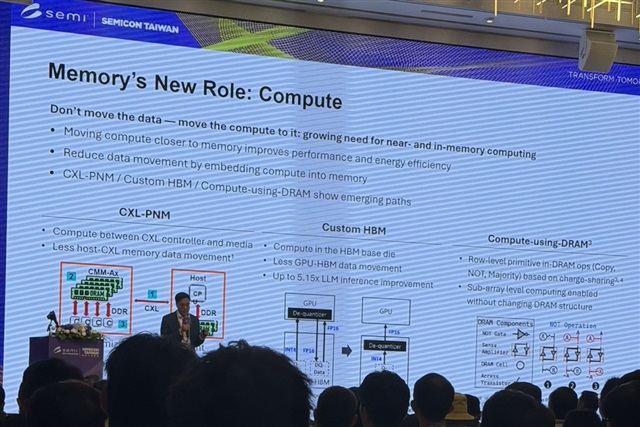
SK Hynix presented a custom HBM concept at SEMICON Taiwan 2026, where compute functions are placed in the base…
Taoyuan is positioning itself as a northern hub for AI data centers (AIDC), citing the Tatan area and an LNG c…
The U.S. Department of Defense announced on August 31 that it has deployed ChatGPT Mil, a customized version o…

Nvidia reported earnings that were both remarkable and boring, reflecting its focus on avoiding a consolidated…

Anthropic has agreed to a $35bn cloud-computing contract with Lambda, a Nvidia-backed cloud provider