
Marvell Technology has identified a significant gap between AI model performance in benchmarks and real-world deployment.
Standard tests may miss critical reasoning failures that appear only when models operate in actual business conditions.
This blindspot poses risks for enterprises deploying AI in high-stakes applications.
What happened
Marvell Technology has released research identifying a critical gap between how AI models perform in laboratory benchmarks and how they behave when deployed in real-world applications, revealing that standard testing may not capture practical reasoning failures.
Why it matters
As enterprises increasingly rely on AI systems for high-stakes decisions, understanding this gap between controlled test conditions and actual deployment performance is essential for assessing whether an AI system is genuinely trustworthy or merely benchmark-optimized.
What to watch
The research highlights the need for new evaluation methods that account for real-world deployment conditions, which could reshape how companies assess AI readiness before committing to production systems.
Ask the AI about this article →
Marvell Technology's research addresses a growing concern in enterprise AI adoption: the divergence between controlled laboratory performance and real-world behavior. As companies invest heavily in deploying AI systems, they typically rely on publicly reported benchmark scores to assess readiness. However, Marvell's findings suggest that these benchmarks may not reflect the conditions, edge cases, and reasoning demands that arise in actual business operations. This gap is particularly significant for high-stakes applications—finance, healthcare, critical infrastructure—where a model's failure to reason correctly in novel or complex scenarios can carry substantial consequences. The research underscores that benchmark optimization and practical robustness are not synonymous; a model can excel in standardized tests while remaining brittle under real deployment conditions.
For example, today's edition would include:
AI-summarized, only the topics you pick — one digest a day via Email, Slack, or Discord.
Free · takes 30 seconds · unsubscribe anytimeWhat is AIToday? →
Ask AI anything about this article. Q&As are published on this page for other readers too.
Israeli startup DataAgent Ltd
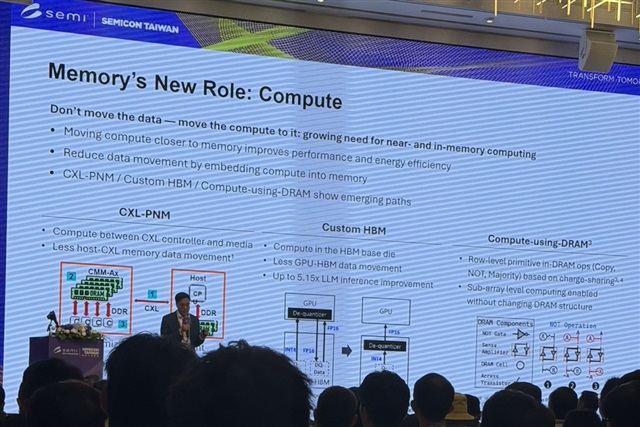
SK Hynix presented a custom HBM concept at SEMICON Taiwan 2026, where compute functions are placed in the base…
The U.S. Department of Defense announced on August 31 that it has deployed ChatGPT Mil, a customized version o…

Nvidia reported earnings that were both remarkable and boring, reflecting its focus on avoiding a consolidated…

Anthropic has agreed to a $35bn cloud-computing contract with Lambda, a Nvidia-backed cloud provider

The Supreme Court of Japan has included about ¥60 million in its fiscal 2027 budget request for AI-related exp…