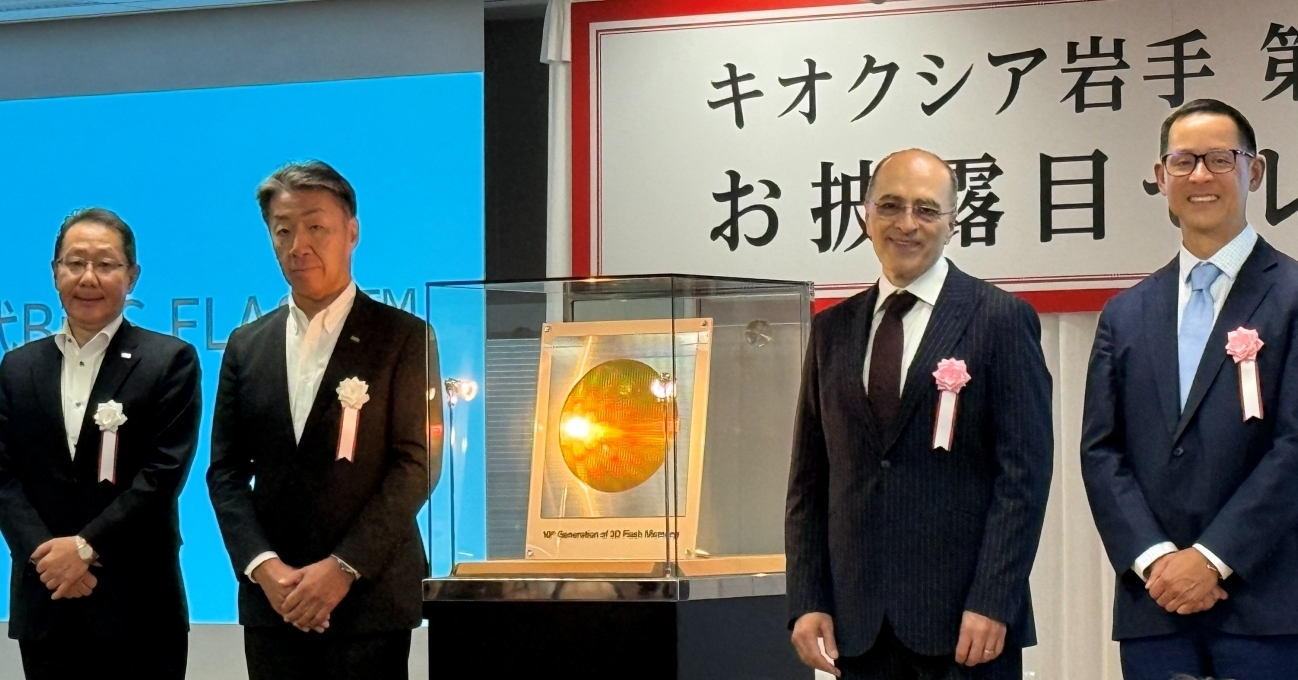
Kioxia has begun mass production of its 10th-generation BiCS FLASH memory chip at its Kitakami plant as of July 3, 2026, targeting demand from AI data centers and enterprise SSDs.
The new chip delivers 33% faster interface speed compared to the prior generation and is being produced alongside earlier-generation chips to balance capacity and cost.
Japan's government is supporting the expansion with over 370 billion yen in subsidies approved in June 2026.
What happened
Kioxia began production of its 10th-generation BiCS FLASH memory chip at its K2 facility in Kitakami on July 3, 2026. The new chip features a 1Tb TLC (Triple-Level-Cell) design and will also be produced at the Sandisk facility. K2 is now producing both 8th and 10th-generation BiCS FLASH chips.
Why it matters
The 10th-generation chip is designed to serve enterprise data centers and SSDs, and the company sees strong demand from AI applications alongside other enterprise and edge AI uses. By ramping 10th-generation production at K2 alongside 8th-generation output, Kioxia aims to meet growing demand in AI infrastructure while maintaining cost competitiveness.
What to watch
The 10th-generation BiCS FLASH achieves a NAND interface speed of 33% faster than the 8th-generation (4.8 Gbps), and Kioxia plans to expand production to a second manufacturing building at K2. Japan's government approved 370 billion yen in subsidies in June 2026, with an additional 68 billion yen planned through fiscal 2040.
Ask the AI about this article →
For example, today's edition would include:
AI-summarized, only the topics you pick — one digest a day via Email, Slack, or Discord.
Free · takes 30 seconds · unsubscribe anytimeWhat is AIToday? →
Ask AI anything about this article. Q&As are published on this page for other readers too.
BHP, the world's largest mining company by market capitalization, has deployed AI across its operations

Team Liquid announced a new five-year extension of its long-running collaboration with Dell Technologies' Alie…

A University of Mississippi study published in Journal of Interactive Advertising found that AI ads succeed wh…

Goldman Sachs Research says AI supply and demand won't balance until the first half of 2028
Lam Research broke ground yesterday on a new lab in Tualatin, Oregon

Visa, Mastercard, and Fiserv joined the Agentic Payments Alliance (APA), a 26-company coalition led by stablec…