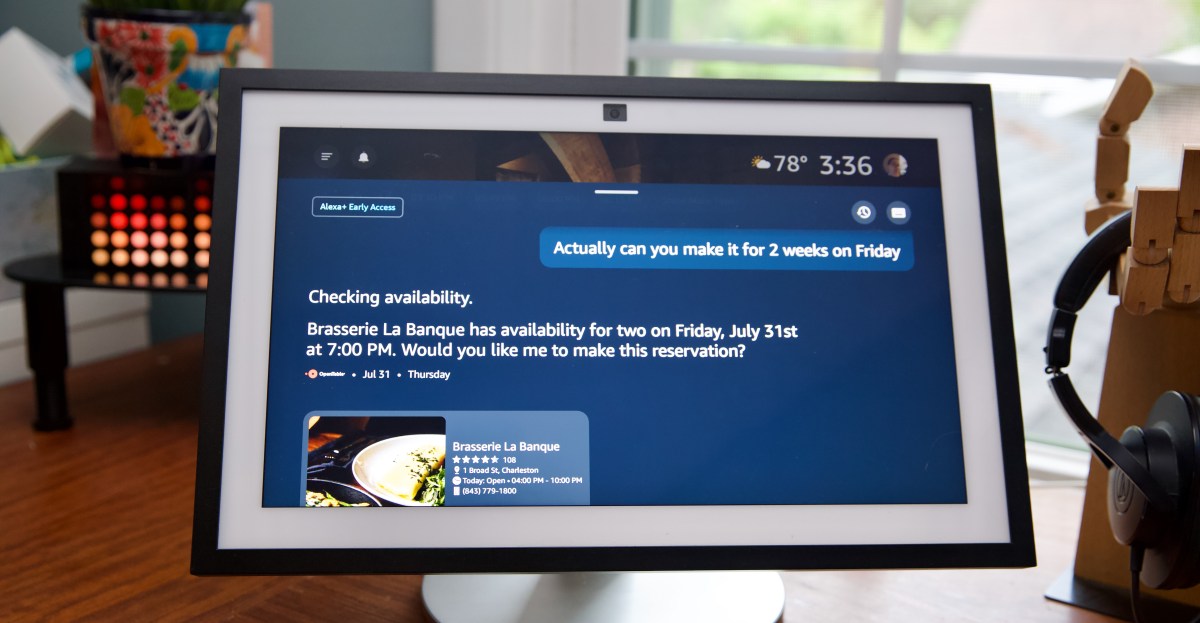
What happened
Amazon is rolling out an update to Alexa Plus that lets the AI assistant connect to smart home devices from Bosch, Delta, Ecovacs, iRobot, Yale Home, Whirlpool, Tapo, Eufy, and others, automatically routing requests to the right device. The update also adds integrations with services like Priceline, Canva, Headspace, Lyft, and others launching later this year.
Why it matters
The revamped Alexa Plus launched in February with the ability to handle multi-step requests and voice-activated routines, but initially worked with only a limited number of third-party services. By adopting the Model Context Protocol (MCP), an open-source standard, Amazon is making it much easier for device makers and companies to connect their products to Alexa Plus, expanding what the assistant can do in the home and across services.
What to watch
The update is currently in preview. Additional integrations from companies including Priceline, Atom Tickets, Cengage, Fandango, and TaskRabbit—some supporting payments through Amazon Wallet—are coming later this year.
Ask the AI about this article →
Summaries like this, in your inbox every morning.
Amazon's Alexa Plus faced a core limitation when it launched in February: despite its ability to handle multi-step voice requests and routines, it could only perform tasks with a small roster of third-party services including Ticketmaster, OpenTable, Uber, and Yelp. The new update addresses this constraint by adopting the Model Context Protocol (MCP), an open-source standard that allows AI models to connect to external systems and tools. This architectural shift is significant because it lowers the barrier for companies to integrate with Alexa Plus—Amazon provides a new AI developer toolkit designed to make connections easier, even for device makers with unique capabilities that weren't previously supported.
The rollout reflects a broader industry approach to AI integration: rather than Amazon building custom connections to each service, MCP creates a standardized interface that third parties can implement themselves. This unlocks integrations across smart home devices (from washing machines that can interpret garment care tags to security systems) and consumer services (travel, entertainment, wellness). By moving from a limited allowlist to an open-standard model, Amazon is positioning Alexa Plus to compete more effectively in the AI assistant space, where the value proposition increasingly depends on seamless access to the broader digital ecosystem.
For example, today's edition would include:
AI-summarized, only the topics you pick — one digest a day via Email, Slack, or Discord.
Free · 30 seconds with Google · unsubscribe anytimeWhat is AIToday? →
Ask AI anything about this article. Q&As are published on this page for other readers too.
At the All-In Summit 2026, Nvidia CEO Jensen Huang described China's approach to artificial intelligence as "m…
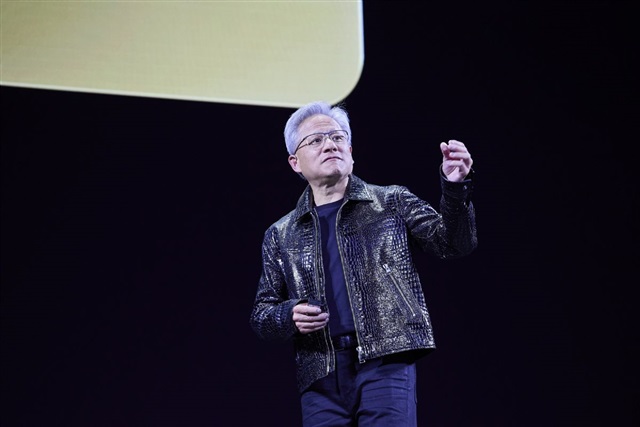
Calls to moderate frontier AI development have surfaced a financial dilemma alongside the safety debate, since…

A shareholder of more than 10 years says he won't sell a single Microsoft share, citing fiscal 2026 revenue of…

Palo Alto Networks' Leeor Piazza said an AI agent scanned the internet, found a public API endpoint, then move…
Mozilla and Mistral launched Firefox Smart Window (beta), an AI assistant that helps with complex searches, re…
TypeSafe AI introduced Jev, a classification-only model that scores developer-defined options instead of gener…