Microsoft and other major tech firms have committed $862 billion(約140兆円) to AI data center expansion, but power shortages are constraining growth. Caterpillar is supplying critical backup and main power generators, including for Microsoft's Chevron-operated natural gas plant, which has driven the company's backlog to a record $63 billion(約10兆円) and sales up 22% in early 2026. While Caterpillar's position in AI infrastructure is strategically sound, its stock has already doubled in a year and trades at valuations well above historical levels, limiting near-term upside.
Summaries like this, in your inbox every morning.
Sign up free →What happened
Microsoft, Oracle, Meta, and Alphabet have committed $862 billion(約140兆円) to future AI data centers, with Microsoft accounting for nearly 23% of the total. Power shortages are forcing companies to get creative—Microsoft recently signed a deal with Chevron to operate a natural gas power plant for a data center, with Caterpillar supplying backup and main power generators. Caterpillar ended the first quarter of 2026 with a record backlog of $63 billion(約10兆円), up nearly 80% year over year, and first-quarter 2026 sales rose 22%.
Why it matters
Electricity has become a limiting factor for AI infrastructure expansion, and Caterpillar's ability to quickly supply power to data centers positions it as a key beneficiary of the tech industry's massive capex push. The record backlog represents future sales and signals strong runway for growth. However, the stock has already doubled in a year; despite a recent 17% drawdown, its price-to-sales and price-to-earnings ratios remain more than twice their five-year averages, meaning investors are already pricing in the opportunity.
What to watch
Caterpillar's ability to fulfill its $63 billion(約10兆円) backlog and secure additional power supply contracts for other major tech companies. The stock's valuation relative to historical averages suggests limited room for upside unless execution significantly exceeds current market expectations.
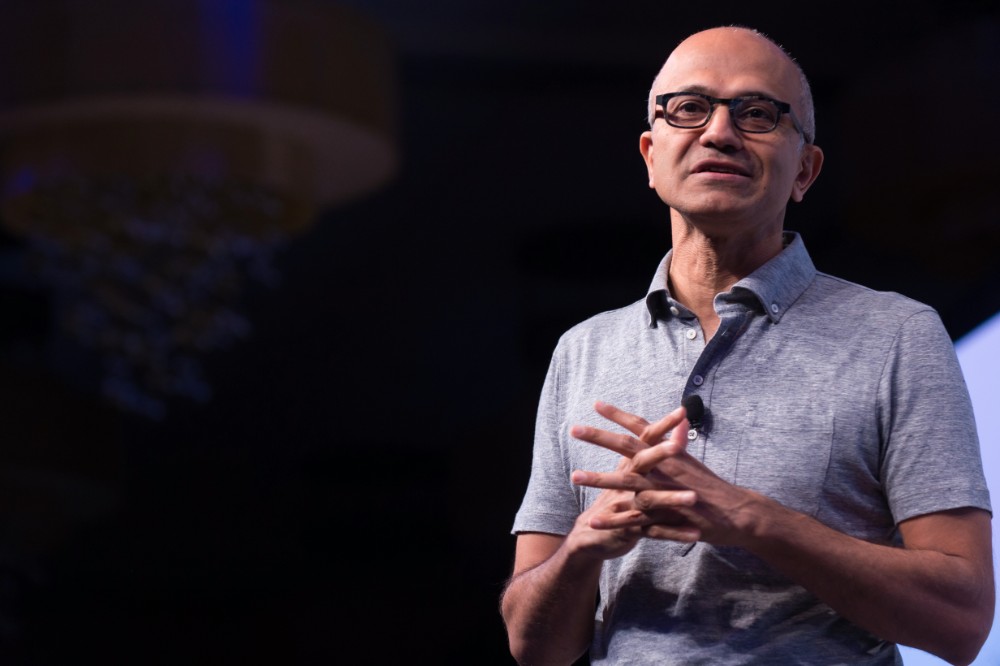
The artificial intelligence infrastructure boom has created an acute power constraint across the technology industry. Six major tech companies have collectively committed $862 billion(約140兆円) to build new AI data centers, with Microsoft—led by Satya Nadella—accounting for nearly 23% of that total. Oracle, Meta, and Alphabet are pursuing similar aggressive expansion, but electricity availability is now the limiting factor slowing deployment. The speed of the infrastructure build-out has outpaced the ability to secure power connections for all planned facilities.
To solve this bottleneck, Microsoft has taken an unconventional step, recently signing a deal with Chevron to operate a natural gas power plant dedicated to supplying electricity to a Microsoft data center. While GE Vernova is supplying most of the turbines for the plant, Caterpillar has positioned itself as a key secondary supplier. Cat's generators serve a dual role: they can function as backup power or as a primary power source, allowing data centers to become operational and begin generating revenue more quickly. This supplier relationship extends beyond a single facility—the fundamental shortage of power means many more data centers across the industry will require similar solutions, making Caterpillar a central player in the AI build-out.
Caterpillar's financial performance reflects this strategic positioning. The company ended the first quarter of 2026 with a record backlog of $63 billion(約10兆円), representing an 80% increase year over year. This backlog translates directly into future sales and revenue, providing a clear visibility into growth for years ahead. First-quarter 2026 sales themselves rose 22%, confirming that the opportunity is not merely aspirational but is already generating revenue. For shareholders, these metrics point to a company with a strong operational foundation and a multi-year growth runway tied to one of the largest capex cycles in technology history.
However, valuation presents a significant caution. Caterpillar's stock price has doubled over the past year, despite a recent 17% drawdown. More importantly, both its price-to-sales and price-to-earnings ratios now trade at levels more than twice their five-year historical averages, indicating that the market has already priced in substantial growth expectations. This elevated valuation means that while Caterpillar's position in AI infrastructure is strategically sound and its near-term execution outlook is favorable, investors entering at current levels may face limited upside unless the company's results significantly exceed market consensus. For those who purchased the stock a year ago, the investment has proved highly rewarding; for prospective buyers today, a more patient approach may be prudent.
The rapid scaling of artificial intelligence has created an unexpected bottleneck: electricity. Six major tech companies—Microsoft, Oracle, Meta, Alphabet, and two others—have collectively committed $862 billion(約140兆円) to build new AI data centers, but the infrastructure needed to power these facilities cannot keep pace. Microsoft, which accounts for nearly 23% of these capex commitments, has been forced to negotiate directly with energy companies; its deal with Chevron to operate a dedicated natural gas power plant exemplifies this constraint. This structural challenge has unexpectedly elevated Caterpillar from a traditional industrial manufacturer to a critical supplier in the AI build-out. Cat's generators serve both as primary power sources and backup systems, allowing data centers to become operational quickly—a competitive advantage in an industry racing to secure capacity.
Caterpillar's financial results reflect this positioning. The company's first-quarter 2026 backlog of $63 billion(約10兆円), up 80% year over year, is unprecedented and represents a multi-year runway of contracted work. First-quarter sales growth of 22% confirms the opportunity is not merely future optionality but present-day momentum. However, the market has already capitalized this opportunity aggressively. The stock has doubled in the past year, and even after a 17% recent pullback, its price-to-sales and price-to-earnings multiples stand more than twice above their five-year historical averages. This valuation trajectory suggests that investors who entered earlier have been well rewarded, but those entering today face the risk of buying at premium levels—a scenario in which even strong execution may not generate outsized returns.
AI-summarized, only the topics you pick — one digest a day via Email, Slack, or Discord.
Free · takes 30 seconds · unsubscribe anytime
No comments yet. Be the first to share your thoughts!
Log in to join the discussion



Get curated AI news from 200+ sources delivered daily to your inbox. Free to use.
Get Started FreeFree · takes 30 seconds · unsubscribe anytime
