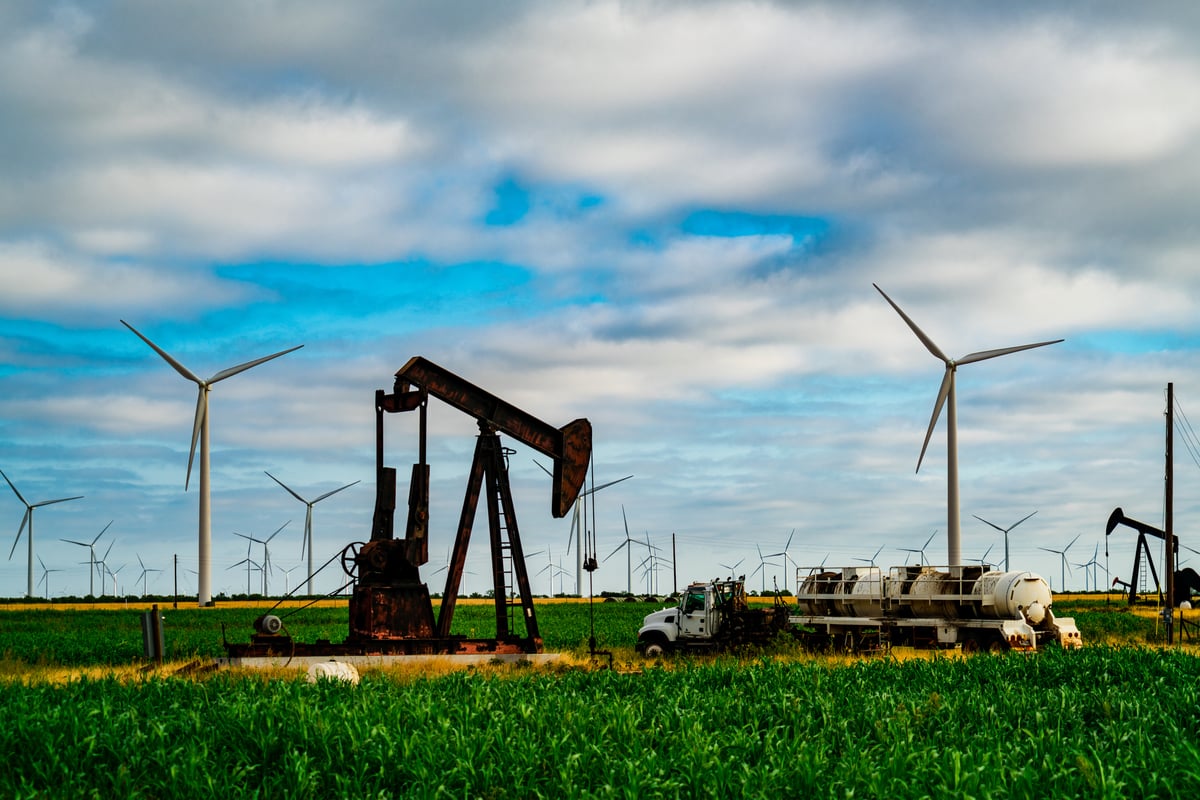
Three high-yield energy companies—Enterprise Products Partners, Enbridge, and Brookfield Renewable Partners—all yielding above 4.5%—stand to benefit as AI data centers drive electricity demand up 60% between 2025 and 2045. Enterprise and Enbridge are natural gas midstream operators that profit from infrastructure-use fees; Brookfield Renewable supplies clean power directly to Microsoft and Alphabet under long-term contracts, offering investors a low-carbon alternative while still capturing AI-driven power growth.
Summaries like this, in your inbox every morning.
Sign up free →What happened
Three energy companies—Enterprise Products Partners (5.7% yield), Enbridge (4.9% yield), and Brookfield Renewable Partners (4.9% yield)—are positioned to benefit from surging power demand tied to AI infrastructure. Elon Musk's Tennessee AI data centers (Colossus I and Colossus II) exemplify the trend, relying on natural gas turbines for power.
Why it matters
Electricity demand is projected to increase 60% between 2025 and 2045, driven by the shift to electric power sources and new technologies including AI. Midstream operators like Enterprise and Enbridge make money by charging fees for energy infrastructure use, so they profit from overall demand growth regardless of energy prices. Brookfield Renewable, which supplies power directly to Microsoft and Alphabet under long-term contracts, offers a cleaner alternative for investors who want to avoid carbon fuels.
What to watch
Enterprise has increased its distribution annually for 27 consecutive years; Enbridge has increased its dividend for 31 years. Brookfield Renewable, though younger, has raised its distribution regularly for a decade but actively buys and sells assets, so investors should monitor quarterly results for portfolio changes.
The article opens with an energy-investor angle on Elon Musk's AI data center plans in Tennessee. Musk is constructing two facilities, Colossus I and Colossus II, both powered by natural gas turbines. While the naming is grandiose, the detail matters to energy investors because it signals that AI infrastructure requires immediate, reliable power—and natural gas turbines are the fastest way to deliver it, even as they draw criticism from nearby residents over noise and pollution.
The demand backdrop is stark. Between 2005 and 2025, U.S. electricity demand grew 10%. The article projects a dramatic acceleration: between 2025 and 2045, demand will increase 60%, driven by electrification (electric vehicles, heat pumps) and AI. This mismatch between demand and supply capacity is already causing problems for the AI industry, which cannot wait years for new power plants. Natural gas turbines, despite their environmental drawbacks, are being deployed as the quickest solution. The U.S. government is reportedly backing this approach, evidenced by Space Exploration Corporation's (SpaceX's) use of off-grid natural gas plants for Musk's Tennessee facility—a decision made despite local pushback from Mississippi residents.
The article then turns to three high-yield energy stocks positioned to capture this demand surge. Enterprise Products Partners offers the highest yield at 5.7% and has raised its distribution for 27 consecutive years. Enbridge yields 4.9% and has increased its dividend (in Canadian dollars) for 31 years. Both are midstream operators—they own the pipelines and infrastructure that move energy and charge fees for its use. Critically, their business model is fee-based, so they profit from the volume of energy flowing through their systems regardless of the price of that energy. This makes them defensive plays on rising electricity demand.
Brookfield Renewable Partners, also yielding 4.9%, offers a cleaner alternative. It owns a global portfolio of renewable assets—hydroelectric, solar, wind, storage, and nuclear—and sells power directly to large users under long-term contracts. Notably, it already has agreements to supply power to Microsoft's and Alphabet's data centers. Unlike Enterprise and Enbridge, Brookfield actively manages and buys and sells assets quarterly, so investors should monitor its results more closely. However, it offers exposure to AI-driven power demand without relying on carbon fuels.
The article concludes by positioning power as a 'pick-and-shovel' play on AI: electricity is the non-negotiable input that AI cannot function without, and that demand will persist indefinitely once a data center is built. All three stocks offer high yields backed by the structural growth in power consumption, making them attractive for income-focused investors seeking indirect exposure to the AI infrastructure boom.
The article frames energy infrastructure as a critical bottleneck for AI expansion. With electricity demand projected to jump 60% over the next two decades—compared to only 10% growth between 2005 and 2025—the power supply side becomes strategically important. Natural gas turbines are emerging as the fastest route to new capacity, evidenced by Musk's Tennessee data centers and U.S. government support despite local pushback over pollution concerns.
The three stocks highlighted represent different plays on the same secular trend. Enterprise and Enbridge, as midstream operators, benefit from the sheer volume of energy flowing through their systems; their fee-based model insulates them from energy price swings and makes them defensive bets on rising overall demand. Brookfield Renewable takes a different approach, locking in demand through direct power-purchase agreements with hyperscalers like Microsoft and Alphabet. For investors seeking exposure to AI growth via the power supply chain rather than the technology itself, all three offer yields above 4.5% backed by rising energy consumption that will persist as long as AI data centers operate.
AI-summarized, only the topics you pick — one digest a day via Email, Slack, or Discord.
Free · takes 30 seconds · unsubscribe anytime
No comments yet. Be the first to share your thoughts!
Log in to join the discussion


Get curated AI news from 200+ sources delivered daily to your inbox. Free to use.
Get Started FreeFree · takes 30 seconds · unsubscribe anytime
