What happened
The article argues that AI is separating content management systems into two layers: the execution plane (creating and assembling content) and the control plane (governing who edits, what gets approved, which version is canonical). AI is making execution cheaper and easier, but the control plane—roles, review, approvals, revision history—remains essential wherever multiple people or systems touch content.
Why it matters
As AI makes content production cheaper, organizations that manage content across teams, channels, and systems need stronger governance, not less. A CMS shifts from being a creation tool to being a trust and coordination layer. The article suggests the real question is not whether AI can generate content, but whether your organization needs a control layer for approval, compliance, and multi-system consistency.
What to watch
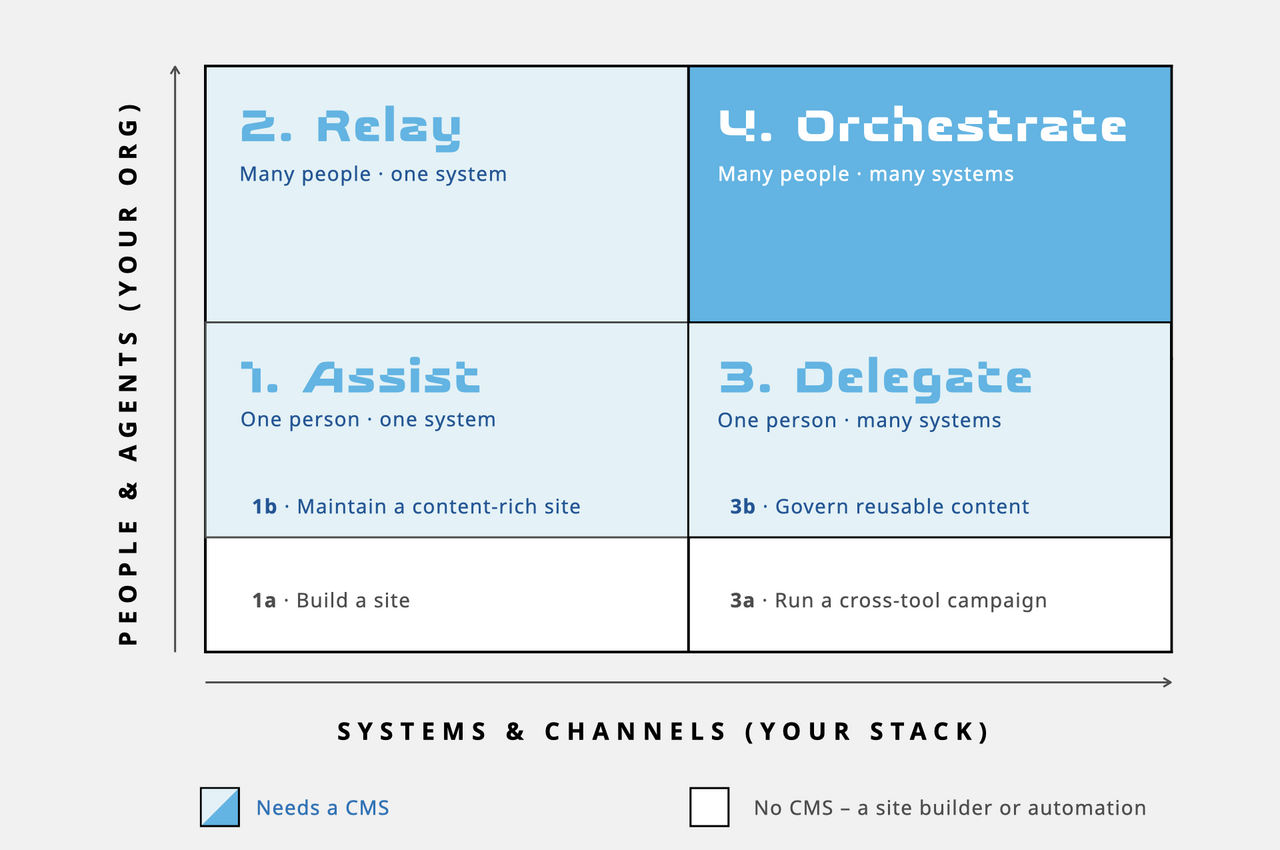
The article frames four use cases on a grid defined by "How many people or agents create, review, and publish content?" and "How many systems need to use, update, or trust that content?" The more people and systems involved, the more a CMS becomes critical. Simple single-person publishing may move to AI builders, but multi-person workflows and multi-system coordination remain dependent on a CMS control layer.
Ask the AI about this article →
For example, today's edition would include:
AI-summarized, only the topics you pick — one digest a day via Email, Slack, or Discord.
Free · takes 30 seconds · unsubscribe anytimeWhat is AIToday? →
Ask AI anything about this article. Q&As are published on this page for other readers too.

