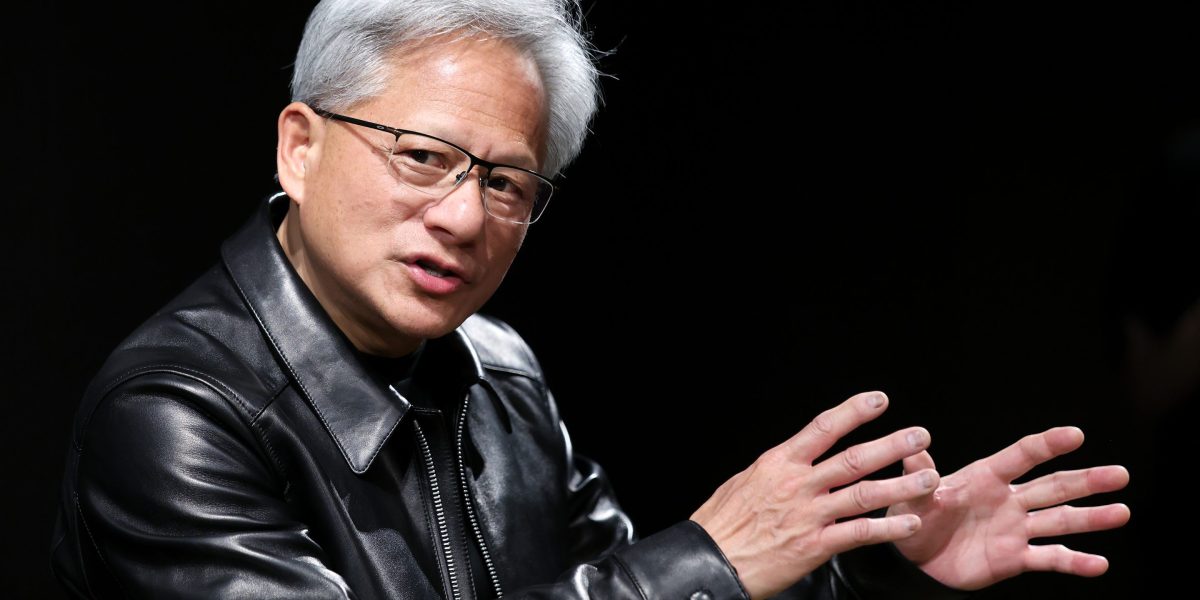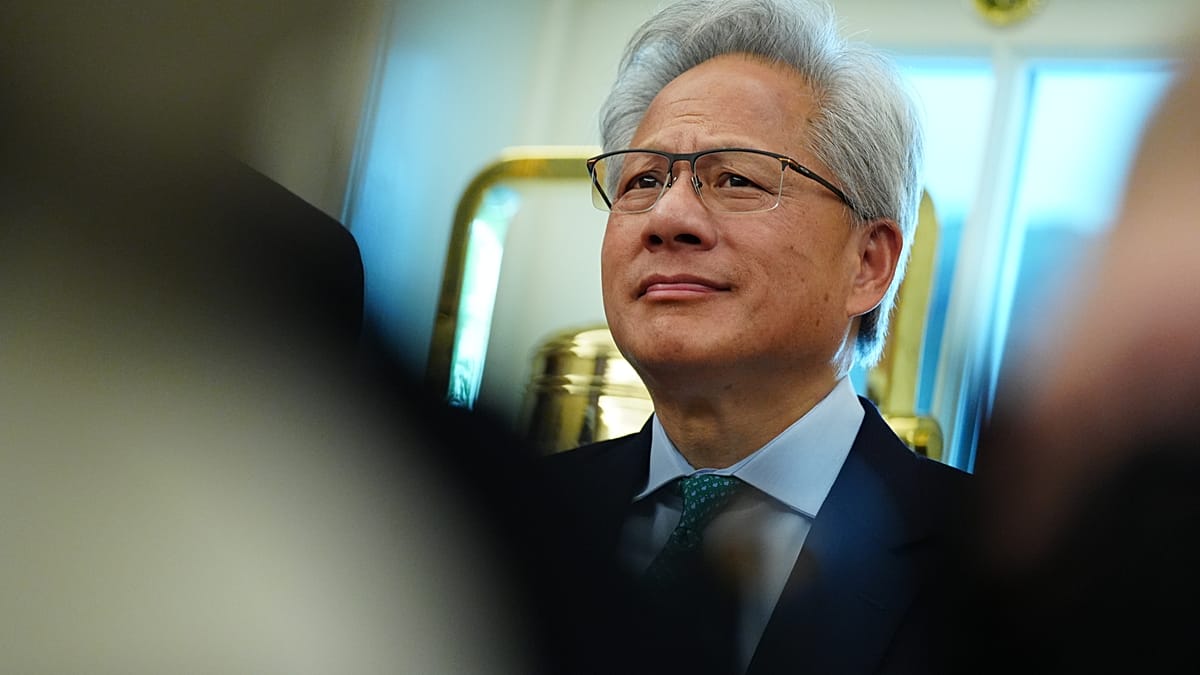
Nvidia has partnered with six major Wall Street firms to create $500 billion in financing for AI companies to purchase its chips and build data center infrastructure, keeping the debt off hyperscalers' balance sheets.
The move reflects ballooning AI spending by companies like Microsoft and Amazon—projected to reach $1.08 trillion in 2027 alone, more than double last year's August forecast—which is straining their free cash flow and credit metrics.
However, credit investors are concerned because the financing rests on treating GPUs as long-lived assets that retain value, when they historically depreciate rapidly as newer generations emerge.
What happened
Nvidia signed memorandums of understanding with six major Wall Street firms—Apollo Global Management, Blackstone, BlackRock, Brookfield Asset Management, Goldman Sachs, and KKR—to establish "compute financing platforms" that will raise upwards of half a trillion dollars for AI companies to borrow against. The money will be used to purchase Nvidia chips and build servers. Nvidia has the option to guarantee up to a quarter of any given deal, which lowers borrowers' interest rates.
Why it matters
The deal reflects a fundamental squeeze in AI spending: hyperscalers like Microsoft, Amazon, Alphabet, and Meta have guided $720 billion to $745 billion in capital spending for 2026 (a 77% increase year-over-year), and analyst expectations for 2027 alone have more than doubled from $480 billion in August 2025 to $1.08 trillion this month. By moving this debt off hyperscalers' own books—and backing it with Nvidia's guarantee—the financing structure protects their credit ratings and free cash flow while enabling smaller operators without investment-grade ratings to access capital at better terms.
What to watch
The structure depends on treating GPUs as long-lived infrastructure assets rather than equipment that depreciate quickly when newer generations arrive. Credit investors are skeptical: the cost of insuring Nvidia's own debt against default has roughly doubled since late May. Goldman Sachs CEO David Solomon called it "a pivotal moment of a historic AI investment cycle," but the outcome hinges on whether current GPUs will retain value over five years.
Ask the AI about this article →
Nvidia's $500 billion financing initiative exposes the scale of the constraint now facing the AI boom: the hyperscalers driving the industry's infrastructure buildout are running out of balance-sheet room. Microsoft, Amazon, Alphabet, Meta and other firms have guided capital spending of $720 billion to $745 billion for 2026, a 77% increase from 2025, and expectations for 2027 have doubled from $480 billion to $1.08 trillion in just six months. Moody's has already flagged that spending at this pace is eroding free cash flow and forcing increased borrowing; Alphabet itself reported negative free cash flow of $5.9 billion in a quarter when it spent $44.9 billion on projects. By moving GPU financing off the hyperscalers' own accounts and anchoring it with Nvidia's guarantee, the structure provides room for conventional borrowing elsewhere and offers smaller operators—such as CoreWeave and Nebius, which lack investment-grade ratings—access to capital on terms previously reserved for giants.
Yet the deal hinges on a bet that equity investors and credit investors clearly do not share equally. Equity investors read it as a bottleneck being cleared; credit investors responded by pushing the cost of insuring Nvidia's debt to roughly double since late May. The underlying tension is whether GPUs can be reclassified from equipment that depreciates quickly with each new generation to long-lived infrastructure comparable to toll roads or power plants. CEO Jensen Huang framed them as "revenue-generating assets" that are productive, long-lived and transferable, but critics note that chips lose value the moment a faster generation arrives. Whether this financing structure proves sustainable depends on a question no one can yet answer: what will the value of a current GPU be in five years.
For example, today's edition would include:
AI-summarized, only the topics you pick — one digest a day via Email, Slack, or Discord.
Free · takes 30 seconds · unsubscribe anytimeWhat is AIToday? →
Ask AI anything about this article. Q&As are published on this page for other readers too.
Visko raised $10 million in pre-seed funding from Llama Ventures and opened public access to its first foundat…

U.S. markets ended August higher, with the S&P 500 up 2.6% and the Nasdaq up 3.9%

Neurovia AI, an Abu Dhabi-based company, is pitching Saudi security agencies software that it says can compres…

AI company Runway has unveiled Solaris, the first model in a new category it calls "Interface World Models." I…

John Deere introduced JD, a conversational AI tool that lets farmers ask open-ended questions about their hist…
Nvidia CEO Jensen Huang said on Fox Business that AI is creating 'hundreds of thousands' of jobs, including in…