What happened
Frontier AI models (like GPT and Claude) retain customer engagement between social networks and mobile games—typically keeping single-digit to 40% of users by month five. The average leading model holds the top position for roughly 41 days before a newer one displaces it. Cost efficiency now ranks equally with raw performance in model benchmarks; for instance, Microsoft's MAI-Code-1-Flash matches Claude Haiku 4.5 on SWE-Bench Verified while using 60% fewer tokens, and GPT 5.5 is 28% less expensive to run than Claude Opus 4.8 despite near-identical Intelligence Index scores.
Why it matters
The price for a given level of benchmark performance is falling roughly 10x per year on frontier tasks (knowledge, reasoning, math, software engineering). This rapid cost decline gives customers and startups concrete negotiating leverage—they can switch to whichever model offers the best value each month without long-term lock-in, unlike older software vendor relationships. The continuous churn of "king of the hill" models accelerates this benefit rather than destabilizing the market.
What to watch
Benchmarks now blend performance AND cost (similar to a price-to-earnings growth ratio in finance), normalizing intelligence by dollar rather than raw capability alone. OpenAI recently published steep user and token growth charts for its newest model, Sol, suggesting fresh displacement cycles are underway.
Summaries like this, in your inbox every morning.
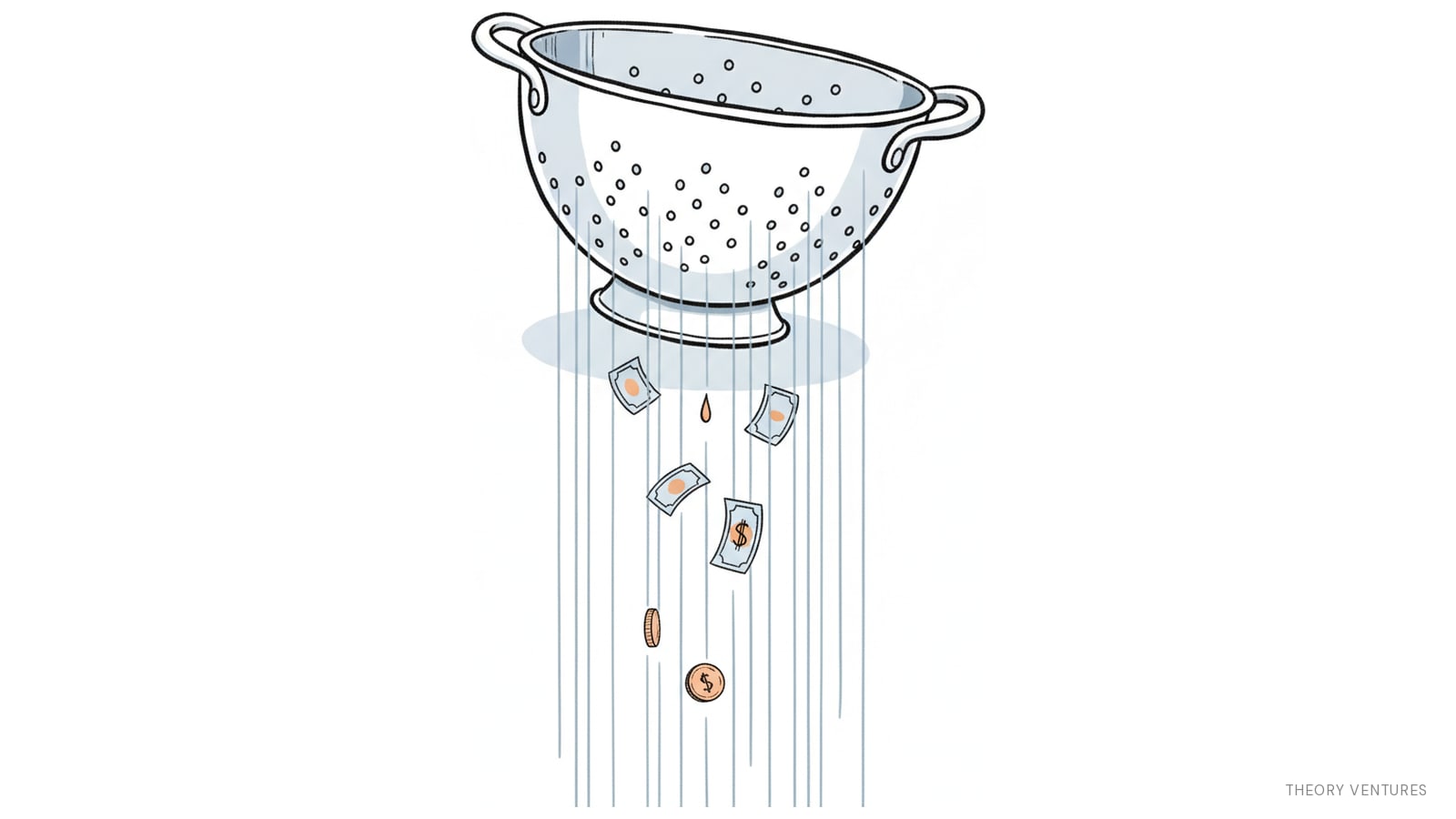
The AI market exhibits a colander pattern: customers enter but many exit within months, creating structural volatility that contrasts sharply with traditional software retention. The 41-day average reign of frontier models reflects an arms race where each new release offers incremental gains in capability or cost (or both), compelling users to reassess their choice regularly. This churn, however, inverts the usual dynamics of vendor lock-in; instead of binding customers to a single provider through switching costs, rapid model succession gives them a fresh opportunity to optimize every cycle.
Benchmarks themselves are evolving to reflect this shift. Performance alone no longer determines leadership; cost normalization (intelligence per dollar) now carries equal weight. GPT 5.5 and Claude Opus 4.8 exemplify this: they score within a point of each other on the Intelligence Index around 60, yet GPT 5.5 costs 28% less to run. Similarly, xAI's Grok 4.5 trails by one tier (score of 54) but costs only $0.31 per task—60% less than higher-ranked models. This metric reframing mimics the PEG ratio in equity analysis, where value is normalized by a second variable to enable fairer comparison.
The 10x annual price decline for a given capability level is the lever that sustains this dynamic. Startups and enterprises gain genuine negotiating leverage every 41 days because switching costs remain low; they can re-route to whichever model best fits their budget and performance needs without long-term contractual friction. Unlike historical software markets, where dominance accrued to the vendor holding the largest installed base, the AI market's brevity of leadership windows ensures continuous pressure on all players to improve both capability and efficiency. OpenAI's recent surge in users and tokens for its newest model, Sol, exemplifies how this cycle repeats.
Pick your industry and the AI tools you use, and get news related to your work every day.
Free · 30 seconds with Google · unsubscribe anytimeWhat is AIToday? →
Ask AI anything about this article. The AI reads this article, earlier AIToday articles, and Wikipedia, and cites its sources. Q&As are published on this page for other readers too.

