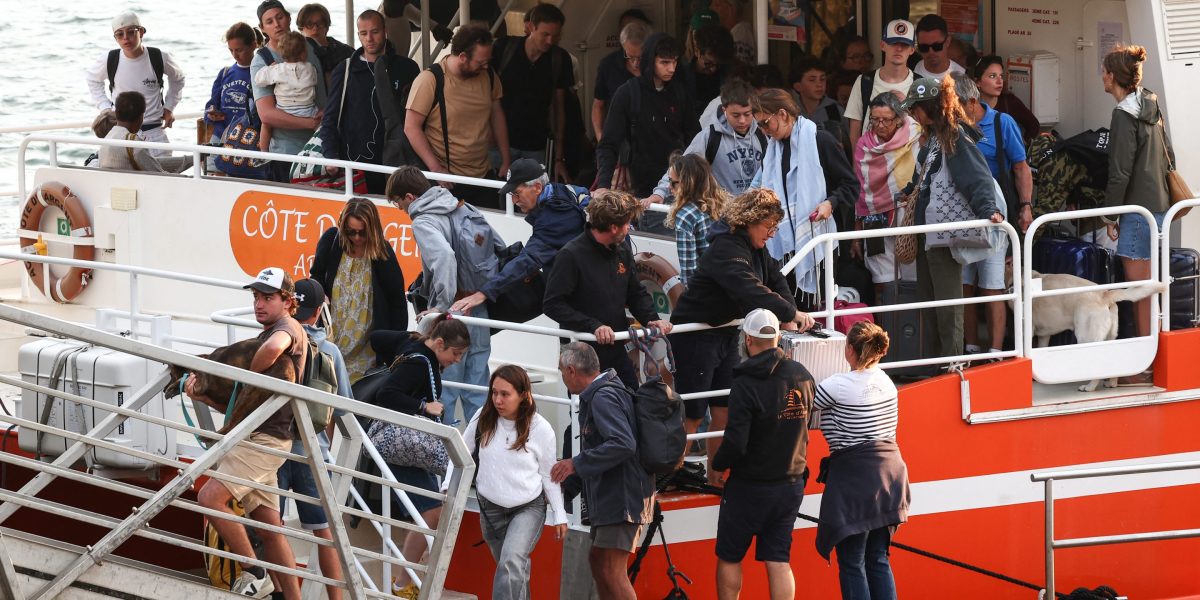
Large forest fires forced the evacuation of approximately 80,000 people from southwestern France and central Spain on Friday, with authorities mobilizing over 1,500 firefighters and seeking EU reinforcements. The blazes—consuming some 100 square kilometers in France and contributing to Spain's already record-breaking fire season of 1,140 square kilometers burned—are driven by extreme heat, strong winds, and low humidity, conditions that scientists attribute to climate change making southern Europe increasingly vulnerable to wildfires.
Summaries like this, in your inbox every morning.
Sign up free →What happened
Large forest fires burned out of control in southwestern France and central Spain on Friday, forcing the evacuation of an estimated 80,000 people. In France, more than 60,000 residents fled the Cap Ferret peninsula near Bordeaux, with around 1,500 evacuated by sea to the city of Arcachon. In Spain, the government declared a national emergency for wildfires for the first time after blazes near Madrid and in the Ávila province prompted evacuations of some 20,000 people.
Why it matters
Europe is the world's fastest-warming continent, with temperatures increasing twice as quickly as the global average since the 1980s, according to the European Union's Copernicus Climate Change Service. Scientists warn that climate change is exacerbating the frequency and intensity of heat and dryness, making the region more vulnerable to wildfires. Spain has already burned 1,140 square kilometers (440 square miles) this year, more than five times the burned terrain through the first half of 2025, and the country experienced its second-largest fire ever this year, consuming some 320 square kilometers (120 square miles).
What to watch
The EU is sending reinforcements, including two Croatian Canadair firefighting aircraft, two Portuguese Air Tractor aircraft, two heavy-lift Black Hawk helicopters from the Czech Republic and Slovakia, and Italy and Greece are each sending two Canadair water-dumping airplanes. Temperatures are expected to top 39 degrees Celsius (102 Fahrenheit) in parts of Spain on Friday, with a high of 44 C (111 F) in Almeria in the southeast, and strong winds are complicating firefighting efforts.
On Friday, massive forest fires raged out of control across southwestern France and central Spain, forcing authorities to evacuate an estimated 80,000 people from their homes. In France, the blaze near Cap Ferret—a touristic peninsula just 60 kilometers (37 miles) from Bordeaux—consumed some 100 square kilometers (38 square miles) and has burned since Wednesday. More than 60,000 French residents fled the area: 40,000 from the Gironde department and 23,000 from the Landes. Some residents could not travel by road and instead evacuated by boat, with around 1,500 people arriving by sea in the city of Arcachon in an unprecedented operation, transported in small water taxis and larger boats operated by professionals. Town officials provided reception areas with coffee, fruit, and water for the evacuees. Laurent Moretti, a resident in the town of Arès, told reporters: "It's quite impressive and even frightening. An evacuation on this scale has never happened before. All we really hope is that the firefighters can quickly get it under control."
In Spain, the situation proved equally dire. The government declared a national emergency for wildfires for the first time after blazes near Madrid and in the Ávila province prompted evacuations of some 20,000 people. The national emergency transferred control of firefighting efforts from regional governments to the interior ministry, which oversees police and security forces. Around 18,000 people were evacuated from villages and towns west of Madrid as multiple fires raged out of control late Thursday. In Burgohondo, Ávila, where 1,500 residents were preventively evacuated, mayor Francisco Martínez told Spain's national broadcaster TVE: "In my 60 years I have never seen something like this in my village, I have never seen fire of these dimensions." Temperatures topped 39 degrees Celsius (102 Fahrenheit) in parts of Spain on Friday, with a high of 44 C (111 F) in Almeria in the southeast. Beyond the major fires in Madrid and Ávila, there were nine serious fires in other parts of Spain.
Spain's fire season has been catastrophic: the country has burned 1,140 square kilometers (440 square miles) already this year, more than five times the burned terrain through the first half of 2025. The nation experienced its second-largest recorded fire ever this year, consuming some 320 square kilometers (120 square miles) in the province of Guadalajara north of Madrid. Thirteen people were killed in a fire in southern Spain earlier in the month, marking the deadliest fire in recent memory for the country. In Italy, wildfires continued to ravage parts of Sicily, with the central-western province of Agrigento particularly hard hit; Italy's national fire department reported over 1,400 operations since last weekend, 240 of which were in the Agrigento area. Seven of Sicily's nine provinces remained at the highest level of alert for wildfires, and a firefighter died responding to a fire in Caltanissetta.
Authorities from both France and Spain appealed to fellow European Union members for help. French President Emmanuel Macron announced that France would receive two Croatian Canadair firefighting aircraft, two Portuguese Air Tractor aircraft, and two heavy-lift Black Hawk helicopters from the Czech Republic and Slovakia. Spanish Interior Minister Fernando Grande-Marlaska said that Italy and Greece are each sending two Canadair water-dumping airplanes. Spanish Prime Minister Pedro Sánchez wrote on X: "We are experiencing a dramatic situation, not just in several Spanish regions but also in neighboring countries." Hundreds of firefighters were deployed with additional ground and aerial reinforcements sent Friday to tackle the blazes. Authorities believe the cause of both the French and Spanish fires was accidental. Strong winds and hilly terrain complicated efforts by firefighters, who combated the blazes with firetrucks and bulldozers. Scientists warn that climate change is exacerbating the frequency and intensity of heat and dryness, making the region more vulnerable to wildfires. Europe is the world's fastest-warming continent, with temperatures increasing twice as quickly as the global average since the 1980s, according to the European Union's Copernicus Climate Change Service.
Southern Europe is facing an unprecedented wildfire crisis driven by the collision of extreme summer heat, structural shifts in the regional climate, and geographic vulnerability. Europe is the world's fastest-warming continent, with temperatures increasing twice as quickly as the global average since the 1980s, according to the EU's Copernicus Climate Change Service—a reality scientists say directly exacerbates both the frequency and intensity of wildfires by reducing humidity and accelerating fuel drying. Spain's fire toll this year exemplifies the trend: the country has already burned 1,140 square kilometers (440 square miles) in 2025, more than five times the burned terrain through the first half of 2025, and experienced its second-largest recorded fire ever, consuming some 320 square kilometers (120 square miles). The fires near Madrid and Ávila were severe enough to trigger Spain's first-ever national emergency declaration for wildfires, placing the interior ministry's control over regional firefighting efforts. The combination of record temperatures (topping 39–44 degrees Celsius in affected regions), low humidity, and unpredictable winds has made containment extraordinarily difficult, forcing authorities to rely on unprecedented evacuation scales—1,500 people by sea in France alone—and to request coordinated EU reinforcements across multiple nations.
AI-summarized, only the topics you pick — one digest a day via Email, Slack, or Discord.
Free · takes 30 seconds · unsubscribe anytime
No discussion yet for this article
Get curated AI news from 200+ sources delivered daily to your inbox. Free to use.
Get Started FreeFree · takes 30 seconds · unsubscribe anytime
