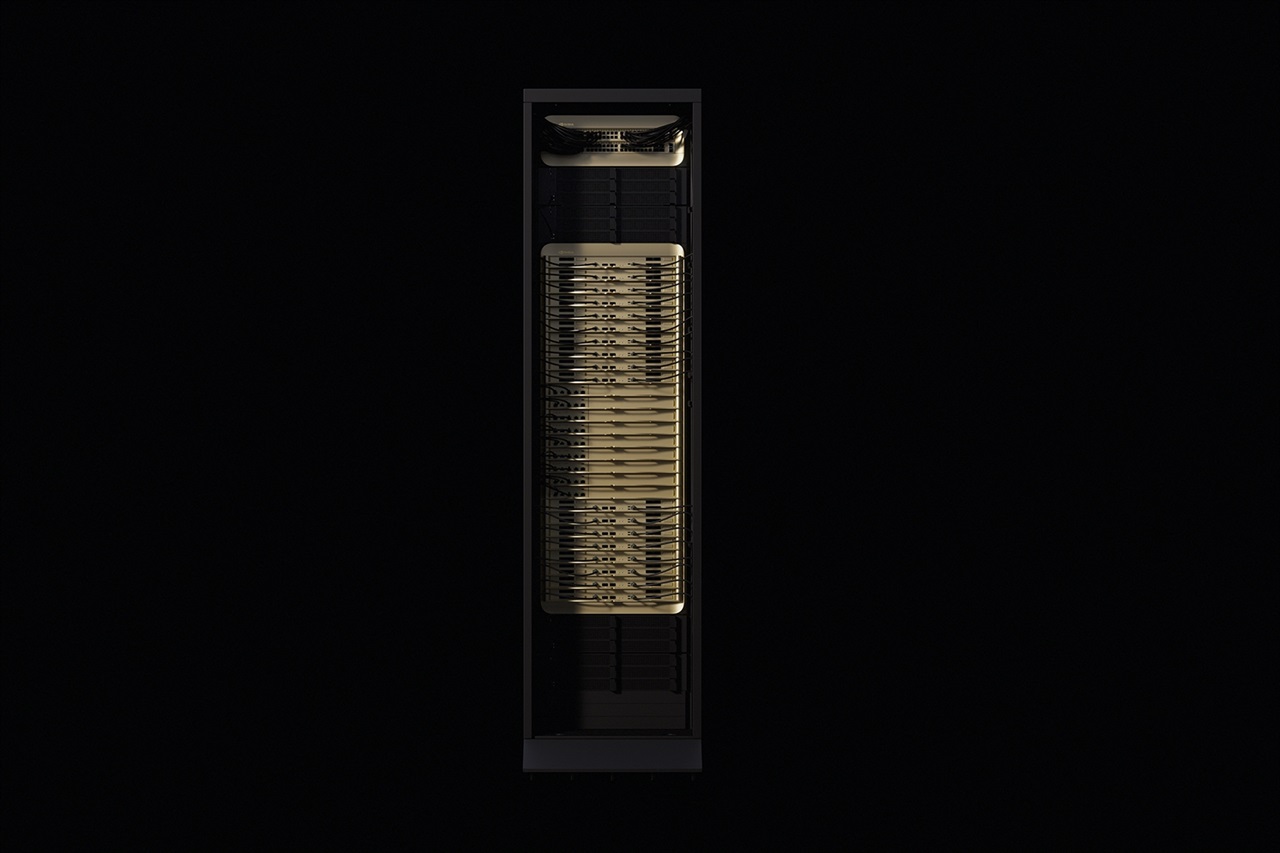
Nvidia has detailed its Vera Rubin NVL72 chip and custom Vera CPU as part of a new rack strategy, emphasizing cost-per-AI-output over raw speed. The shift reflects the industry's growing constraint: power availability in data centers is now the limiting factor for AI deployment growth, not chip performance alone.
Summaries like this, in your inbox every morning.
Sign up free →What happened
Nvidia detailed the Vera Rubin NVL72, positioning it not as a faster chip but as a lower-cost unit of AI output, paired with a custom Vera CPU for its rack strategy.
Why it matters
Power constraints are now the ceiling for data center growth in the industry. By emphasizing cost-per-output rather than raw speed, Nvidia is addressing the economic and physical limits that power-constrained facilities face when deploying AI infrastructure.
What to watch
The announcement marks a shift in how Nvidia markets its AI chips—away from performance alone and toward efficiency and cost metrics that matter to capacity-limited data centers.
Nvidia has detailed its Vera Rubin NVL72 chip and custom Vera CPU as the centerpiece of a new rack strategy aimed at the AI infrastructure market. Rather than emphasizing the chip's raw performance, Nvidia is marketing the Vera Rubin NVL72 as a lower-cost unit of AI output, a framing that reflects a fundamental shift in how the company views its competitive advantage.
This repositioning matters because power availability has become the defining constraint for data center growth across the industry. As operators push their facilities toward capacity limits, neither faster chips nor more servers alone can solve the problem—the electrical and cooling infrastructure simply cannot support unbounded expansion. By focusing the Vera Rubin NVL72's marketing on cost-per-output rather than absolute speed, Nvidia is directly addressing the economic reality that power-constrained data centers face. The custom Vera CPU paired with the chip suggests a vertically integrated approach designed to optimize the entire rack for efficiency, not just individual components for performance.
Nvidia's framing of the Vera Rubin NVL72 signals a recognition that the AI infrastructure market has matured beyond a simple competition for processing speed. Power availability has emerged as the hard constraint limiting data center expansion—a shift from the traditional performance-focused chip race. By bundling the Vera Rubin NVL72 with a custom Vera CPU and positioning the pair around cost-per-output, Nvidia is acknowledging that buyers now care more about economic and physical efficiency than peak compute. This pivot suggests the company sees its future growth tied less to incremental speed gains and more to helping power-constrained operators extract more AI inference value per watt and per dollar spent.
AI-summarized, only the topics you pick — one digest a day via Email, Slack, or Discord.
Free · takes 30 seconds · unsubscribe anytime
No discussion yet for this article
Get curated AI news from 200+ sources delivered daily to your inbox. Free to use.
Get Started FreeFree · takes 30 seconds · unsubscribe anytime
1 minute a day. The AI essentials.
200+ sources · Email / LINE / Slack
