What happened
Fleek, a London-based online marketplace connecting second-hand clothing wholesalers (mostly in India, Pakistan, and Dubai) to retail sellers globally, has raised $25 million(約40億円) in Series B funding, bringing total funding to $45 million(約72億円). The round was led by Burda Principal Investments, with participation from eBay, FJ Labs, and H14.
Why it matters
The second-hand clothing industry moves up to 24 billion garments annually but remains largely manual and fragmented, with little pricing transparency. Fleek addresses a real supply constraint—demand for vintage clothing is currently outstripping supply—by connecting roughly 2,000 verified wholesalers with over 50,000 retailers across 100+ countries, reducing the risk of fraud that has plagued the market.
What to watch
Fleek Sort, a custom computer vision-language model the company built in-house, now analyzes smartphone photos of garments to identify brand, style, and category, flag defects, and estimate resale price and time to sell. The model is already in use by graders in Pakistan, India, and Dubai, with pilots launching in the U.K., Europe, and the U.S.
Summaries like this, in your inbox every morning.
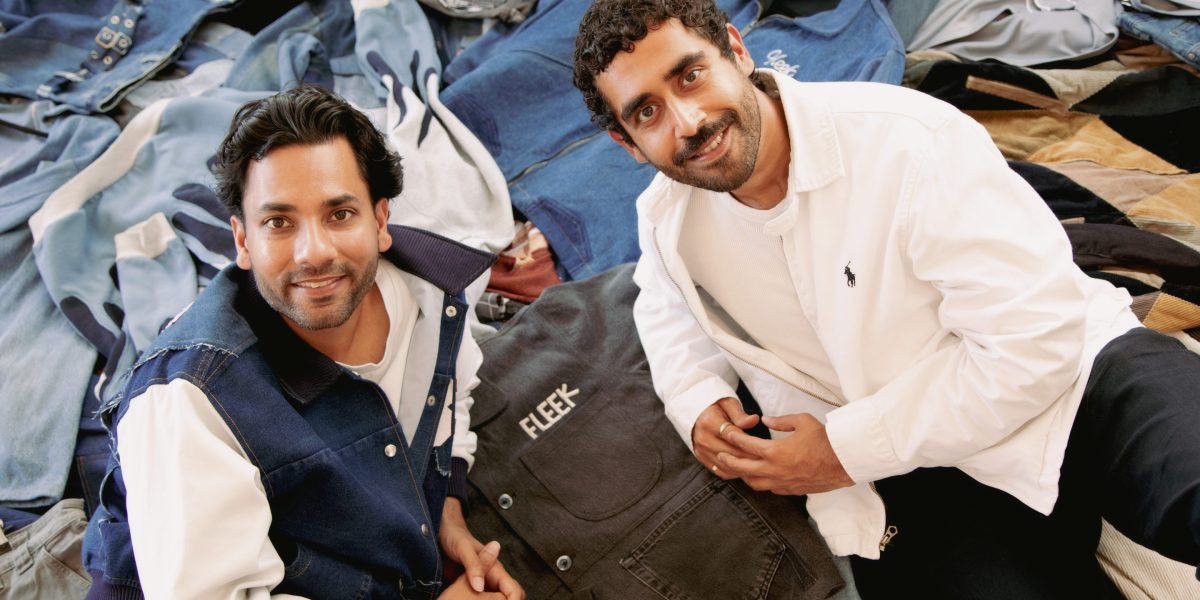
Fleek was born from a practical problem: after a London vintage shop near Brick Lane closed due to the costs and fraud risks of sourcing inventory through online brokers during the COVID-19 pandemic, cofounder Abhi Arora recognized that the second-hand clothing supply chain had a structural inefficiency. His cofounder Sanket Agarwal faced the same issue through his mother-in-law's vintage clothing business. Together, they identified that supply was not scaling as fast as demand—a constraint that persists today despite the industry moving up to 24 billion garments annually through global supply chains.
The core problem is that the $200-billion-plus second-hand clothing industry remains stubbornly manual: items are assessed by hand, graded to inconsistent standards, and traded through disconnected networks with little pricing transparency. Fleek's marketplace solves part of this by connecting verified wholesalers (concentrated in India, Pakistan, and Dubai, where much of the world's second-hand clothing is sorted) with retailers globally, ensuring buyers do not have to worry about fraud. The new AI tool, Fleek Sort, goes further by automating the grading and pricing step itself—historically the most labor-intensive part of the supply chain. By training the model on four years of the company's own transaction data, Fleek achieved accuracy at the massive volumes its partners handle (600,000 pounds of clothing per day in some cases) without the prohibitive cost of third-party models.
The timing aligns with regulatory tailwinds: new EU rules require member states to collect textiles separately for recycling, and incoming regulations prohibit retailers from junking unsold inventory, which should push more clothing into Fleek's channels. The company's new capital will fund continued development of Fleek Sort, expansion of its engineering team, and growth of its buyer and seller network, positioning it to capture a larger share of a supply-constrained, high-volume market.
Pick your industry and the AI tools you use, and get news related to your work every day.
Free · 30 seconds with Google · unsubscribe anytimeWhat is AIToday? →
Ask AI anything about this article. The AI reads this article, earlier AIToday articles, and Wikipedia, and cites its sources. Q&As are published on this page for other readers too.

