Nokia has opened an AI network automation R&D center in Riyadh.
The facility will develop software to make networks more autonomous and efficient.
It also supports research into AI-native 6G technologies.
What happened
Nokia has opened a new research and development center in Riyadh, Saudi Arabia, focused on AI-powered network automation and orchestration. The facility will develop software for communications service providers and enterprises in local and global markets.
Why it matters
The center will work on technologies like Service Management and Orchestration, Self-Organizing Networks, Autopilot and rApps, aiming to make networks more autonomous and energy-efficient. It also supports research into AI-native 6G and aims to create exportable "Made in Saudi" solutions.
What to watch
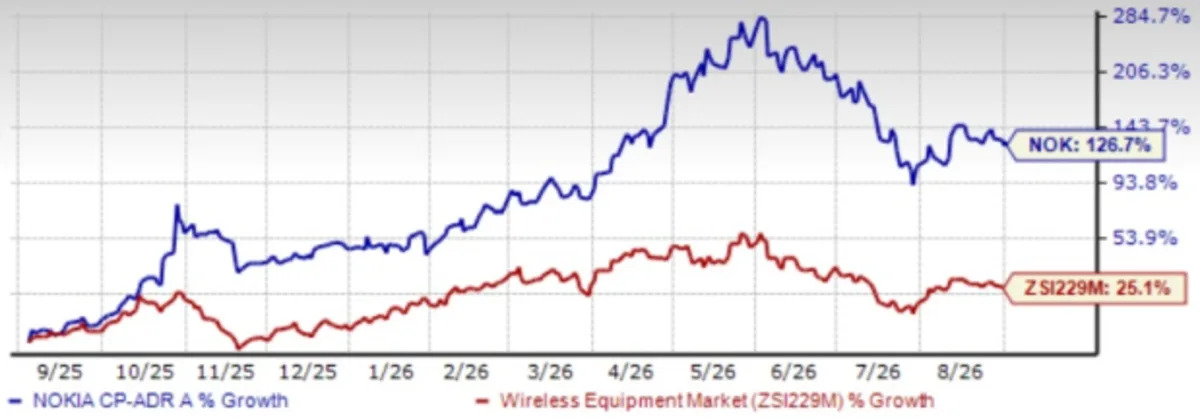
Nokia's shares have risen 126.7% over the past year, and it trades at a forward price-to-sales ratio of 2.27, below the industry's 4.86. The company faces competition from Ericsson and Cisco, which are also expanding their AI strategies.
Ask the AI about this article →
Nokia's investment in a Riyadh R&D center signals a push to strengthen its AI and automation capabilities for telecom networks. The facility will develop software that helps networks become more autonomous, potentially reducing operational costs and energy use for service providers. This move aligns with the broader industry trend toward AI-native 6G research, though the article does not specify a timeline for commercial deployment.
Nokia faces strong competition from Ericsson and Cisco, both actively advancing their AI strategies. Ericsson is focusing on AI-powered RAN solutions and AI-ready infrastructure for 5G and 6G, while Cisco is developing secure AI infrastructure and agentic AI tools, including an expanded Secure AI Factory with NVIDIA. Nokia's stock performance has been strong, rising 126.7% over the past year, and its valuation remains lower than the industry average, which could indicate room for growth or reflect market skepticism.
For business readers, this development highlights Nokia's effort to differentiate through software and AI, potentially creating new revenue streams from "Made in Saudi" solutions. The training programs and certifications mentioned could also build local talent, supporting the country's tech ecosystem. However, the article does not provide specific financial details on the investment or projected returns, so the direct impact on Nokia's growth remains to be seen.
For example, today's edition would include:
AI-summarized, only the topics you pick — one digest a day via Email, Slack, or Discord.
Free · takes 30 seconds · unsubscribe anytimeWhat is AIToday? →
Ask AI anything about this article. Q&As are published on this page for other readers too.
ZeroDrift Inc. today introduced Guard for Agents, a service that converts written company policies into enforc…

Cloud AI capital expenditure continues to exceed market expectations, raising concerns about overheating and a…
Zhen Ding Technology showcased 800G, 1.6T, XPO, and NPO high-end optical transceiver modules, plus ultra-high-…
President Trump sharply rejected the US backlash against AI data centers, writing on Truth Social that communi…

The Pentagon added OpenAI's ChatGPT Mil and xAI's Grok for Government to its AI platform GenAI.mil, which prev…

Amazon Web Services (AWS) has started offering “AWS Cloud Quest 2.0,” a new version of its online game that te…