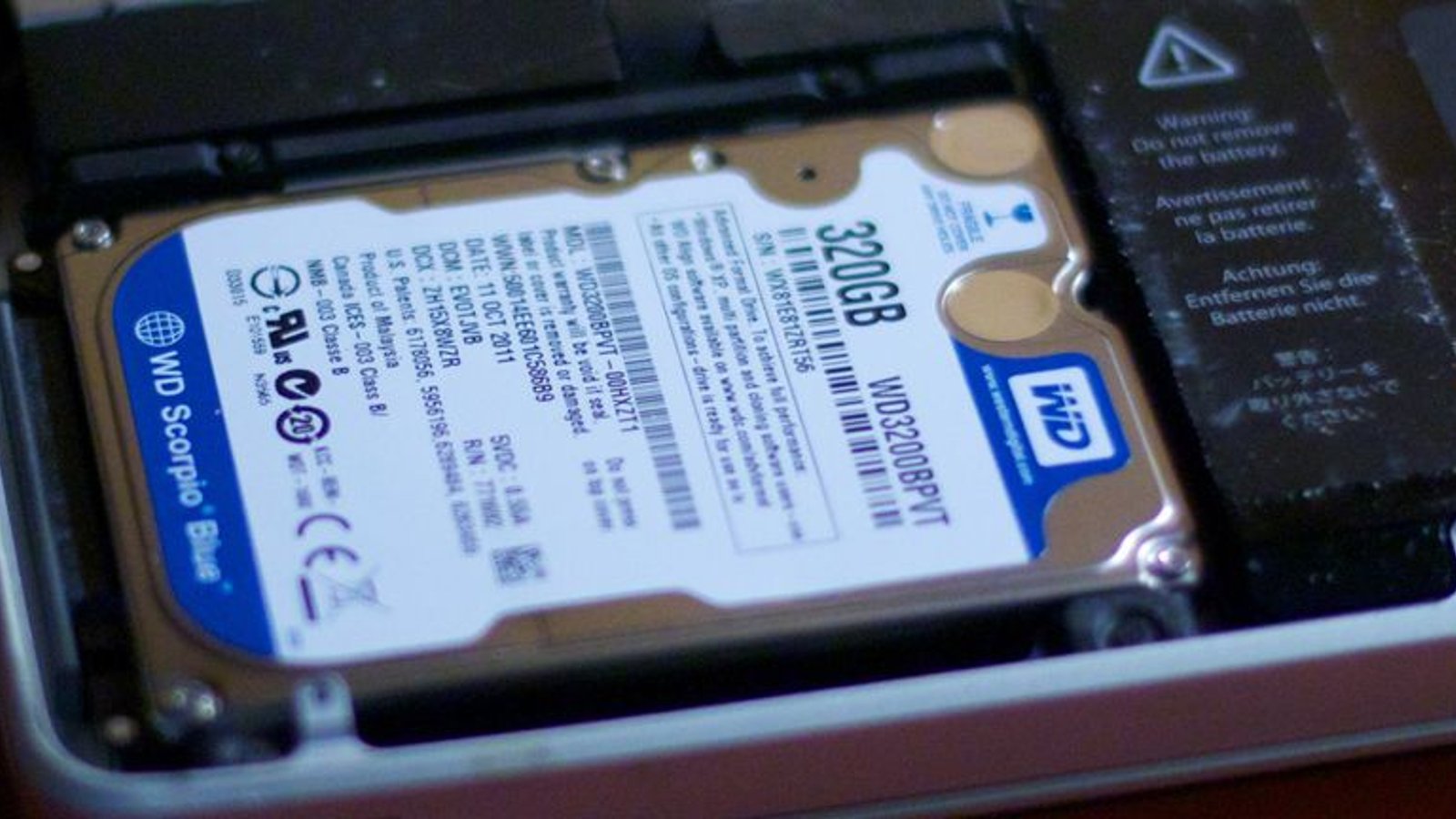
What happened
Western Digital has benefited from strong AI and cloud-driven demand for high-capacity storage and closer collaboration with hyperscalers. The company's narrative projects $32.1 billion revenue and $15.2 billion earnings by 2029.
Why it matters
Nearline and UltraSMR drive adoption remains the key short-term catalyst for the company, while concentration in a few hyperscalers is still the biggest risk. The company has spent about US$2.76 billion to retire 5.09% of shares under its current repurchase program.
What to watch
The bull case hinges on whether AI storage demand can offset hyperscaler concentration, leaving the narrative’s upside undecided against competing bubble warnings. Watch the US$2.76 billion buyback spend versus the 5.09% of shares retired.
Summaries like this, every morning.
The investment case for Western Digital hinges on whether AI and cloud demand for high-capacity drives can offset reliance on a limited number of hyperscale buyers and a softer consumer segment. The latest AI-driven storage momentum and positive analyst sentiment reinforce nearline and UltraSMR adoption as the key short-term catalyst, yet this does not materially change the concentration risk profile.
For investors already convinced of the AI storage growth thesis, the ongoing share repurchase activity could amplify the impact of earnings progress from increased demand. However, competing signals are pulling investor sentiment in different directions, with warnings about a potential AI-stock bubble contrasting with enthusiasm for Western Digital's AI-related storage technologies.
The divergence in analyst projections underscores how differently the same AI-driven news can be interpreted. While the optimistic narrative projects $32.1 billion revenue and $15.2 billion earnings by 2029 yielding a $662.12 fair value, the most pessimistic analysts caution that heavy HDD reliance could weigh on margins, projecting about US$27.6 billion in revenue and roughly US$11.5 billion in earnings by 2029 — a view that suggests the stock might be worth 28% less than its current price.
Pick your industry and the AI tools you use, and get news related to your work every day.
Free · 30 seconds with Google · unsubscribe anytimeWhat is AIToday? →
Ask AI anything about this article. The AI reads this article, earlier AIToday articles, and Wikipedia, and cites its sources. Q&As are published on this page for other readers too.
Anthropic donated the Agent Skills standard (name, logo, GitHub organization, agentskills.io domain) to the Ag…

A powerful OpenAI model was used to uncover two critical flaws in PHP, the programming language that runs a la…

On the Motley Fool podcast, Ray Dalio said an AI bubble could burst relatively soon, citing higher interest ra…
SpaceX reported revenue up 161% with positive EBITA

T-Mobile US completed what Nvidia described as the first AI-RAN call on a live commercial network, unveiled at…
Blackstone's Steve Schwarzman said that a chance encounter led the firm to AI, according to Bloomberg.com