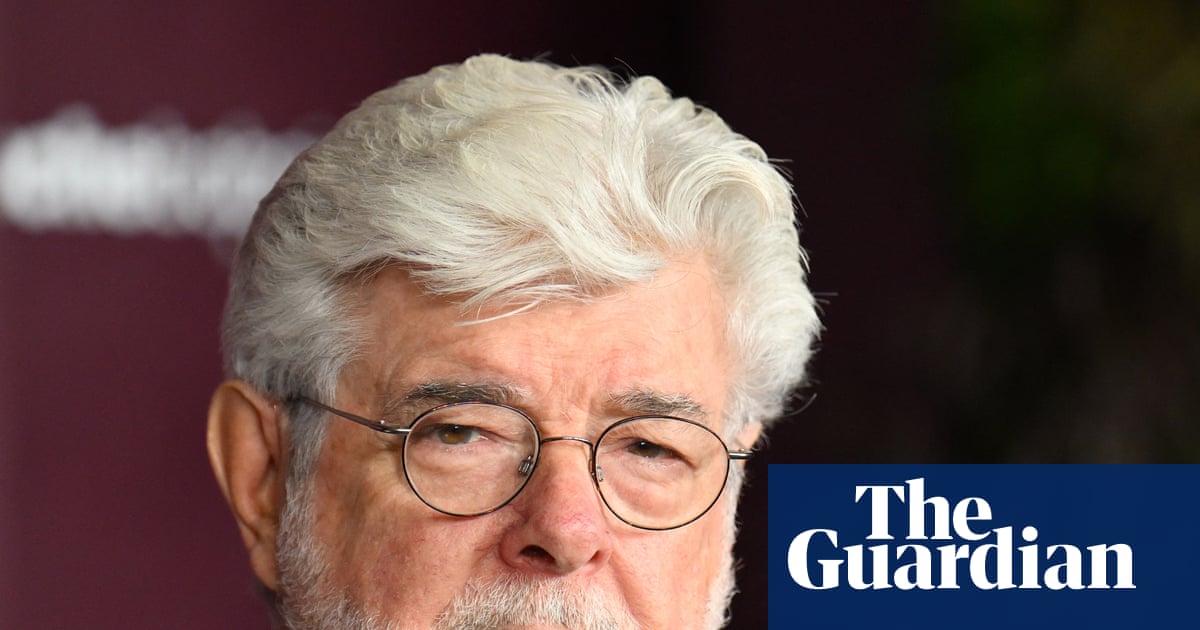
George Lucas has publicly backed the use of AI tools in moviemaking, telling A Rabbit's Foot that artificial intelligence makes filmmaking easier and that resistance to the technology is futile. Lucas's support puts him alongside director Gareth Edwards, though other filmmakers including Christopher Nolan and Steven Soderbergh have expressed skepticism. The divide highlights a gap between industry adoption and public reception, with younger audiences particularly critical of AI-generated content.
Summaries like this, in your inbox every morning.
Sign up free →What happened
George Lucas, 82, told A Rabbit's Foot in an interview that artificial intelligence makes it easier to make movies and that resistance to the technology is inevitable progress. Fellow Star Wars director Gareth Edwards (Rogue One, Jurassic World Rebirth) has also endorsed generative AI as helpful, while Christopher Nolan (The Odyssey) and Steven Soderbergh have expressed skepticism or ambivalence.
Why it matters
Lucas's endorsement adds weight to a divide in Hollywood between filmmakers who see AI as a tool and those who worry about its role in creative decision-making. The debate reflects broader tension over how the industry adopts new technologies—Lucas himself criticized reliance on audience testing and focus groups, suggesting his AI stance reflects a broader philosophy about who should control filmmaking.
What to watch
Lucas compared AI skepticism to rejecting cars in favor of horses and buggies, framing adoption as unstoppable. Nolan has noted that while Wall Street and investors have embraced AI, the public—especially young people—has rejected it, coining the term 'AI slop' to describe AI-generated content.
In an interview with A Rabbit's Foot, George Lucas, now 82, has added his voice to filmmakers embracing artificial intelligence in moviemaking. "Artificial intelligence means it's much easier for us to make movies," Lucas said, dismissing concerns about the technology by comparing them to historical resistance to automobiles. "Resistance to the technology," he explained, "is very much like sitting here saying: 'Well, I believe the horse and the buggy is really where it's at. These cars, they break down, they need gas, there's all kinds of problems with them and pretty soon they'll be making them into tanks, and then they'll be killing people. It's terrible.'" Lucas positioned AI adoption as inevitable and unstoppable: "There's nothing you can do about it. That's progress, it's the future." His stance is shared by Gareth Edwards, the British filmmaker behind Rogue One: A Star Wars Story and the recent Jurassic World Rebirth, who has characterized generative AI as "a fucking genius at helping you." However, Lucas and Edwards are far from speaking for all of Hollywood. Christopher Nolan, director of The Odyssey, has expressed sharp skepticism, noting a stark divide between industry adoption and public sentiment. "I've never seen a technology that's been so successfully adopted by Wall Street and by investors … that the public has so thoroughly rejected," Nolan observed, pointing out that young people in particular have coined the dismissive term "AI slop." Steven Soderbergh, whose documentary John Lennon: The Last Interview incorporates AI-generated sequences, has taken a more measured stance, saying "I don't think it's the solution to everything, and I don't think it's the death of everything. We are in the very early stages. Five years from now, we all may be going: 'That was a fun phase.'" In the same interview, Lucas also reflected on the film industry's reliance on audience testing and focus groups, arguing that they undermine creative control. "I don't like focus groups," he said. "The audience doesn't know what they want to see. If they don't like a character, that's interesting, and as a film-maker I want to find out why. But when the studios hear that, they take the wrong message. They let the audience actually make the movie." This criticism of audience-driven decision-making adds complexity to his AI stance, suggesting his support for the technology reflects a broader philosophy about where creative authority should lie in filmmaking.
George Lucas's comments reflect a widening schism in Hollywood between established filmmakers and their audiences over artificial intelligence. While Lucas frames AI adoption as inevitable progress—a technological step no different from the transition from horse-drawn carriages to automobiles—other prominent directors see cause for concern. Christopher Nolan's observation that investors and Wall Street have embraced AI while the public has rejected it, with younger audiences specifically coining the pejorative term "AI slop," suggests the industry may be moving faster than audiences are comfortable with. Lucas's own criticism of focus groups and audience testing complicates his pro-AI stance: he argues that filmmakers, not audiences, should control creative decisions, yet the public's rejection of AI-generated content suggests audiences do have agency in what they consume. The debate ultimately hinges on whether AI is a neutral tool that empowers creators (as Lucas and Edwards suggest) or a shortcut that dilutes creative integrity (as critics fear).
No discussion yet for this article
Get curated AI news from 200+ sources delivered daily to your inbox. Free to use.
Get Started FreeFree · takes 30 seconds · unsubscribe anytime
1 minute a day. The AI essentials.
200+ sources · Email / LINE / Slack
