Nvidia has launched a backstop program in which it guarantees minimum revenue on GPU clusters rented by infrastructure companies, removing a key financing barrier that has so far confined large compute deployments to hyperscalers and big AI labs.
The move addresses what analysts now see as the main constraint on AI compute growth: not chip supply or datacenter space, but access to financing.
By stepping in as a revenue guarantor and sharing upside, Nvidia aims to broaden compute availability to smaller companies and enable rental contracts of varying lengths, particularly short-term deals under one year that startups and inference providers currently cannot access under today's lending model.
What happened
Nvidia has launched a program providing take-or-pay commitments to companies building AI clusters (Neoclouds), guaranteeing minimum revenue on GPU capacity in exchange for sharing revenue above that level. The move addresses a financing bottleneck: lenders currently require either a hyperscaler offtake contract or an investment-grade company backing before they will fund GPU clusters.
Why it matters
AI infrastructure financing is projected to reach ~$7.1T in outstanding debt by 2029, making it the second-largest asset-backed debt market after US mortgage-backed securities at just over $13T. Today, most lending follows a narrow template: 5-year contracts backed by hyperscalers. By backstopping deals directly, Nvidia removes a gating constraint that has forced smaller AI companies (startups, inference providers) to accept longer contract terms or prepayment requirements they do not want. This potentially unlocks compute access beyond the handful of large hyperscalers and labs that currently dominate the market.
What to watch
The program aims to broaden contract terms—particularly enabling rentals shorter than one year—and to help lenders evolve their risk models beyond the hyperscaler-backstop template. Cumulative AI capex from 2024 to 2029 is forecast to reach ~$11.1T, with credit markets as the main funding source; how successfully Nvidia's backstop catalyzes non-hyperscaler lending will shape whether that capital can flow to a wider set of compute buyers.
Ask the AI about this article →
Until recently, AI infrastructure financing has been constrained by a narrow template: hyperscalers (large cloud providers like Google, Meta, Microsoft, Oracle) and large AI labs provided long-term offtake contracts—usually 5 years—that gave lenders enough confidence to finance GPU clusters. By mid-2026, supply-side bottlenecks have shifted: datacenter capacity improved, then chip production became the constraint, and now financing itself is emerging as the most significant obstacle to scaling compute broadly.
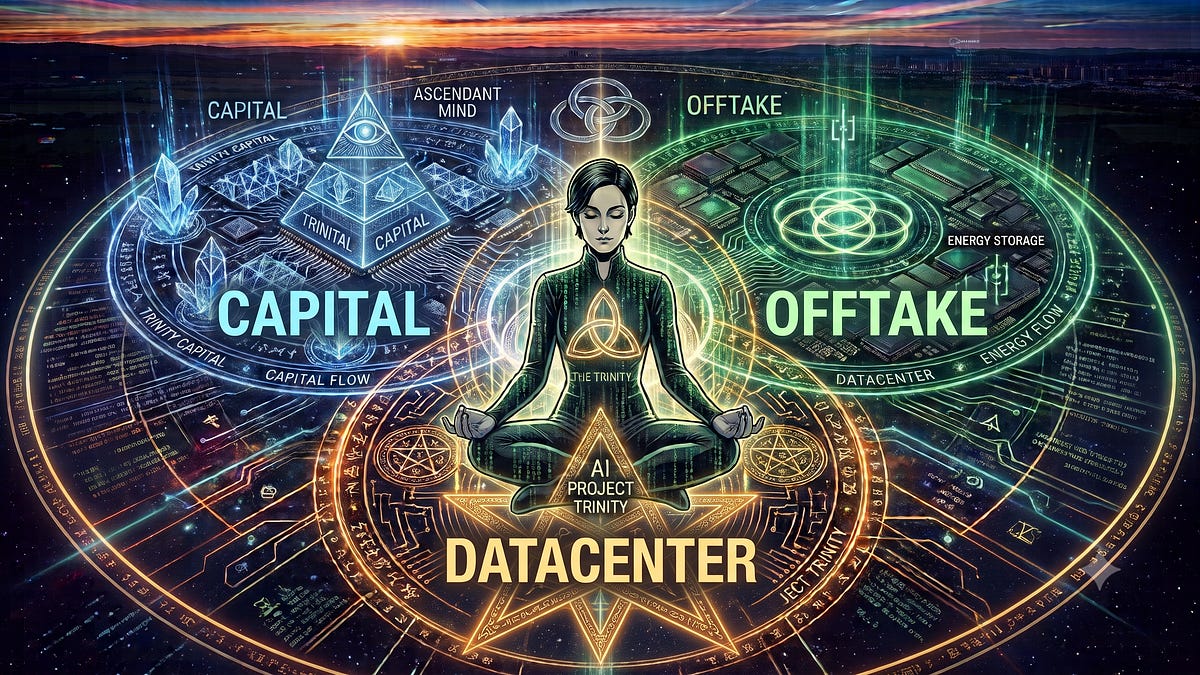
Nvidia's backstop program directly addresses this structural problem. The current market serves a tiny slice of buyers because Neoclouds have so much demand they can extract full prepayment on 5-year deals, achieving theoretically infinite returns with zero cash outlay. Smaller players—VC-backed AI startups and inference providers—are forced to either accept those unfavorable terms, wait months for availability, or use GPUs they do not prefer. The program opens three paths: (1) it gives lenders confidence to finance deals outside the hyperscaler-offtake template, (2) it enables Neoclouds to offer shorter-term rentals (1-year and below) that startups need to reach funding milestones, and (3) it shifts Nvidia's role from pure hardware vendor to market infrastructure provider, directly solving for the "AI Project Trinity"—capital, offtake, and datacenter—that has until now required either luck, clever deal structuring, or private equity matchmaking to assemble.
The stakes are material: cumulative AI capex from 2024 to 2029 is forecast at ~$11.1T, with credit markets as the dominant funding source. Whether Nvidia's backstop catalyzes a broader lending ecosystem—banks, private credit, insurance, pension funds—or remains a narrow carve-out will determine whether that capital disperses to a competitive market of compute providers or remains concentrated among a handful of incumbents.
For example, today's edition would include:
AI-summarized, only the topics you pick — one digest a day via Email, Slack, or Discord.
Free · takes 30 seconds · unsubscribe anytimeWhat is AIToday? →
Ask AI anything about this article. Q&As are published on this page for other readers too.
Phonely Ltd. launched Alma, a large language AI model built for voice agents and trained on over 10 million re…

Aranya Inc., a startup founded last year, launched today with $11 million in funding

CBTS Technology Solutions LLC launched Forge Agents, a platform that turns a plain-language job description in…

Imec CEO Patrick Vandenameele said at SEMICON Taiwan 2026 that the Belgian research center is broadening its c…
Alphabet's AI Overviews now reach over 2.5 billion monthly users through Google Search, and its ad business ge…
Sarah O’Connor's book 'We Are Not Machines' explores how mechanization and AI have transformed the workforce…