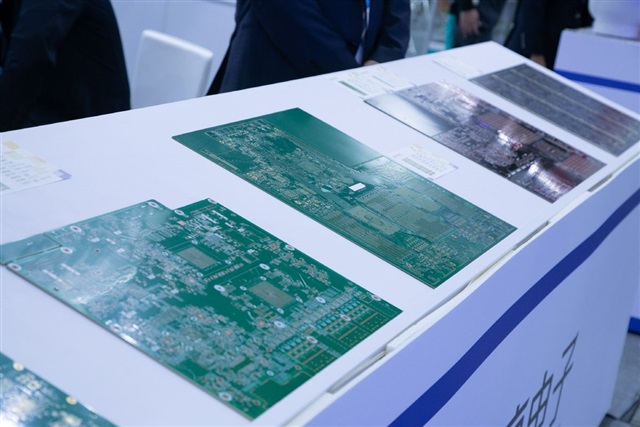
Southeast Asia is undergoing a structural shift in its electronics industry as AI infrastructure investment drives demand for servers, networking equipment, and satellite communications. Thailand, Vietnam, and Malaysia are beginning to move beyond assembling consumer devices and are building deeper manufacturing and supply-chain capabilities in semiconductors and advanced components—a transition that could reshape the region's economic role in the global tech supply chain.
Summaries like this, in your inbox every morning.
Sign up free →What happened
Rising investment in AI servers, high-speed networking, and satellite communications is accelerating a shift in Southeast Asia's electronics industry, with Thailand, Vietnam, and Malaysia moving beyond traditional consumer device assembly.
Why it matters
The region is building deeper infrastructure for semiconductors and advanced manufacturing, which could establish it as a critical hub for AI hardware rather than just a contract assembler for consumer products.
What to watch
How quickly these countries scale production capacity and whether they can attract the specialized talent and investment needed to compete in high-margin AI infrastructure components.
Southeast Asia's electronics manufacturing sector is undergoing a structural transformation driven by global investment in AI infrastructure. Rising capital spending on AI servers, high-speed networking equipment, and satellite communications systems is pulling the region away from its long-established role as an assembly hub for consumer electronics and toward deeper participation in advanced semiconductor and infrastructure manufacturing. Thailand, Vietnam, and Malaysia are the primary countries at the center of this shift. Traditionally, these economies have hosted contract manufacturers who assemble finished devices—phones, tablets, laptops—designed and partially manufactured elsewhere. That business model, while providing employment and foreign exchange, captures relatively low margins and keeps the region dependent on orders from large Western and Asian technology companies. The new AI-driven investment pattern is different in kind: it directs capital toward components and subsystems with higher technical barriers to entry, longer product lifespans, and more stable demand from data centers and communications infrastructure operators. The article frames this as an opportunity for the region to build "deeper" manufacturing capabilities, suggesting that investment is extending beyond assembly into design, testing, packaging, and supply-chain integration. Success in this transition will depend on whether Thailand, Vietnam, and Malaysia can attract specialized engineering talent, secure long-term partnerships with global AI and networking companies, and invest in the equipment and facilities required for advanced production. The timing aligns with global efforts to diversify semiconductor supply chains away from concentration in Taiwan and East Asia, creating a window for Southeast Asian countries to become strategic partners rather than interchangeable suppliers.
Southeast Asia's electronics industry has historically been defined by contract manufacturing of consumer devices—smartphones, laptops, and peripherals assembled for global brands. The article signals a departure from this model, with capital flowing toward infrastructure components tied to AI deployment. AI servers and high-speed networking are capital-intensive, margin-rich products that require different supply chains, design partnerships, and technical expertise than consumer assembly. Thailand, Vietnam, and Malaysia are in position to capture this opportunity because of existing manufacturing bases and labor availability, but success depends on whether they can upgrade their technical workforce and attract investment from chip designers and systems integrators who currently anchor supply chains in Taiwan, South Korea, and Japan. The shift is not instantaneous—the region is described as "moving" and "building," which suggests a multi-year transition. If realized, it would mark a significant upgrade in the region's position within global semiconductor and hardware supply chains.
AI-summarized, only the topics you pick — one digest a day via Email, Slack, or Discord.
Free · takes 30 seconds · unsubscribe anytime
No discussion yet for this article
Get curated AI news from 200+ sources delivered daily to your inbox. Free to use.
Get Started FreeFree · takes 30 seconds · unsubscribe anytime
1 minute a day. The AI essentials.
200+ sources · Email / LINE / Slack
