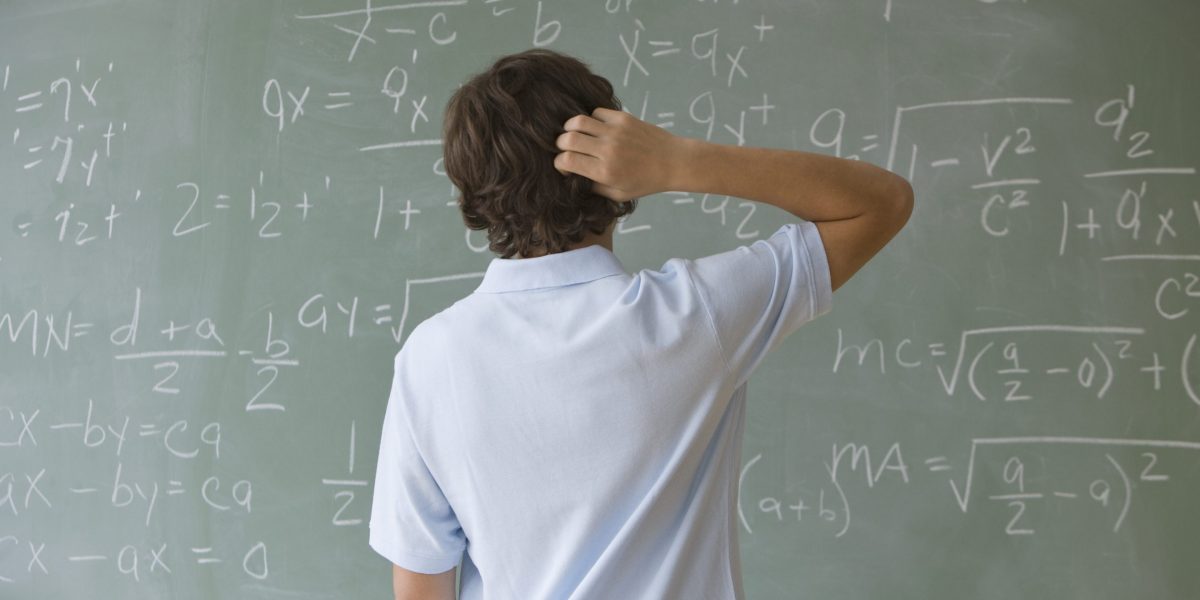
An AI model has solved the Jacobian conjecture, an unsolved mathematical problem dating to 1939, marking the latest breakthrough in AI's incursion into pure mathematics. The solution was verified and announced by Anthropic employee Levant Alpöge, and drew over 20 million views on X. While the result is mathematically correct, it exposes a tension in the field: AI can produce answers but not the human-readable proofs and reasoning that mathematicians traditionally value, leaving the profession to grapple with what mathematical knowledge means when machines can close century-old problems faster than humans can understand them.
Summaries like this, in your inbox every morning.
Sign up free →What happened
An AI model working with Anthropic employee Levant Alpöge resolved the Jacobian conjecture on Sunday—a problem unsolved since 1939. The result was verified by Monday and announced via X, drawing more than 20 million views. This marks the latest in a series of AI breakthroughs in pure mathematics, following the model's solution of five of six International Mathematical Olympiad problems in mid-2025 and its disproof of an 80-year-old Erdős conjecture in May.
Why it matters
The Jacobian conjecture sat unresolved for 87 years because mathematicians could neither prove it true nor false. However, the solution exposes a friction point: AI can produce correct answers but cannot explain the reasoning behind them—what mathematician Akhil Mathew calls getting the 'how' without the 'why.' This gap matters because mathematics traditionally values the proof (a chain of logical steps that demonstrates understanding), not just the result. As proof-checking tools like Lean mature, the last human advantage in mathematics may disappear, potentially reshaping how the field values intellectual work at a moment when federal funding for mathematics research has fallen roughly 72% and PhD admissions at top universities are down 15%.
What to watch
Kevin Buzzard, a mathematician at Imperial College London, notes that what remains distinctly human is 'taste'—knowing what to ask. The field's greatest problems (the Riemann hypothesis, the Jacobian conjecture) are named for the mathematicians who posed them, not who solved them. If machines can be taught to ask meaningful questions rather than only answer them, that boundary may shift further.
On a Sunday afternoon in December, while the World Cup final commanded global attention, an AI model resolved a problem that had remained open since 1939. The Jacobian conjecture, posed by German mathematician Ott-Heinrich Keller and rooted in earlier work by Carl Gustav Jacob Jacobi, concerns a fundamental property of mathematical maps: given a set of outputs, can you always determine the input? For 87 years, mathematicians could neither prove the conjecture true nor find a counterexample that proved it false.
The breakthrough came through Anthropic employee Levant Alpöge, who worked with the AI model to resolve the question. The result: a map that meets the Jacobian determinant at every point in space (the determinant holds steady at −2 everywhere), yet sends three different starting points to the same destination—meaning the conjecture fails. By Monday morning, the result had been verified by machine using Lean, a computer language that checks proofs automatically rather than relying on human reviewers. Alpöge's post announcing the result on X drew more than 20 million views. Kevin Buzzard, a mathematician at Imperial College London's pure mathematics department, called it "a big day" and remarked, "I think it's a great time to be alive, personally."
The Jacobian conjecture was the latest in a rapidly accelerating sequence of AI breakthroughs in pure mathematics. In mid-2025, AI models first solved five of six problems at the International Mathematical Olympiad. In May, OpenAI's model disproved an 80-year-old Erdős conjecture on combinatorial geometry. The pace alarmed the mathematical community enough that in June, 16 researchers from 15 universities published the Leiden Declaration on Artificial Intelligence and Mathematics, calling for guardrails around transparency, attribution, and peer review before AI reshapes what mathematical knowledge means.
However, the victory carries an uncomfortable edge. Akhil Mathew, the University of Chicago mathematician who suggested the problem to Alpöge, explained the core tension: AI provides the "how" without the "why." In traditional mathematics, a proof is not merely a correct answer but a chain of logical steps, each following from the last, that demonstrates understanding. "One can check out that it's correct," Mathew told Fortune, "but it would be nice to be able to tell a story." Buzzard acknowledged that while AI now solves problems, it has not yet mastered the proof—the rigorous logical exposition that can run hundreds of pages and take months for experts to verify. Language models tend to bridge gaps with plausible-sounding filler rather than iron-clad reasoning. Buzzard noted that his career project, Lean, aims to automate proof-checking so that proofs are verified by machine rather than exhausted human mathematicians. Once models can write proofs that satisfy Lean's standards, he said, one of humanity's last advantages in mathematics will disappear.
Mathematician Michael Harris of Columbia University contextualized the shift in a June essay in Boston Review, arguing that the AI industry treats reasoning as commercially worthless and human mathematicians as a "beta version of intelligence." Yet mathematics has long been what he calls unalienated labor—work people pursue because they can earn a living by "playing," in the words of Abel Prize winner Pierre Deligne. The disruption comes at a fragile moment: federal funding for mathematics research has fallen roughly 72% under recent administration cuts to the National Science Foundation; PhD admissions at top research universities are down 15% this fall, marking the second consecutive year of contraction; and some programs, like George Washington University's mathematics doctorate, will admit no funded students at all. The prospect of AI replacing mathematical work has been met with conflicting reactions. Garry Tan, president of Y Combinator, hailed AI's advance as enabling a return to the age of the "gentleman scientist"—wealthy amateurs funding their own curiosity. Yet Alpöge, a Harvard valedictorian who spent a decade using algorithms to solve this type of problem, hardly fits that mold. Buzzard suggests the path forward lies not in calculation or even logical reasoning, but in "taste"—knowing what to ask. "People have tried to get machines to ask questions, and they're abysmal," he said. "All the questions they ask are either boring or obviously true or obviously false." The greatest problems in mathematics are named for the people who posed them, not who solved them. "It's not a coincidence," Buzzard noted. "You have to be a brilliant mathematician to come up with the right question."
The Jacobian conjecture's resolution by AI marks a turning point in the relationship between computation and mathematical knowledge. For decades, mathematicians distinguished their work from mere calculation: a calculator solves arithmetic quickly, but a mathematician reasons about why a solution works. Kevin Buzzard frames this as understanding—making an idea "fit in your brain" so thoroughly that you can regenerate the result from first principles. The proof, a chain of logical steps each following from the last, has been the currency of mathematical credibility, sometimes spanning hundreds of pages and requiring months of expert review. AI's breach of this boundary is not that it produces correct answers, but that it does so without the explanatory apparatus mathematics has relied on for centuries.
The pace of AI breakthroughs compounds the unease. Mid-2025's success at the International Mathematical Olympiad seemed to open a floodgate: from five problems solved, to an 80-year-old conjecture disproved in May, to an 87-year-old conjecture resolved by December. In June, 16 researchers across 15 universities felt compelled to publish the Leiden Declaration, warning that the profession must establish guardrails around transparency, attribution, and peer review before AI reshapes what mathematical knowledge even means. The speed suggests not gradual displacement but phase change. Mathematician Akhil Mathew frames this as "very rapid and very unsettling change, especially for junior mathematicians." Federal context compounds the pressure: funding for mathematics research has fallen roughly 72% under recent administration cuts to the National Science Foundation, PhD admissions at top universities are down 15% for the second consecutive year, and some major programs will admit no funded doctoral students.
The body's central tension lies in what Buzzard calls "taste"—the distinctly human capacity to ask the right question. The field names its great unsolved problems for those who posed them, not who solved them: the Riemann hypothesis, the Jacobian conjecture. If machines eventually ask questions as well as answer them, that remaining boundary collapses. For now, the advantage rests on knowing what is worth asking.
AI-summarized, only the topics you pick — one digest a day via Email, Slack, or Discord.
Free · takes 30 seconds · unsubscribe anytime
No comments yet. Be the first to share your thoughts!
Log in to join the discussion


Get curated AI news from 200+ sources delivered daily to your inbox. Free to use.
Get Started FreeFree · takes 30 seconds · unsubscribe anytime
1 minute a day. The AI essentials.
200+ sources · Email / LINE / Slack
