Memory chip manufacturers are shifting production away from smartphone components toward specialized AI chips, which are far more profitable. This supply crunch has raised handset prices sharply in India, causing smartphone shipments to fall 10% year-over-year in the second quarter—the steepest June-quarter decline in six years. India's market, where about 60% of sales are in budget segments under $210, has been hit harder than China, and memory shortages are expected to persist through at least the end of 2027.
Summaries like this, in your inbox every morning.
Sign up free →What happened
India's smartphone shipments fell 10% year-over-year in the April–June quarter, the steepest June-quarter decline in six years, as memory chip manufacturers shift production capacity to high-bandwidth memory for AI data centers, raising costs for consumer devices.
Why it matters
India is the world's second-largest smartphone market by shipments and home to over 700 million smartphone users, making it a bellwether for price-sensitive markets globally. About 60% of India's smartphone market is in the sub-₹20,000 (under $210) segment, where higher memory costs have had the biggest impact on prices. Consumers are expected to delay upgrades from roughly 3.5 years to around four years, and shipments in the sub-₹15,000 (under $150) segment fell 45% year-over-year.
What to watch
Memory shortages and elevated smartphone prices are likely to persist until at least the end of 2027, according to IDC research director Kiranjeet Kaur. Samsung posted 2% shipment growth in India in Q2—the only major brand to do so—while Apple saw a 3% decline. OnePlus this week said it would stop launching new products in Europe and North America while maintaining its India business, signaling a strategic shift among budget-focused brands as margins tighten.
Memory chip manufacturers including Samsung, SK Hynix, and Micron have been redirecting production capacity toward high-bandwidth memory—the specialized chips used in AI accelerators—because these components deliver much higher profit per wafer than the standard RAM and storage components used in smartphones and laptops. This reallocation has left less capacity available for consumer electronics and driven up costs, with consequences now rippling through India's smartphone market.
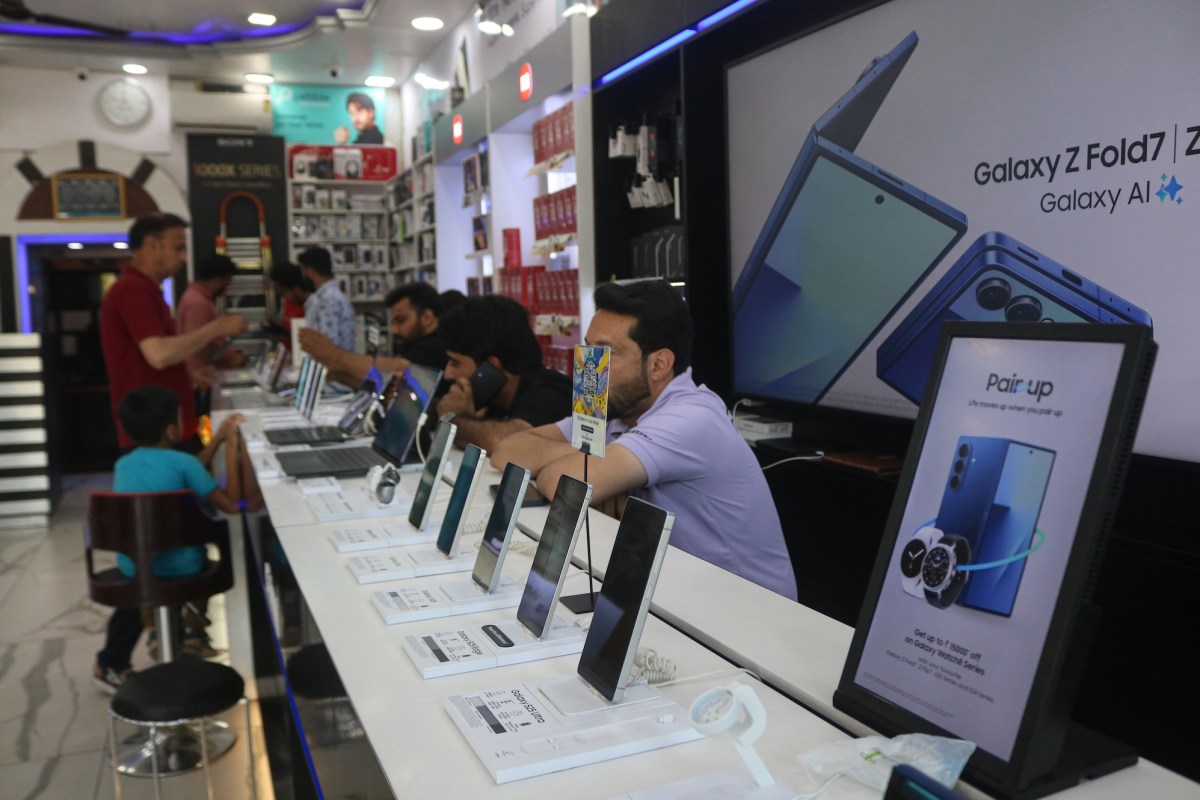
India, the world's second-largest smartphone market by shipments after China, saw shipments fall 10% year-over-year in the April–June quarter, marking the steepest June-quarter decline in six years, according to market research firm Counterpoint Research. The decline reflects rising handset prices driven by memory cost increases. The impact has been more pronounced in India than in China, where smartphone shipments fell just 2% in Q2. Tarun Pathak, Counterpoint's vice president of research, explained that India has been hit harder because about 60% of its smartphone market is concentrated in the sub-₹20,000 (under $210) segment, where higher memory costs have had the biggest impact on prices.
India's scale and demographics make it a crucial market to watch. The South Asian nation is home to more than 1.4 billion people and over 700 million smartphone users, making it a bellwether for consumer demand in price-sensitive markets. Device makers, chip suppliers, and investors tracking the broader health of the AI supply chain are closely monitoring shifts in buying patterns there. However, Pathak told TechCrunch that consumers are unlikely to abandon smartphones altogether. Instead, many are expected to delay upgrades, stretching replacement cycles to around four years from about 3.5 years previously. Premium brands such as Apple and Samsung remain better insulated from the slowdown, with consumers buying higher-end devices proving less sensitive to price increases, aided by financing options.
The pain has been most acute at the lower end of the market. Shipments in the sub-₹15,000 (under $150) segment fell 45% from a year earlier, according to Counterpoint. Chinese brands, which are heavily exposed to entry- and mid-tier smartphones, have seen their combined market share fall to its lowest level for a second calendar quarter since 2020. Samsung, by contrast, was the only major smartphone brand to post shipment growth in India in Q2, with volumes rising 2% year-over-year. Apple saw shipments fall 3%, though that decline largely reflected supply constraints and inventory shortages limiting iPhone deliveries.
The tougher economics are prompting strategic shifts among manufacturers. This week, Chinese smartphone brand OnePlus announced it would stop launching new products in Europe and North America while maintaining its India business, following what it described as a careful assessment. Counterpoint data showed China accounted for 74% of OnePlus' global smartphone shipments to distributors and retailers in Q1, up from 59% a year earlier, while India's share fell to 19% from 30%. Pathak noted that running several sub-brands only makes sense if each one sells enough volume to cover shared costs, and that math stops working once margins get this thin. "Sub-brands normally have overlaps and shared resources, and you need a minimum base to justify the cut-throat margins. Profitability is the key to deciding market operations," he said.
Smartphone prices in India have risen by between 4% and 68%, depending on the model, according to Pathak. As prices rise, consumers are either moving to higher-priced devices, delaying upgrades, or turning to the secondhand market. Kiranjeet Kaur, associate research director for mobile phones research at IDC, said financing has meanwhile become "central to affordability." She added that brands and retailers were also building inventory ahead of the festive season to lock in lower costs before further increases in component prices. IDC expects India's smartphone shipments to decline by double digits in Q2, a steeper fall than the 4.1% decline in the first quarter and the 5.3% drop in the previous quarter, though Kaur noted the firm's estimates were not yet finalized.
Kaur told TechCrunch that memory shortages and elevated smartphone prices were likely to persist until at least the end of 2027, although the pace of price increases should moderate as consumers gradually adjust to higher prices becoming the new normal. She also highlighted a compounding factor: "For Indian consumers, it is a double whammy as the weaker currency makes imports costlier, which has added to margin pressures for the market players, and they are passing on the cost to the consumer."
The memory chip shortage affecting India's smartphone market is the direct result of semiconductor manufacturers prioritizing AI infrastructure over consumer electronics. Samsung, SK Hynix, and Micron have been shifting production capacity toward high-bandwidth memory—the specialized chips used in AI accelerators—because they generate far higher profit per wafer than standard memory used in phones and laptops. This supply reallocation was flagged by analysts months ago, but India is now providing the clearest real-world evidence that the disruption has arrived.
The impact is unevenly distributed across the market. Budget-segment phones, which account for roughly 60% of India's market, have been hit hardest because memory cost increases represent a much larger share of the final price. Shipments in the sub-₹15,000 (under $150) segment fell 45% year-over-year, while consumers in higher-income brackets have remained more resilient—helped by financing options that make expensive devices affordable. This divide is reshaping competitive dynamics: Samsung gained 2% market share growth in Q2, while brands like OnePlus, which depend heavily on entry- and mid-tier volumes, are retreating from lower-margin regions like Europe and North America to focus on India and China, where they can still operate profitably.
For Indian consumers, the squeeze has multiple dimensions. A weaker currency makes imports costlier on top of rising component prices, compressing margins for device makers who are passing the cost to buyers. Consumers are responding by delaying upgrades (stretching replacement cycles from about 3.5 years to around four years), moving to higher-priced devices, or turning to the secondhand market. Financing has become essential to affordability, and brands and retailers are building inventory ahead of the festive season to lock in lower costs before further price increases.
AI-summarized, only the topics you pick — one digest a day via Email, Slack, or Discord.
Free · takes 30 seconds · unsubscribe anytime
No discussion yet for this article
Get curated AI news from 200+ sources delivered daily to your inbox. Free to use.
Get Started FreeFree · takes 30 seconds · unsubscribe anytime
1 minute a day. The AI essentials.
200+ sources · Email / LINE / Slack