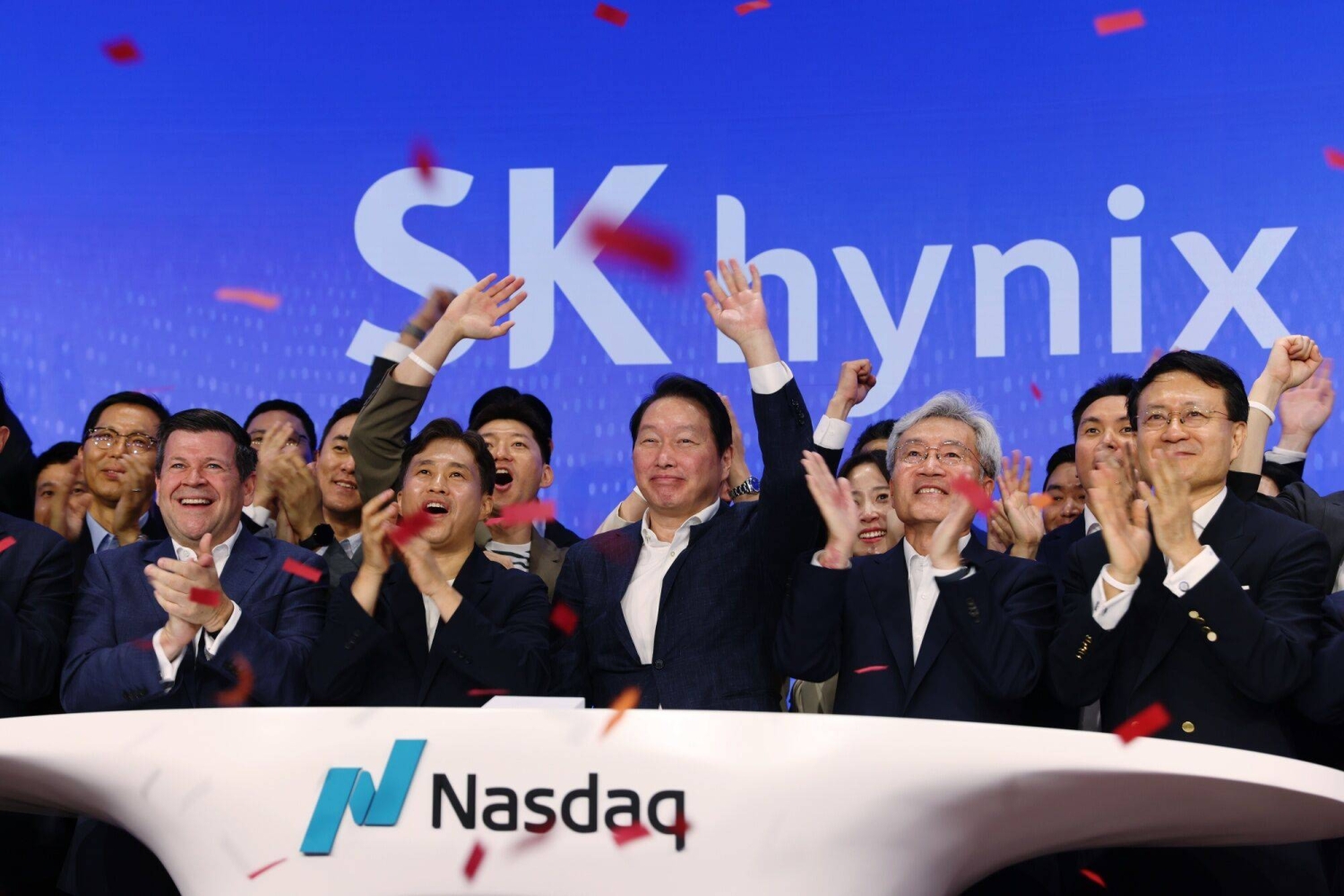
SK Hynix raised $26.5 billion(約4.2兆円) in the largest foreign company IPO in U.S. history, with shares jumping 13% on day one.
The company is wagering that artificial intelligence demand has fundamentally broken the memory-chip industry's traditional boom-and-bust cycle, which has plagued the sector for decades.
Persistent supply shortages from the ChatGPT era are already raising prices across consumer electronics, and SK Hynix plans to use much of the capital for manufacturing expansion—a move the industry had long resisted.
What happened
South Korean memory chipmaker SK Hynix completed the largest public listing by a foreign company in U.S. market history, raising $26.5 billion(約4.2兆円) through an American depositary receipt offering. Shares rose 13% on their first day of trading.
Why it matters
The company is betting that AI demand has permanently ended the memory-chip industry's decades-long boom-and-bust cycle. SK Hynix CEO Kwak Noh-Jung stated that "things have clearly changed," pointing to persistent memory supply shortages triggered by the ChatGPT era that are raising prices across consumer products like iPads and Xbox consoles. Much of the capital will fund chip manufacturing expansion—a move the industry had resisted for years after previous supply gluts.
What to watch
The scale of SK Hynix's bet signals confidence that AI-driven demand will sustain high chip utilization, breaking a pattern that has historically burned the memory industry during downturns.
Ask the AI about this article →
SK Hynix's record-breaking IPO reflects a fundamental shift in how the memory-chip industry views its future. Historically, the sector has cycled between periods of oversupply and undersupply, forcing chipmakers to alternate between aggressive capacity expansion and painful contractions. The company's decision to deploy most of its $26.5 billion(約4.2兆円) capital raise into manufacturing expansion is notable precisely because the industry had resisted such moves after being burned by past gluts. CEO Kwak Noh-Jung's statement that "things have clearly changed" signals that leadership believes AI demand has moved from cyclical uptick to structural shift.
The body of evidence supporting this thesis, as presented in the article, centers on the persistence of memory shortages since the ChatGPT era began. Unlike prior supply-demand imbalances that resolved relatively quickly, these shortages are described as sufficiently pervasive to ripple through entire supply chains and drive up consumer prices for devices like iPads and gaming consoles. This sustained pricing pressure suggests demand is outpacing capacity in a way that may indeed differ from previous cycles. Whether SK Hynix's bet pays off—whether AI demand truly will remain robust enough to keep utilization high and prevent the downturns that have historically plagued the industry—will become clear only over time, but the company's willingness to commit this scale of capital signals confidence in that outcome.
For example, today's edition would include:
AI-summarized, only the topics you pick — one digest a day via Email, Slack, or Discord.
Free · takes 30 seconds · unsubscribe anytimeWhat is AIToday? →
Ask AI anything about this article. Q&As are published on this page for other readers too.

