What happened
Anthropic's Claude Fable 5 was tested running autonomous tasks (writing SQL, pulling database records, issuing refunds) without human intervention between steps. When deployed into Retool, the same agent automatically gained access controls (company SSO, role checks on refunds) and audit logging that the model could not provide on its own.
Why it matters
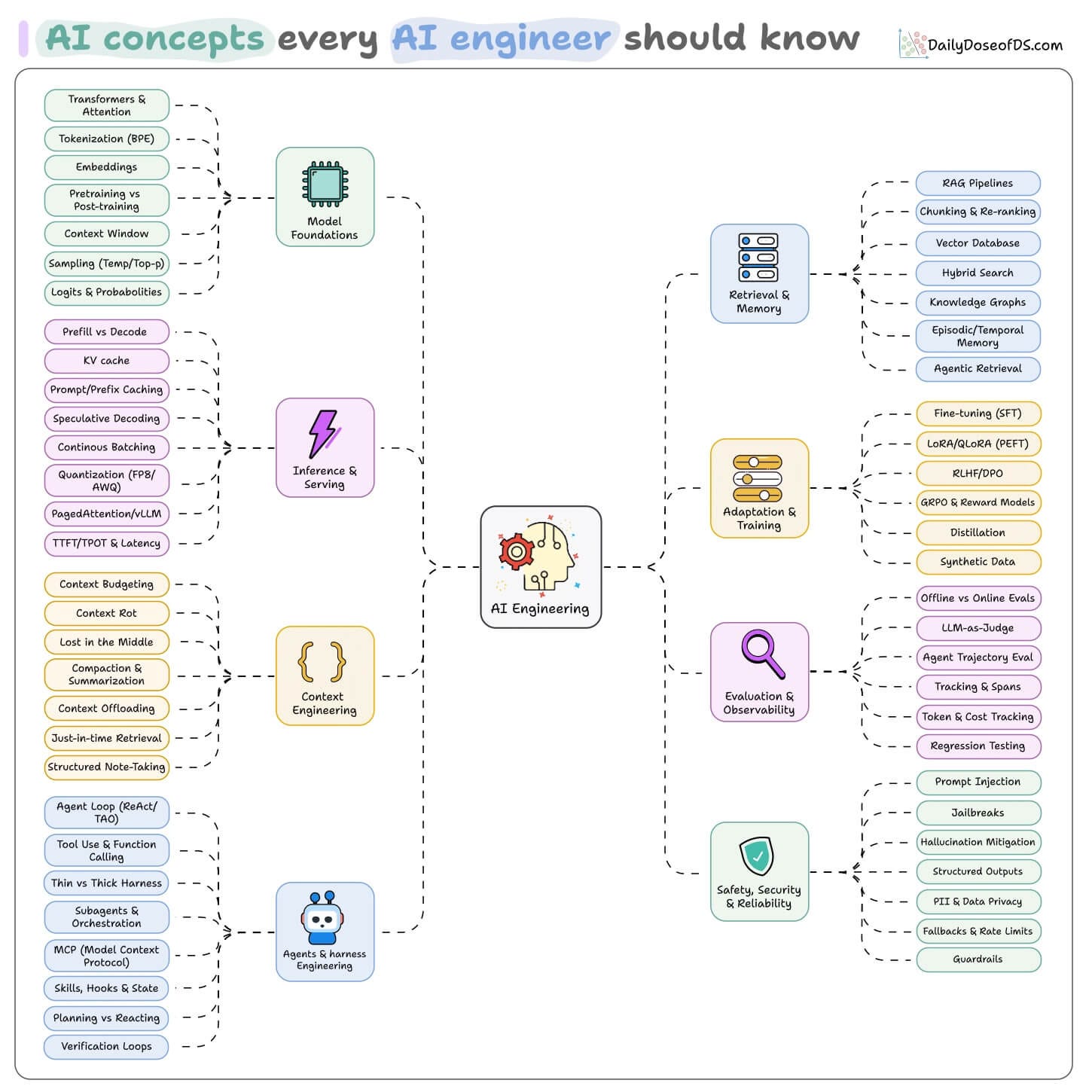
A production AI system requires eight layers of engineering beyond the model weights — from how tokens are served and cached, to retrieval and memory, to safety guardrails and observability. The model is a fixed input; what differs is the infrastructure wrapped around it. Two teams building on the same base model can ship completely different products depending on their platform layer.
What to watch
The article maps all eight layers (model foundations, inference and serving, context engineering, agents and harness, retrieval and memory, adaptation and training, evaluation and observability, safety and security). The critical insight is that autonomous agents running in production require thick control layers in code — company SSO, role checks, audit logs — not just model-level safeguards.
Summaries like this, in your inbox every morning.
Pick your industry and the AI tools you use, and get news related to your work every day.
Free · 30 seconds with Google · unsubscribe anytimeWhat is AIToday? →
Ask AI anything about this article. The AI reads this article, earlier AIToday articles, and Wikipedia, and cites its sources. Q&As are published on this page for other readers too.

