AIToday

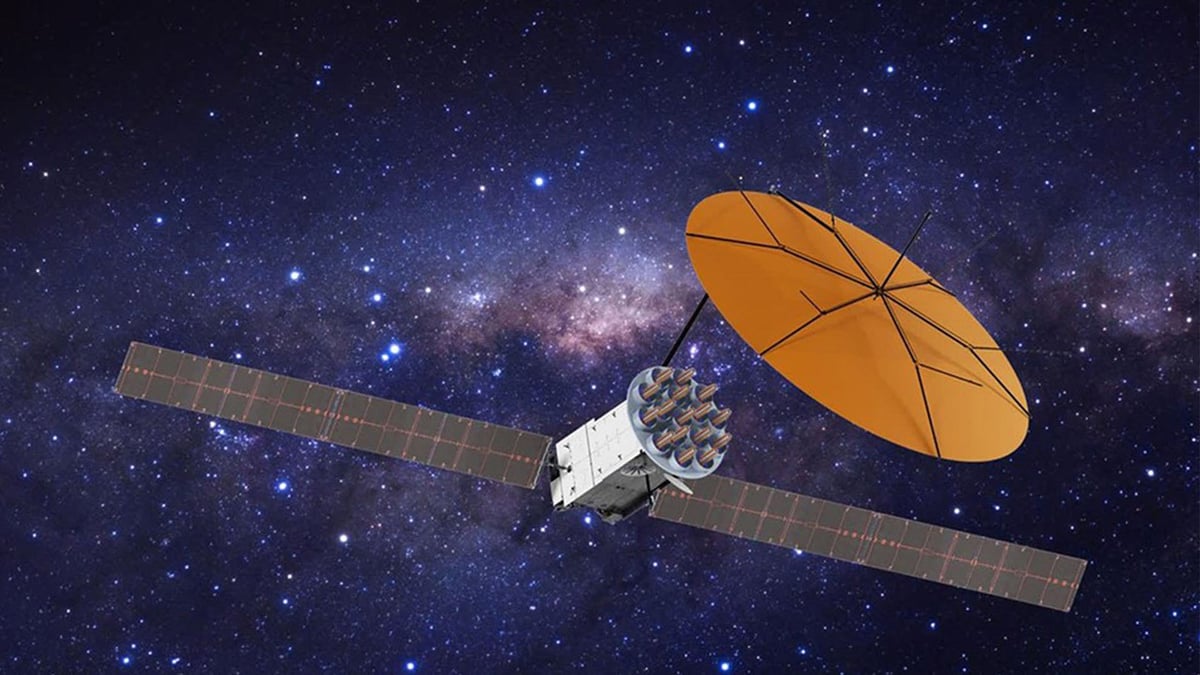
U.S. Air Force orders $2 billion(約3200億円) in large Boeing satellites, bucking small-sat trend

Yahoo Finance AI14h ago
U.S. Air Force orders $2 billion(約3200億円) in large Boeing satellites, bucking small-sat trend

Key takeaway

The U.S. Air Force ordered Boeing to build two large satellites for $2 billion(約3200億円), a striking exception to the global shift toward small-satellite constellations led by Amazon, Blue Origin, and SpaceX. The decision, however, reflects the Pentagon's need to sustain an aging military communications system (MUOS) rather than a broad preference for large satellites; future defense projects may still favor the smaller, cheaper, more resilient approach gaining ground elsewhere.

Summaries like this, in your inbox every morning.

Sign up free →

3 Key Points

  • What happened

    The U.S. Air Force awarded Boeing $2 billion(約3200億円) to build two large Mobile User Objective System (MUOS) satellites, expected to remain in service through 2035, even as Amazon, Blue Origin, and SpaceX build thousands of small satellites for broadband and communications.

  • Why it matters

    The order signals that despite industry momentum toward small satellites—which are cheaper, easier to iterate, and more resilient to attack—large satellites still serve specific military needs where continuity and long lifespan matter. Boeing is supplementing the five original Lockheed Martin–built MUOS satellites as they age out.

  • What to watch

    The Air Force's choice does not necessarily predict future Pentagon projects; the contract locks the military into large satellites specifically to replace existing large satellites it already operates, leaving room for smaller satellites to dominate in new missions.

In Depth

For the better part of a decade, the space industry has bet on a radical shift in strategy: away from a handful of massive, long-lived satellites in geostationary orbit and toward constellations of thousands of smaller, cheaper, more disposable satellites in low earth orbit. Amazon is building a constellation of 3,000-plus Amazon Leo satellites to provide broadband internet. Blue Origin, Jeff Bezos' other space venture, plans to deploy 5,400 small satellites under the Terawave brand, targeting enterprise, data center, and government customers. SpaceX's Starlink already dominates the space with approximately 10,800 small satellites in orbit, dwarfing its competitors combined. The case for small satellites is persuasive on multiple fronts. From a security standpoint, a constellation of thousands of units presents a much harder target than a network of a few dozen massive geostationary satellites; an attacker cannot cripple the entire system by destroying or hijacking a single platform. From a technology standpoint, rapid processor improvements and falling launch costs make it economically rational to build many short-lived satellites that can be regularly refreshed and upgraded, rather than anchor a business model to a single large satellite whose cutting-edge processors become obsolete within a year of launch. Yet last month, the U.S. Air Force awarded Boeing $2 billion(約3200億円) to build two large Mobile User Objective System (MUOS) satellites, a contract originally sought by Lockheed Martin, the system's original builder. The Air Force expects these satellites to remain in service through 2035. MUOS is an ultra-high-frequency communications system designed to sustain critical military communications for personnel operating on the ground, at sea, and in the air, particularly in regions where reliable connections are difficult to maintain. Lockheed Martin built five MUOS satellites that are now aging; Boeing will supplement this existing constellation and ensure the system continues to function as the original satellites degrade. However, industry observers caution against interpreting this award as a broad Pentagon endorsement of large satellites over small ones. The Air Force is not choosing between two equally viable options; it is locked into a large-satellite architecture because it already operates large MUOS satellites and must maintain that system through 2035. At $1 billion(約1600億円) per satellite, Boeing's cost is orders of magnitude higher than the millions charged by small-satellite providers like Rocket Lab and Planet Labs, but that comparison reflects different mission profiles and legacy commitments, not a general Pentagon preference. For future projects starting from scratch, the Pentagon may well favor the smaller, more resilient, cheaper approach that dominates the rest of the space industry—but this contract does not signal that shift.

Context & Analysis

The contrast between the Air Force's $2 billion(約3200億円) order for two large Boeing satellites and the global push toward small constellations reveals a fault line in space strategy: resilience and innovation versus operational continuity and legacy systems. Amazon is deploying over 3,000 small satellites (Amazon Leo), Blue Origin plans 5,400 (Terawave), and SpaceX already operates approximately 10,800 Starlink satellites. The logic for small satellites is sound—they are cheaper to replace, harder to knock out in a single attack, and allow iterative technology updates rather than betting on a single design that may become obsolete within a year of launch. Yet the Air Force's decision underscores a hard reality: existing military infrastructure, once built around large platforms, creates path dependency. Boeing is not replacing Lockheed Martin's five original MUOS satellites with a new architecture; it is extending and supplementing them. The $1 billion(約1600億円)-per-satellite cost dwarfs the million-dollar small-satellite market, but the comparison is misleading—the Pentagon is not evaluating large versus small on a clean slate, but rather sustaining a system it has already committed to through 2035. This does not settle the broader question of whether future defense projects will embrace the small-satellite model that dominates commercial space.

FAQ

What is MUOS and why is the Air Force ordering new satellites for it?
MUOS is an ultra-high-frequency communications system originally built by Lockheed Martin, designed to sustain critical military communications for users on the ground, at sea, and in the air, especially in places with unreliable connections. Boeing's two new satellites will supplement the five existing Lockheed-built satellites as they age out of service.
How much is the Air Force paying per satellite?
The Air Force is paying $1 billion(約1600億円) for each of the two large Boeing MUOS satellites, compared to the millions of dollars that small satellites from companies like Rocket Lab and Planet Labs cost.
Does this order mean the Pentagon will favor large satellites going forward?
No; the Pentagon is buying large satellites to replace large satellites it already operates in the MUOS system. For future projects, the Pentagon may well favor smaller satellites, like everyone else in the industry.

Get AI news like this every morning

AI-summarized, only the topics you pick — one digest a day via Email, Slack, or Discord.

Free · takes 30 seconds · unsubscribe anytime

Discussion

No discussion yet for this article

Stay ahead with AI news

Get curated AI news from 200+ sources delivered daily to your inbox. Free to use.

Get Started Free

Free · takes 30 seconds · unsubscribe anytime

