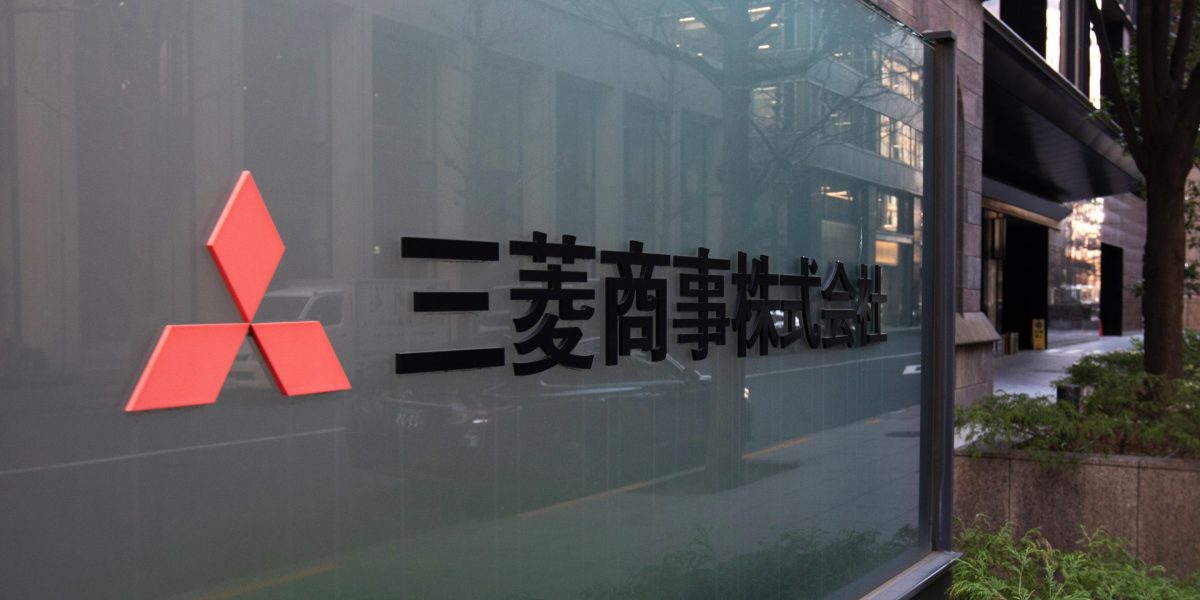
Mitsubishi closed a $7.5 billion(約1.2兆円) acquisition of U.S. natural gas assets on July 15, making it one of America's largest gas producers and deepening Japanese investment in domestic energy. The deal reflects a bet that gas demand will surge from both LNG exports to Japan and AI data centers needing power — and allows Mitsubishi to control production directly rather than rely on volatile market prices. Japanese firms, having learned from losses in the shale boom a decade ago, are now investing more carefully in the gas-rich Haynesville region, a shift that underscores shifting energy priorities in Asia.
Summaries like this, in your inbox every morning.
Sign up free →What happened
Mitsubishi closed on July 15 its largest acquisition ever, a $7.5 billion(約1.2兆円) deal to take over natural gas production assets from Dallas-based Aethon Energy. Aethon was the nation's third-largest privately held energy producer and the largest focused exclusively on natural gas, with heavy concentration in the Haynesville Shale region of northern Louisiana and eastern Texas.
Why it matters
The deal positions Mitsubishi to profit from two surging demand streams — growing LNG exports (especially to Japan, the world's second-largest LNG importer) and the AI data center boom, which increasingly requires gas-fired power generation. By owning production assets rather than just infrastructure, Mitsubishi gains control over more of the supply chain and insulates itself from volatile gas pricing, a strategy other Japanese firms like Tokyo Gas, Osaka Gas, JERA, and Mitsui are now pursuing in the same region.
What to watch
The deal includes $2.3 billion(約3700億円) in debt. Mitsubishi created a Dallas subsidiary called Adamas Energy to hold the assets, with Aethon managing partner Gordon Huddleston serving as Adamas CEO; Aethon has agreed to buy back a 25% stake in Adamas. Adamas is now the top natural gas producer in the Haynesville region after Houston-based Expand Energy.
Mitsubishi officially became one of the largest natural gas producers in the United States on Wednesday, July 15, when it closed its largest acquisition ever—a $7.5 billion(約1.2兆円) deal to acquire the natural gas production assets of Dallas-based Aethon Energy. The transaction, which included $2.3 billion(約3700億円) in debt, positions the Japanese conglomerate to capitalize on two intersecting demand drivers: surging LNG exports (particularly to Japan, the world's second-largest LNG importer) and the AI data center boom, which is increasingly dependent on gas-fired power generation.
Aethon Energy was the nation's third-largest privately held energy producer and the largest focused exclusively on natural gas. Its assets were heavily concentrated in the Haynesville Shale region spanning northern Louisiana and eastern Texas—a particularly productive gas formation situated close to growing LNG export hubs along the U.S. Gulf Coast. To execute the deal, Mitsubishi created Adamas Energy, named after the Greek word for "invincible," as its Dallas subsidiary. Aethon has agreed to buy back a 25% stake in Adamas, and Aethon managing partner Gordon Huddleston will serve as Adamas CEO, representing Mitsubishi's interests. Following the acquisition, Adamas is now the top natural gas producer in the Haynesville region, after Houston-based Expand Energy.
The strategic rationale extends beyond simple commodity hedging. Foreign nations have long invested in U.S. LNG infrastructure, but doing so exposes them to volatile gas pricing at the mercy of external markets. By acquiring upstream production assets—the land and processing facilities where natural gas is extracted—Mitsubishi gains control over more of the supply chain, protecting margins and ensuring reliable feedstock for export. "They recognize what a critical component the natural gas is," Huddleston told Fortune. "The U.S. is blessed with a lot of gas, but those that are in the right places are going to benefit. I think behind-the-meter, power generation in the U.S. is going to surprise a lot of people about how big these numbers are on the AI side for [gas-fired power demand]." The deal was in the works before the Iran war outbreak, but the geopolitical conflict has reinforced its investment case. Qatar, historically a leading LNG exporter, is now facing major facility repairs from the ongoing conflict, and Middle Eastern supply is under strain. Huddleston emphasized: "There's a huge wake-up call about the need for [energy] supply diversity and resiliency. The U.S. historically has been a very safe place to invest from a supply assurance standpoint."
Mitsubishi's move reflects a broader Japanese pivot back into U.S. natural gas, though with hard-won lessons from the past. In the decade following the 2011 Fukushima nuclear disaster, Japanese firms rushed to acquire U.S. shale gas assets at inflated prices; Sumitomo and others later exited, having lost substantial capital. This time, Japanese investors are proceeding with greater discipline and a longer time horizon. "By 2013, there was a lot of money put to work, and some of those deals did not turn out well," Huddleston noted. "There's been a much more methodical, thoughtful way to invest in the space." He added: "Mitsubishi is thinking 10, 20 years out. It's just a very different time horizon the way that they invest." Mitsubishi is now the flagship among a constellation of Japanese energy firms redoubling their Haynesville presence—Tokyo Gas has rapidly expanded its TG Natural Resources there, Osaka Gas operates Sabine Oil & Gas as a key player, JERA (Japan's top power generator) bought significantly into the region earlier this year, and Mitsui and JAPEX have secured positions in the Haynesville and U.S. Rockies. The U.S. natural gas market has itself undergone a transformation: in just a decade, the country has evolved from a first-time net LNG exporter to the world's leading LNG shipper, surpassing Australia and Qatar. Huddleston captured the geopolitical stakes bluntly: "The Chinese would be here if they could be. This is kind of the world's energy basket, given what's happened with LNG."
Mitsubishi's $7.5 billion(約1.2兆円) acquisition of Aethon Energy marks a pivotal moment in Japanese energy strategy. Over the past decade, Japanese firms learned a costly lesson: the Fukushima nuclear disaster in 2011 prompted urgent U.S. shale gas investments at inflated valuations that later soured. Sumitomo and others exited their positions, marking a decade-long pause in aggressive capital deployment. Now, with energy security and diversification back in focus — reinforced by geopolitical risks like the Iran war affecting Middle Eastern and Australian LNG suppliers — Japanese companies are re-entering the U.S. natural gas market, but this time with discipline. The timing reflects two concurrent forces: Japan's structural need for LNG imports (it is the world's second-largest importer after China) and the emerging power demands of AI data centers, which prefer reliable, dispatchable gas generation over intermittent renewables. By acquiring production assets in the Haynesville Shale, Mitsubishi and its Japanese peers secure direct control over supply chains rather than depending on volatile spot market pricing, a strategic move that other Japanese majors — Tokyo Gas, Osaka Gas, JERA, Mitsui, and JAPEX — are paralleling across the region and Rockies. The geopolitical angle is stark: Aethon managing partner Gordon Huddleston noted that "the Chinese would be here if they could be," underscoring that U.S. natural gas assets have become a scarce and strategically contested resource as Asia's energy giants compete for long-term supply security.
No discussion yet for this article
Get curated AI news from 200+ sources delivered daily to your inbox. Free to use.
Get Started FreeFree · takes 30 seconds · unsubscribe anytime
1 minute a day. The AI essentials.
200+ sources · Email / LINE / Slack

