What happened
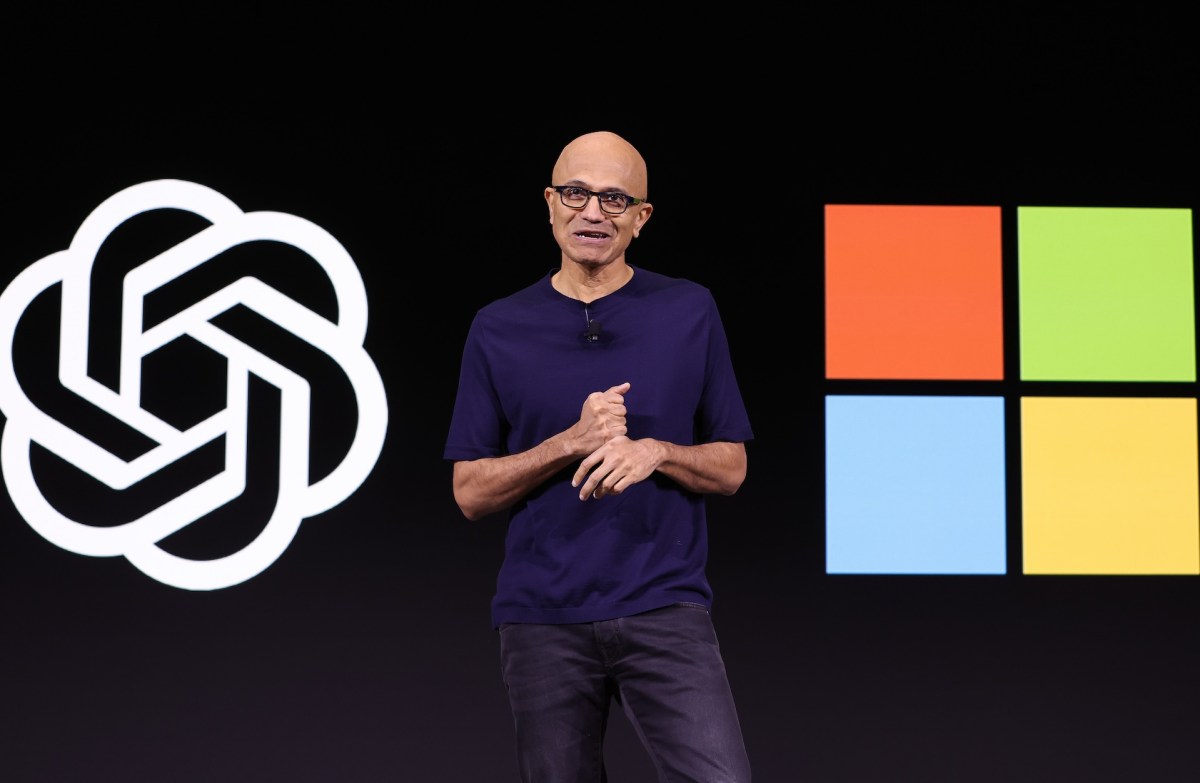
Microsoft CEO Satya Nadella published a blog post warning that enterprises using AI models from providers like OpenAI and Anthropic are effectively paying twice — once with money for tokens, and again by revealing proprietary business knowledge that model makers can learn from and potentially use competitively.
Why it matters
Enterprises unknowingly teach AI models about their business nuances through prompts, tool usage, and corrections — knowledge a competitor could never buy. Nadella argues this asymmetry is unfair: model makers freely train on public internet data but restrict enterprises from studying their models in return, creating a one-sided arrangement that puts companies at competitive risk.
What to watch
Nadella is urging enterprises to retain data ownership by building their own proprietary learning environments on cloud infrastructure and adopting 'orchestration layers' (tools that let companies switch between AI model providers). Open-source models running on company premises are already seeing adoption surge, with open models accounting for 29% of traffic routed through Vercel's gateway last month.
Summaries like this, in your inbox every morning.
Nadella's warning reflects a growing tension in enterprise AI adoption: the trade-off between the capabilities of large proprietary models and the risk of exposing sensitive business data. His framing—that enterprises are inadvertently teaching AI systems institutional knowledge through their interactions—echoes concerns already voiced by venture capitalists and Palantir CEO Alex Karp, but carries particular weight coming from the CEO of Microsoft, which has made major investments in both OpenAI and Anthropic. By essentially critiquing the business model of his own company's partners, Nadella is signaling that Microsoft's cloud infrastructure (Azure) can offer a solution: a controlled environment where enterprises retain data ownership.
Nadella's argument for "fair use" reciprocity is politically calculated. He points out that AI model makers argue they have the right to freely train on public internet data, yet they restrict enterprises from "distilling" (reverse-engineering) those models to create cheaper alternatives. This framing redefines what many see as intellectual property protection as unfair market advantage. His endorsement of "orchestration layers"—tools that reduce vendor lock-in—also suggests Microsoft believes it can compete on infrastructure and tooling rather than model superiority alone.
The practical shift is already underway: companies like Vercel and OpenRouter report surging traffic to open-source models, and enterprises with on-premise infrastructure are increasingly preferring cheaper, locally-controlled open models over proprietary alternatives. Nadella's public warning may accelerate this trend, effectively pushing customers toward solutions where Microsoft's cloud platform becomes the differentiator rather than dependence on any single AI provider's model.
Pick your industry and the AI tools you use, and get news related to your work every day.
Free · 30 seconds with Google · unsubscribe anytimeWhat is AIToday? →
Ask AI anything about this article. The AI reads this article, earlier AIToday articles, and Wikipedia, and cites its sources. Q&As are published on this page for other readers too.
Supermicro Computer appointed Mark Long as chief financial officer, bringing an experienced technology finance…

Holtek Semiconductor unveiled its 2026 product roadmap on October 15, focusing on four core areas: smart prote…

TSMC reported about NT$763.1b in Q3 net profit and confirmed that demand for advanced processors is running ah…

Nvidia-backed CoreWeave steadied Thursday after a sharp slump, as investors worried about the debt financing b…

Weathernews said on October 15 it implemented its own AI weather-forecasting model, AI-Nowcast, in its Weather…

TOPPAN Holdings and Keio University ran a quantum-computer and generative-AI proof-of-concept from February 1…