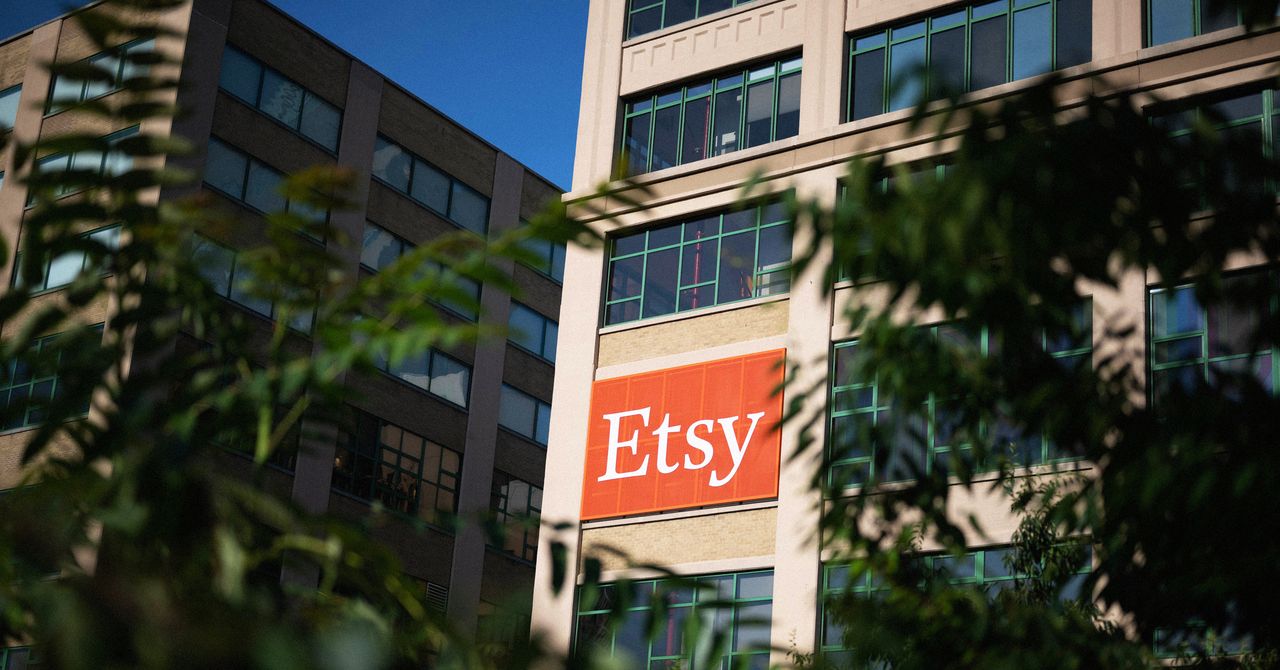
Etsy officially permitted AI-generated art on its marketplace in 2024 while requiring disclosure, but enforcement is lax and sellers report the platform ignores complaints about unlabeled AI content. Artists like Emily Olson, whose Etsy revenue fell 30 percent in 2022 and another 50 percent in 2023 due to competition from cheaper AI-generated listings, are migrating to alternatives or their own websites. A new competitor, Fybe, launching August 1, explicitly bans AI-generated content and drop-shipping, positioning itself as a response to seller frustration with Etsy's perceived tolerance of AI "slop" over human creativity.
Summaries like this, in your inbox every morning.
Sign up free →What happened
Etsy officially allowed AI-generated art on its platform in 2024, provided sellers disclosed it. Frustrated sellers like Emily Olson—who saw her sales drop 30 percent in 2022 and 50 percent in 2023—are now leaving en masse. A competing platform, Fybe, will launch August 1 with an explicit ban on AI-generated content and drop-shipping.
Why it matters
Etsy's disclosure mandate is not strictly enforced, leaving human artists competing against cheap AI-generated listings that often lack proper labeling. Sellers report losing customers to unmoderated AI content, and some see the platform's inaction as prioritizing profit over creator integrity. For handmade artisans, this signals a fundamental shift in how the platform values human creativity.
What to watch
Fybe's August 1 launch will test whether a human-moderated alternative can attract sellers seeking protection from AI competition. Etsy retains 5.6 million sellers and generated $2.8 billion(約4500億円) in revenue last year, but the departure of established creators could erode the authentic craftsperson brand that once defined the platform.
Emily Olson started selling watercolor puppy portraits on Etsy in 2017, pricing each piece from $75 to $300. By 2021, the business had grown into a significant income source—she made more than $40,000 that year and accumulated 180,000 YouTube followers. But in 2022, the marketplace shifted beneath her. Competitors flooded the platform, cheaper versions of her work appeared on drop-shipping sites like Alibaba, and then came the AI-generated pet portraits. These algorithmic creations not only appeared in search results where her own listings ranked, but they were also being sold at a fraction of her prices and were earning enthusiastic customer reviews. Olson's sales dropped 30 percent in 2022, then fell another 50 percent the following year.
In 2024, Etsy announced an official policy permitting AI-generated art, contingent on seller disclosure. Sellers must flag AI use in product listings, and the platform barred the sale of customized AI prompts themselves. But multiple sellers told WIRED that this disclosure requirement is poorly enforced and Etsy responds slowly or not at all to complaints. Olson posted a YouTube video in January 2025 titled "Etsy Was Great … Until It Wasn't—Why I'm Walking Away," stating that the platform "doesn't align with my values these days" and had "become another giant corporation chasing profits above all else." She has since moved to Shopify, though sales there have also disappointed.
Olson is not alone. On the subreddit r/EtsyCommunity, sellers describe widespread frustration with the influx of undisclosed "AI-generated slop." Viktor, a UK-based illustrator on Etsy for 10 years, reports his sales have plummeted 98 percent over the last year, attributing the drop to sellers treating the platform as "an easy way to make a quick buck." Chloe Rose, who sold stickers and original watercolors, echoes the sentiment: "The whole AI side of things has really, really hampered Etsy for sellers, big time." The AI content invasion extends beyond simple portraits—listings now include AI-generated crocheting patterns, hermit crab pools, and medieval suits of armor, according to the article.
A new competitor is seizing the opportunity. Fybe, launching August 1, will explicitly ban AI-generated content and drop-shipping, using volunteer moderators and direct seller conversations to enforce human creation. Founder Rachel Powell says: "I figured if we could start a platform that has human moderation and only allows vendors that aren't using AI or using drop-shipping, then we could be filling a very real need in the community." James Ossman, Etsy's vice president of customer operations, responded to WIRED by reiterating the company's stance that Etsy is "the marketplace for goods made, designed, handpicked, or sourced by real people," and that sellers "may use AI as one of many tools in their creative process." He acknowledged that enforcing standards "is complex, and we know we have a lot more work to do." Despite these assurances, Etsy's current financial position—5.6 million sellers and $2.8 billion(約4500億円) in revenue last year—masks deeper erosion in the trust and authenticity that once distinguished the platform.
Etsy's decision to permit AI-generated art in 2024 arrived as the platform faced mounting pressure from competitors like Temu and Shein and had already laid off 11 percent of its workforce in late 2023. Rather than shore up creator protections, the company chose a transparency-based approach—requiring disclosure but leaving enforcement largely to chance. This choice has proven costly: sellers report that AI-generated listings appear high in search results, lack proper disclosure, receive positive reviews despite their origin, and undercut prices by a large margin, all while Etsy customer service remains unresponsive to complaints.
The exodus reflects a deeper tension in Etsy's identity. The platform built its reputation on human creativity, amateur artisans, and authenticity—the antithesis of mass production. Yet the business case for policing AI content is weak when AI-generated listings generate transactions at lower cost to the platform and attract price-sensitive buyers. Several sellers interviewed for this story report lost trust not just in Etsy but in the viability of selling handmade work online at all. Etsy's stated commitment to "protecting human creativity" and vague promises to "improve our ability to detect and remove listings that don't belong" have failed to stem departures, suggesting that trust, once eroded, is difficult to rebuild.
AI-summarized, only the topics you pick — one digest a day via Email, Slack, or Discord.
Free · takes 30 seconds · unsubscribe anytime
No discussion yet for this article
Get curated AI news from 200+ sources delivered daily to your inbox. Free to use.
Get Started FreeFree · takes 30 seconds · unsubscribe anytime
1 minute a day. The AI essentials.
200+ sources · Email / LINE / Slack
