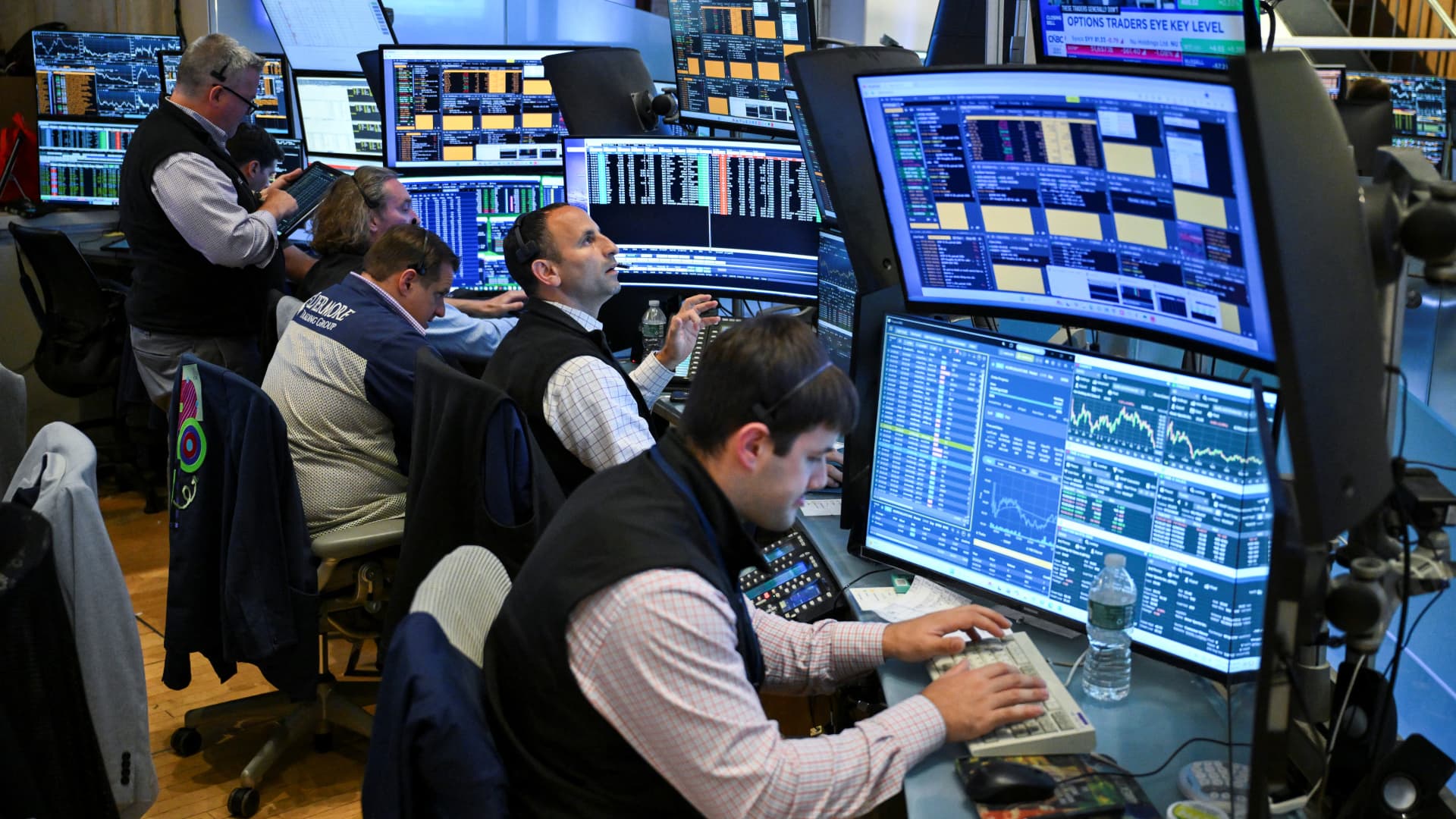
Bond investors are growing uneasy about the soaring capital expenditure required to build out artificial intelligence infrastructure, with credit spreads widening for Google, Amazon, and Meta as lenders demand more compensation for the risk. The hyperscalers are on track to spend more on capex than they generate in free cash flow next year, driven partly by surging energy costs for data centers. Oracle's credit rating was downgraded to one notch above junk status, and Meta's $12 billion(約1.9兆円) Texas data center financing is coming at higher borrowing rates than previous deals, signaling investor doubt about the return on these massive AI investments.
Summaries like this, in your inbox every morning.
Sign up free →What happened
Fixed-income investors are demanding higher returns to lend to Google, Amazon, and Meta as the companies' artificial intelligence infrastructure spending balloons. Alphabet recently raised its capital expenditure forecast, triggering wider credit spreads and higher yields. Oracle's credit default swap (a measure of default risk) has hit a multi-year high, and S&P Global downgraded Oracle's credit rating to BBB−, one notch above junk status.
Why it matters
The hyperscalers are now on track to collectively spend more on capex than they generate in free cash flow by next year, according to Mizuho analysts—a dramatic reversal from their reputation as capital fortresses. Rising energy costs are a major driver; GE Vernova's CEO expects the inflationary environment to persist, and oil recently broke above $100 a barrel. Bond investors are increasingly skeptical that these massive data-center investments will deliver adequate returns, creating tension between equity and bond holders at the largest tech firms.
What to watch
Meta is financing a $12 billion(約1.9兆円) Texas data center expected to be priced early next week at a higher borrowing rate than previous projects—a sign that lenders are applying stricter terms. Oracle faces investor questions about how aggressively it will borrow for data-center buildout in coming years.
The bond market is sending a clear warning signal about the sustainability of hyperscaler AI capex budgets. Investors holding debt issued by Google (Alphabet), Amazon, Meta, and Oracle are demanding higher yields and wider credit spreads—a market mechanism for pricing additional risk. This week, Alphabet lifted its capital expenditure forecast, which immediately triggered higher yields across the sector and renewed concern that competitors could announce similar increases.
The root of the anxiety is simple arithmetic: the hyperscalers are spending at a pace that outstrips their free cash flow generation. According to Mizuho's analysis shared with clients on Friday, the companies are on track to collectively spend more on capex than they generate in free cash flow by next year. This represents a dramatic shift from their historical profile as capital fortresses—firms that could absorb billions in infrastructure spending while maintaining strong cash positions. Rising energy costs are amplifying the problem. GE Vernova CEO Scott Strazik told CNBC that he expects the inflationary environment to remain, driven in part by geopolitical tensions. Oil recently broke above $100 a barrel, adding to the operating expense burden for data centers across the U.S.
Oracle exemplifies the market's growing unease. In the past week, S&P Global downgraded Oracle's credit rating to BBB−, just one notch above junk status—a significant move for a major technology company. Oracle's five-year credit default swap (a derivative that hedges against default risk) is now trading at a multi-year high. Barclays credit analyst Andrew Keches wrote that Oracle's CDS has become a liquid proxy for broader AI debt and data-center spending concerns, extending "beyond company-specific fundamentals." Investors are also questioning how aggressively Oracle will tap the debt markets as data-center buildout becomes more capital intensive.
Meta's planned $12 billion(約1.9兆円) Texas data center financing exemplifies the new borrowing environment. According to a source familiar with the talks, the deal is expected to be priced at a higher borrowing rate than Meta's previous data-center projects. The Financial Times reported that this signals investors are not only demanding higher compensation but are actively questioning the return on investment for these projects. One anonymous credit fund portfolio manager told CNBC that capex raises are creating "intense discussions between bond and equity investors who have exposure to the biggest names in tech." While executives at Oracle and other hyperscalers remain confident in their ability to win the AI race—Oracle has growing relationships with OpenAI, Meta, and Nvidia on cloud architecture—the bond market's repricing suggests lenders are growing increasingly skeptical that capital-intensive AI infrastructure will deliver commensurate returns.
The bond market's widening skepticism of AI capex budgets reflects a fundamental tension in how the technology industry is financing its infrastructure blitz. For years, the largest tech companies built their reputations as capital fortresses—firms that could absorb massive spending without straining their balance sheets. But the scale of AI buildout has altered that calculus. According to Mizuho, the hyperscalers are now projected to spend more on capex than they generate in free cash flow by next year, a striking reversal that has spooked fixed-income investors who must evaluate credit risk over multi-year bond maturities.
Energy cost inflation is a material driver of this concern. With oil recently breaking above $100 a barrel and GE Vernova's CEO expecting the inflationary environment to persist, the operating expense side of data-center economics is deteriorating. Bond investors, accustomed to evaluating tech firms on revenue growth and cash conversion, are now forced to model scenarios where capex consumes free cash flow—a scenario that raises questions about dividend sustainability, share buybacks, and debt repayment capacity. Oracle's downgrade to BBB− illustrates how acute the concern has become: the ratings agency moved a large, profitable company to near-junk status partly because of uncertainty around data-center capital intensity and OpenAI execution risk.
Meta's $12 billion(約1.9兆円) Texas data center refinancing at higher rates is the clearest market signal yet. When lenders insist on rate premiums for deals they view as less attractive than prior ones, they are directly pricing in skepticism about whether the investment will earn its cost of capital. This dynamic, playing out across the sector, has the potential to make future AI infrastructure deals more expensive or harder to arrange—a real constraint on the speed of buildout.
AI-summarized, only the topics you pick — one digest a day via Email, Slack, or Discord.
Free · takes 30 seconds · unsubscribe anytime
No comments yet. Be the first to share your thoughts!
Log in to join the discussion



Get curated AI news from 200+ sources delivered daily to your inbox. Free to use.
Get Started FreeFree · takes 30 seconds · unsubscribe anytime
