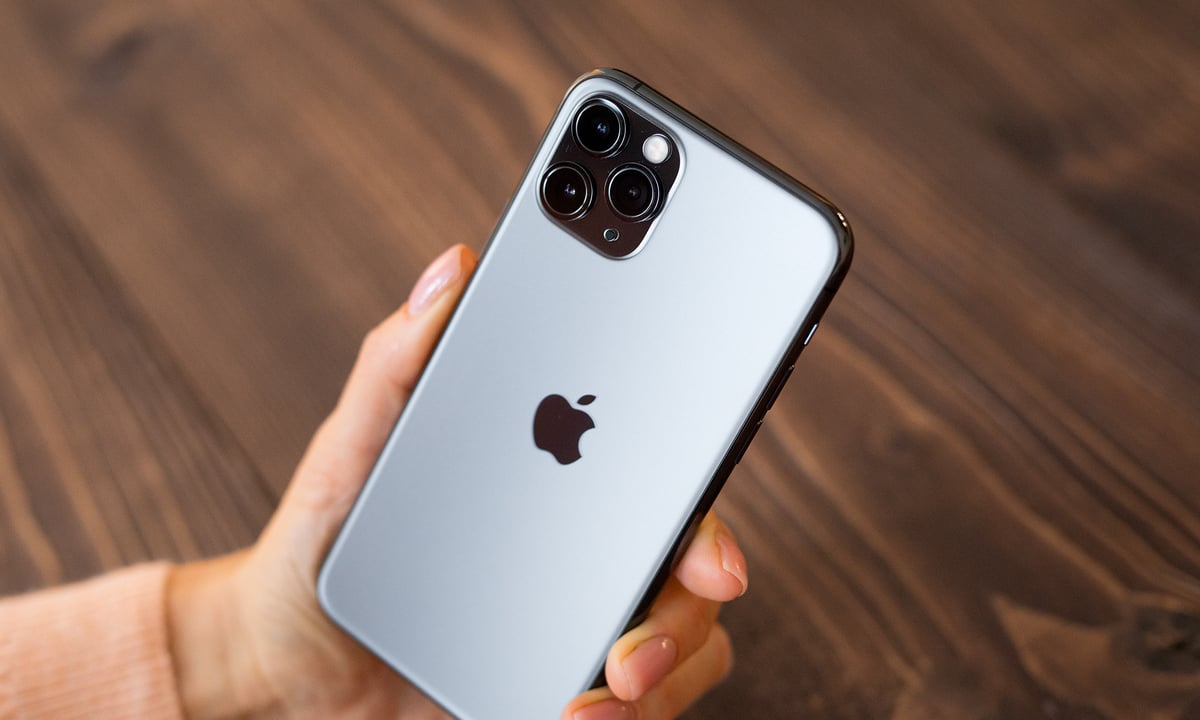
Apple's stock has climbed 22% in 2026 despite the company's decision to avoid heavy AI infrastructure spending that rivals are pursuing. The Cupertino company benefits from three structural advantages: a record 2.5 billion active devices that can distribute any AI feature to consumers, a differentiated user experience that commoditizes the underlying AI infrastructure, and robust free cash flow of $78.3 billion(約13兆円) in the first half of fiscal 2026—up 63% year over year—without the data center capex burden that Amazon, Microsoft, Alphabet, and Meta collectively face.
Summaries like this, in your inbox every morning.
Sign up free →What happened
Apple's share price rose 22% in 2026 (as of July 21) despite the company taking a conservative approach to AI infrastructure spending, while hyperscalers like Amazon, Microsoft, Alphabet, and Meta plan roughly $700 billion(約110兆円) in combined capital expenditures in 2026.
Why it matters
Apple's 2.5 billion active devices give it unmatched distribution to deliver AI features to consumers; the company's hybrid AI model—running simple tasks locally and routing complex ones to its Private Cloud Compute infrastructure—lets the user experience, not the underlying infrastructure, drive value; and Apple avoids the massive data center spending that other big tech firms face, preserving cash flow.
What to watch
Apple's free cash flow reached $78.3 billion(約13兆円) in the first six months of fiscal 2026, up 63% year over year and representing 30.7% of revenue; analyst consensus forecasts FCF to grow at 19.1% annually between fiscal 2025 and fiscal 2028.
The article presents an investment thesis that Apple will emerge as a long-term winner in artificial intelligence, driven not by massive infrastructure spending but by distribution, differentiation, and financial discipline.
Apple's most significant advantage is its installed base of more than 2.5 billion active devices, a record figure disclosed by CEO Tim Cook during the Q1 2026 earnings call in January. This scale gives Apple an unrivaled distribution channel: any AI feature—whether developed internally or by other companies—can reach a vast consumer base through these devices. The company's Q2 2026 performance (ended March 28) underscores the strength of this installed base: iPhone revenue jumped 21.7% year over year to $57 billion(約9.1兆円). Unlike hyperscalers, which must build entirely new product categories around AI, Apple can layer AI capabilities onto existing hardware that already saturates the market.
Apple's AI strategy, called Apple Intelligence, relies on a hybrid architecture. Simple user requests are processed by models running directly on devices; more complex tasks are routed to Apple's Private Cloud Compute infrastructure. The company pays Alphabet $1 billion(約1600億円) per year for access to Gemini capabilities, partnering with a rival hyperscaler rather than building all AI infrastructure in-house. From the user's perspective, the underlying AI model, GPU, or data center is invisible—what matters is the seamless experience. This design philosophy implies that AI infrastructure itself will become commoditized over time, with competitive value shifting to the differentiated layers of hardware, software, and services where Apple already dominates.
Capital discipline distinguishes Apple from rivals. Amazon, Microsoft, Alphabet, and Meta are planning roughly $700 billion(約110兆円) in combined capital expenditures in 2026 to expand data center capacity. Apple's capex totaled just $4.3 billion(約6900億円) in the last two quarters, avoiding the massive infrastructure build-out that rivals consider necessary. This constraint has freed Apple to generate extraordinary free cash flow: $78.3 billion(約13兆円) in the first six months of fiscal 2026, up 63% year over year and representing 30.7% of Apple's entire revenue. Analyst consensus forecasts this free cash flow to grow at a compound annual rate of 19.1% between fiscal 2025 and fiscal 2028. Unlike hyperscalers, Apple does not face the burden of proving that billions in capex will eventually produce adequate returns on investment. The market has validated this approach: Apple's share price rose 22% in 2026 as of July 21, even as the investment community initially criticized the company's conservative AI stance.
Apple's conservative stance on AI infrastructure spending stands in sharp contrast to the capital-intensive strategies of hyperscalers. While Amazon, Microsoft, Alphabet, and Meta collectively plan roughly $700 billion(約110兆円) in capex for 2026, Apple is investing just $4.3 billion(約6900億円) over two quarters—a fraction of what rivals deem necessary to compete in the AI race. Yet the market has rewarded Apple's restraint: the stock gained 22% in 2026 as of July 21, signaling investor confidence in the company's selective approach.
The investment case rests on three structural advantages. First, Apple's installed base of more than 2.5 billion active devices, disclosed during Q1 2026 earnings in January, creates an unparalleled distribution channel for AI features. Second, the company's hybrid AI architecture—processing simple requests on-device while routing complex tasks to Private Cloud Compute—ensures that the end user experience, not the underlying infrastructure, remains the differentiator. By commoditizing the AI model and infrastructure layer, Apple can concentrate value in the hardware, software, and services layers where it has historically excelled. Third, Apple's capital discipline preserves substantial free cash flow: $78.3 billion(約13兆円) in the first half of fiscal 2026, a 63% year-over-year increase representing 30.7% of total revenue. Analyst consensus projects this free cash flow to grow at 19.1% annually through fiscal 2028, a trajectory that does not require proving capex returns in the way hyperscalers must.
AI-summarized, only the topics you pick — one digest a day via Email, Slack, or Discord.
Free · takes 30 seconds · unsubscribe anytime
No comments yet. Be the first to share your thoughts!
Log in to join the discussion

Get curated AI news from 200+ sources delivered daily to your inbox. Free to use.
Get Started FreeFree · takes 30 seconds · unsubscribe anytime
