Artificial intelligence is triggering a fundamental reorganization of global networks, hidden from consumers but massive in scale and cost. AI now generates roughly 77 exabytes per month, makes up about 20% of total network traffic, and drives 1.3 trillion sessions a year. Inside data centers, the dominant traffic flow has flipped from user-to-server to GPU-to-GPU communication, breaking the 30-year-old hierarchical network architecture that powered the cloud era. Google, Meta, AWS, and Microsoft are all deploying new specialized network fabrics (Virgo, Disaggregated Scheduled Fabric, RNG, and others) designed specifically for AI workloads, while fiber capacity has become so scarce that companies are locking in multi-year supply contracts years in advance.
Summaries like this, in your inbox every morning.
Sign up free →What happened
Artificial intelligence is fundamentally rewiring global networks. Nokia's CEO said AI generates roughly 77 exabytes per month today, makes up about 20% of total network traffic, and processes more than 100 trillion tokens daily, with AI traffic projected to grow at a 23% compound annual growth rate through 2034. Inside data centers, the traffic pattern has inverted—instead of flowing user-to-server, it now flows GPU-to-GPU (east-west), requiring up to five times more connectivity than traditional topologies. Every major hyperscaler (Google, Meta, AWS, Microsoft) is abandoning the 30-year-old "fat tree" network architecture in favor of specialized flat, low-latency designs optimized for AI workloads.
Why it matters
The shift is driving a strategic reshuffling of network infrastructure. Optical fiber capacity, once a commodity, has become scarce enough that Meta locked in a multi-year supply agreement with Corning years in advance. Network equipment makers like Arista are designing entirely new hardware—Arista's XPO optical standard, introduced in March 2026, delivers 12.8 terabits per second and would reduce a 400-megawatt AI data center's network footprint by 75% compared to current gear. This infrastructure buildout mirrors the $700 billion(約110兆円) in hyperscaler spending on data centers, reshaping how the internet moves data at its foundation.
What to watch
The second wave will be inference, not training. While training gets attention for dramatic scale (clusters reached 200,000 to 300,000 GPUs in 2025, with 2026 forecasts pushing toward one million GPUs per cluster), inference drives the economic engine—every dollar spent on training must be monetized many times over by inference. The networking implications of inference differ from training: agentic workflows with multi-step reasoning chains, retrieval queries, and long-running sessions sit between classic web services and training traffic in volume and shape. Hyperscalers have already begun moving beyond custom silicon and switches to proprietary network designs they will not license to each other, widening the gap between leading and lagging operators.
A structural transformation is underway in the networks that power artificial intelligence, driven by the sheer volume and velocity of AI compute workloads. Nokia's CEO Justin Hotard, speaking at MWC 2026 in Barcelona, offered concrete metrics: AI generates roughly 77 exabytes per month today, makes up about 20% of total network traffic, drives 1.3 trillion sessions a year, and processes more than 100 trillion tokens daily. More than half already runs over mobile networks. Bell Labs, owned by Nokia, forecasts AI traffic growing at a 23% compound annual growth rate through 2034, ending up around 30% of total wide-area network traffic. These numbers reflect a shift so profound that it has inverted the basic traffic pattern that defined the internet for thirty years.
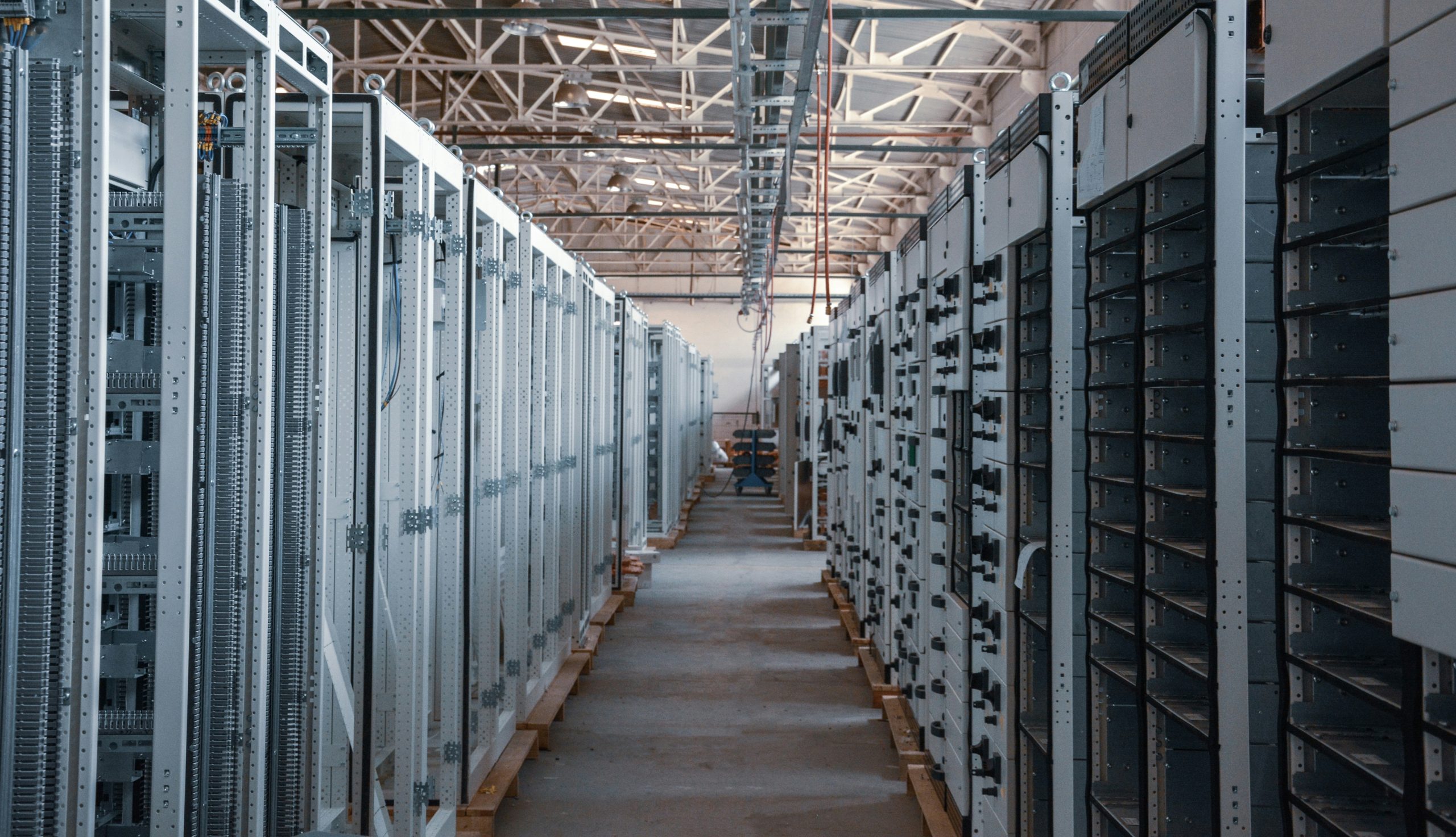
Inside hyperscale data centers, the transformation is most acute. Training a frontier model means tens of thousands of GPUs running in lockstep at speeds legacy data center networks were never designed to handle. The dominant flow is no longer user requests flowing to servers (north-south, in industry jargon), but GPUs talking to each other inside the same building (east-west). AI clusters need up to five times more connectivity than traditional hyperscale topologies. This inversion breaks the economic logic of the fat-tree topology, a hierarchical Clos network design that has been the workhorse of every hyperscale data center on the planet for over two decades. The fat tree's roots go back to Charles Clos, a Bell Labs engineer whose 1953 paper described a three-stage switching network for telephone exchanges. MIT's Charles Leiserson extended the idea in 1985, coining the term "fat tree" for parallel computing—a tree where branches get thicker as they climb toward the root, preventing upper levels from becoming bottlenecks. Google, Meta, Microsoft, and AWS all built their first cloud-era data centers on this foundation, assuming traffic between endpoints would be relatively predictable and capacity could be hierarchically aggregated.
AI workloads shattered that assumption. Training generates massive, sustained bursts between specific GPUs that need to stay synchronized, a traffic pattern the fat tree was never designed to handle. Operators face a choice: overbuild the fabric at enormous cost, or accept bottlenecks inherent to the design itself. Every major hyperscaler chose a third path: replace the architecture entirely. In 2022, Google published its Jupiter Evolving paper, describing a move away from Clos topology to a direct-connect fabric. By late 2024, Jupiter was running at 13 petabits per second of aggregate bandwidth, delivering a 30% capex reduction and 41% power reduction compared to the previous generation. In April 2026, Google announced Virgo Network, described as "a fundamental shift away from general-purpose network design towards a specialized flat, low-latency network architecture." Virgo separates the AI accelerator-to-accelerator fabric (east-west, using RDMA protocol) from the Jupiter front-end network (north-south, for storage and general compute), employing a flat two-layer topology. Meta, meanwhile, described splitting training clusters into separate front-end and back-end networks in its SIGCOMM 2024 paper on RDMA over Ethernet at Meta scale, and in October 2025 announced Disaggregated Scheduled Fabric, which scales this idea to interconnect thousands of GPUs across a data center region using deep-buffer switching. AWS published its RNG paper in April 2026, describing production deployment of random graph topologies to replace fat trees, with a new routing protocol called Spraypoint and a passive optical device called a ShuffleBox, reporting 9% to 45% fewer switches than fat trees with equivalent performance.
These are not marginal optimizations. They are fundamental architectural departures, each proprietary and none likely to be licensed to competitors. The stakes on the hardware side are equally high. In March 2026, Arista Networks introduced XPO (eXtra-dense Pluggable Optics), an optical pluggable standard designed specifically for AI data center fabrics. A single XPO module delivers 12.8 terabits per second of bandwidth with a roadmap to 25.6 terabits per second on 400-gigabit lanes, consuming more than 400 watts per module. Arista estimates that a 400-megawatt AI data center would require 352 switch racks with XPO, a 75% reduction in network footprint from the current generation of gear, before accounting for corresponding reductions in electrical, cooling, and plumbing infrastructure. The constraint driving these innovations is physical: optical fiber capacity has become scarce. Meta locked in a multi-year fiber supply agreement with Corning, a move that signals fiber is now a strategic resource that must be secured years in advance. The economic scale of the buildout reflects the underlying priority. Hyperscalers are spending $700 billion(約110兆円) on data centers, with GPU clusters reaching 200,000 to 300,000 units in 2025 and forecasts pushing toward one million GPUs per cluster in 2026. Microsoft has publicly warned of a "networking wall," noting that the explosive east-west traffic generated by large AI models is pushing data center networks to their physical limits. The first gigawatt-scale training data centers are coming online now and through 2027. This infrastructure is being built not primarily for training, which dominates headlines, but for inference. While training gets attention for dramatic scale and cost, inference is the economic engine—every dollar spent on training must be monetized many times over by inference, or the business model breaks. Inference traffic looks different from training: many concurrent users each generating small requests and slightly larger responses, but complicated by agentic workflows with multi-step reasoning chains, retrieval queries pulling context from vector stores, and long-running sessions that maintain state. The volume and traffic shape sit between traditional web services and training, requiring a distinct optimization approach.
The rise of AI is not merely changing what data moves across networks; it is restructuring how networks themselves are built. For thirty years, the internet was optimized around a simple asymmetry: content flowing from servers to consumers (downstream traffic). A shift toward symmetry has already begun—average upload usage is growing 21.7% year over year, more than twice the rate of downstream growth. But the AI transition is operating at a different layer entirely, one invisible to most users. Inside hyperscale data centers, the traffic pattern has completely inverted. Instead of user requests flowing in and responses flowing out (north-south), the dominant flow is now GPUs communicating with each other in the same building at extreme speeds (east-west). This fundamental change breaks the economic assumptions that underpinned the "fat tree" hierarchy—a network topology borrowed from 1950s telephone switching and adapted to cloud computing in the 2000s. The fat tree worked when traffic between any two endpoints was relatively predictable and could be aggregated hierarchically through layers of switches. AI training workloads shatter that assumption, generating massive, sustained bursts that require low latency and high throughput between specific GPUs in lockstep.
Every major hyperscaler has responded by walking away from this architecture. Google moved to a direct-connect fabric (Jupiter Evolving), achieving a 30% capex reduction and 41% power reduction. Meta is splitting training clusters into separate front-end and back-end networks with deep-buffer switching. AWS is deploying random graph topologies with a new routing protocol (Spraypoint) and optical devices (ShuffleBox), achieving 9% to 45% fewer switches than fat trees. Each hyperscaler has built a proprietary solution and shown no inclination to share. This mirrors the pattern that already emerged with custom silicon (TPUs, Trainium, Maia, MTIA)—the hyperscalers see workloads at scale first, build infrastructure to match, optimize relentlessly, and the rest of the industry catches up later, if at all. The strategic implication is stark: optical fiber capacity, once treated as a commodity, has become a contested resource. Meta locked in a multi-year supply agreement with Corning, signaling that future AI infrastructure will be bottlenecked by physical fiber availability as much as by electricity or cooling.
AI-summarized, only the topics you pick — one digest a day via Email, Slack, or Discord.
Free · takes 30 seconds · unsubscribe anytime
No discussion yet for this article
Get curated AI news from 200+ sources delivered daily to your inbox. Free to use.
Get Started FreeFree · takes 30 seconds · unsubscribe anytime
