What happened
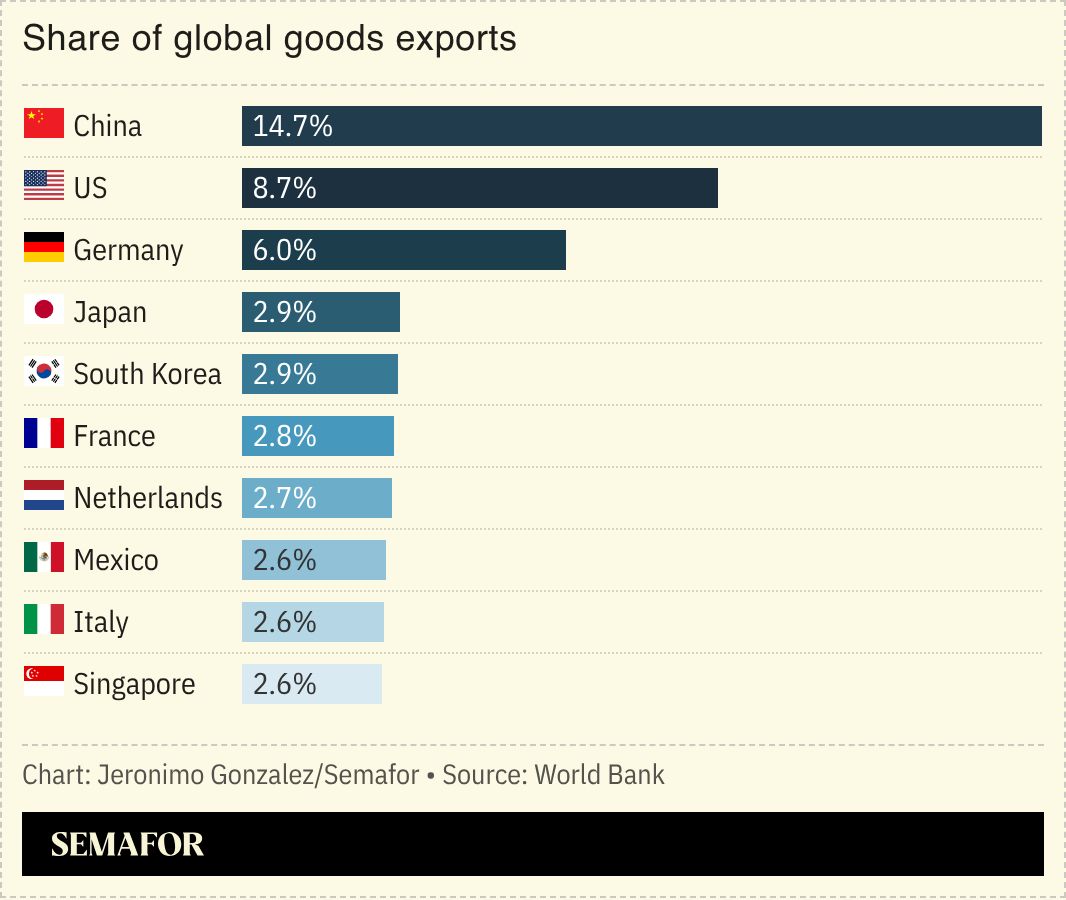
China exported $412 billion(約66兆円) worth of goods last month, exceeding analyst forecasts. Green tech exports surged by a third in the first half of the year, car shipments topped a million units in a single month for the first time, and semiconductors ranked among the fastest-growing export categories.
Why it matters
The surge reflects strong global demand for AI infrastructure and the energy transition, positioning China as the primary supplier of critical technologies. However, the growth masks a bifurcation in China's economy—domestic consumption remains weak, suggesting the export boom may not translate into broad-based domestic health.
What to watch
The tension between record exports and flagging home demand; whether semiconductors continue accelerating as buyers seek alternatives to supply-chain bottlenecks; and whether green tech export growth (up a third in H1) sustains amid geopolitical shifts like the Iran war pushing fuel prices higher.
Summaries like this, in your inbox every morning.
China's record $412 billion(約66兆円) export month reflects a sharp divergence in the global economy: while demand for AI-related semiconductors and green technologies remains robust internationally, China's domestic market is struggling. The surge in car shipments—crossing one million units in a single month for the first time—and the one-third jump in green tech exports in the first half of the year are concrete evidence that China has solidified its position as the world's primary supplier of technology needed for the AI build-out and the energy transition. Semiconductors, alongside these categories, have become among the fastest-growing export segments as global buyers attempt to navigate around supply-chain constraints. However, this export strength coexists with a troubling structural imbalance: domestic consumption remains weak, according to experts cited by Reuters. The bifurcation suggests that China's growth is increasingly dependent on external demand—a situation that could be fragile if global appetite for these technologies moderates or supply chains diversify away from China.
Pick your industry and the AI tools you use, and get news related to your work every day.
Free · 30 seconds with Google · unsubscribe anytimeWhat is AIToday? →
Ask AI anything about this article. The AI reads this article, earlier AIToday articles, and Wikipedia, and cites its sources. Q&As are published on this page for other readers too.

