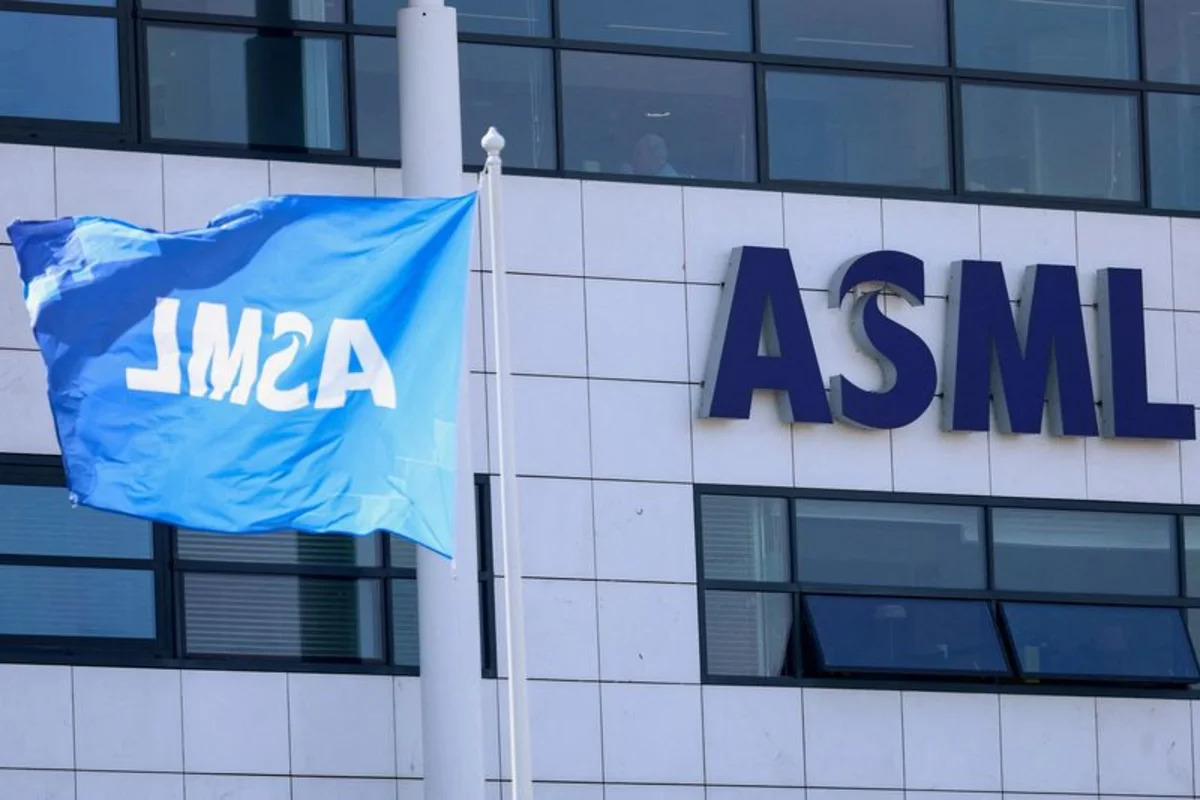
ASML, Europe's most valuable listed company, reports earnings Wednesday as a critical test of whether it can keep pace with soaring demand for AI chip manufacturing equipment while navigating U.S. export restrictions on China. Analysts expect the company to beat forecasts and raise guidance, with some predicting its 2030 sales target of at least €44 billion is now overly conservative; the main constraint is that ASML is the sole maker of the advanced EUV machines required for cutting-edge chips, and each takes roughly a year to build.
Summaries like this, in your inbox every morning.
Sign up free →What happened
ASML, the Netherlands-based maker of equipment used to manufacture AI chips, reports quarterly earnings on Wednesday. The company is expected to post an 8.8% rise in second-quarter net profit to €2.61 billion on revenue up 14% at €8.8 billion, with analysts looking for an increase to its full-year revenue forecast of between €36 billion and €40 billion.
Why it matters
ASML's valuation—€610 billion ($696 billion(約110兆円))—reflects an AI boom that has lifted its share price by nearly 70% this year as major chip makers including SK Hynix, Samsung, Micron, and TSMC rush to expand capacity. However, proposed U.S. export controls targeting China could limit sales; the company has denied selling its most advanced EUV tools to China but expects China to account for up to 20% of its sales this year through legal purchases of less-advanced equipment.
What to watch
ASML manufactures the only EUV lithography systems—$300 million(約480億円) machines that take about a year to build—needed for cutting-edge chip production. The company aims to ship 60 EUV tools this year and 80 next year, though JPMorgan analysts believe it could make as many as 110. Susquehanna's analyst said all of ASML's capacity through the end of 2027 may already be booked.
ASML's Wednesday earnings report arrives at a pivotal moment for the global chip industry. The company's near-70% share price gain this year reflects the explosive demand for AI infrastructure, as leading chip manufacturers including TSMC (which supplies Nvidia), SK Hynix, Samsung, and Micron all race to add production capacity. TSMC and Intel are expanding, while Elon Musk's TeraFab plans could add further demand. ASML's role as the sole supplier of EUV lithography systems—the $300 million(約480億円) machines essential for cutting-edge chip production—has turned it into a critical bottleneck in the AI supply chain, much as occurred during the COVID-19 pandemic.
The earnings report will test whether ASML can justify its €610 billion ($696 billion(約110兆円)) valuation by demonstrating both strong near-term profitability and a credible path to higher output. Analysts at Susquehanna expect a "beat-and-raise" result, with some forecasting that all of ASML's capacity through end of 2027 may already be sold. Morningstar's analyst argues that ASML's 2030 sales target of at least €44 billion is outdated, predicting €60 billion instead, while JPMorgan suggests the company could theoretically manufacture up to 110 EUV tools per year without expanding its physical facilities. Chief Executive Christophe Fouquet has emphasized that ASML is "doing everything possible" to avoid becoming an industry bottleneck.
Clouding the outlook is the proposed U.S. export control legislation naming ASML, aimed at restricting China's ability to manufacture advanced chips. China represents up to 20% of ASML's expected 2024 sales through legal purchases of less-advanced DUV tools for automotive and industrial applications. The company has denied selling its most advanced EUV systems to China, but the regulatory uncertainty may constrain future growth and shape how ASML navigates customer demand in the coming years.
No discussion yet for this article
Get curated AI news from 200+ sources delivered daily to your inbox. Free to use.
Get Started FreeFree · takes 30 seconds · unsubscribe anytime
1 minute a day. The AI essentials.
200+ sources · Email / LINE / Slack
