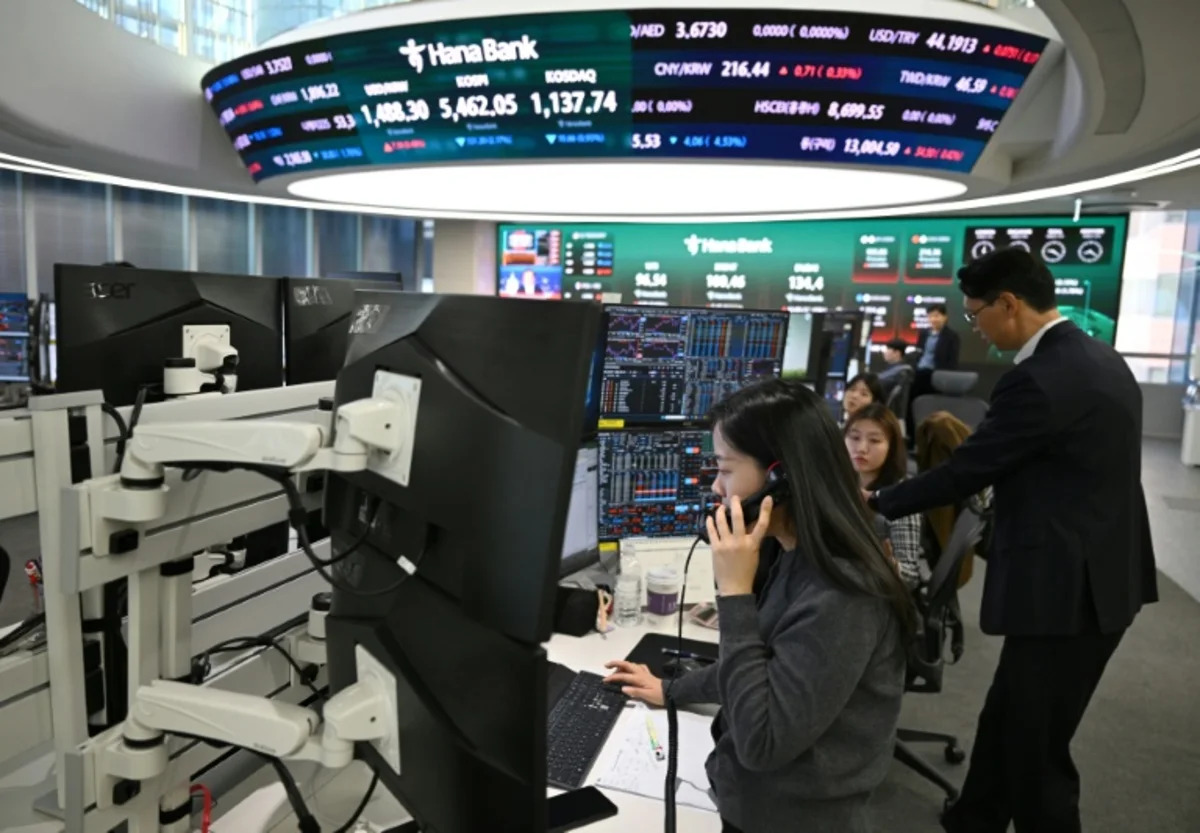
Asian stock markets surged Tuesday as technology shares recovered from recent AI valuation fears, with Tokyo, Seoul, and Shanghai all posting gains. Oil prices eased despite Iranian military strikes on US positions in the Gulf and Houthi threats to Saudi shipping routes. The tech rebound's durability will be tested this week when Tesla, Alphabet, Microsoft, Meta, Apple, and Amazon report earnings—results that must demonstrate whether massive AI infrastructure spending can generate the revenues and profits needed to support current valuations.
Summaries like this, in your inbox every morning.
Sign up free →What happened
Asian markets rebounded Tuesday as technology shares recovered from recent losses. Tokyo rose more than 3%, Seoul 3.6%, and Shanghai nearly 2%, following a Monday gain on the Nasdaq. Oil prices eased despite fresh Middle East tensions, including Iranian attacks on US military assets in the Gulf and threats from Houthi rebels to blockade Saudi ports.
Why it matters
Tech stocks had plunged on concerns about AI sector valuations, but the rebound now hinges on whether Big Tech can prove AI investments will deliver real revenues and profits. Earnings from Tesla and Alphabet begin this week, followed by Microsoft, Meta, Apple, and Amazon next week—results that will either justify the massive spending or fuel fresh doubts. Oil's relative calm suggests markets believe Middle East disruptions will be contained, though Iran's military actions and Houthi threats create ongoing risk.
What to watch
Stephen Innes of SPI Asset Management cautioned that the tech rebound has not been driven by "a decisive improvement in the AI fundamentals," signaling traders remain skeptical. Major tech earnings arriving this week will be critical; the sector must show that "AI revenues, margins and cash flow can justify the scale" of infrastructure investments.
Asian stock markets rebounded sharply on Tuesday, with technology shares leading the charge after weeks of losses tied to concerns about excessive artificial intelligence valuations. Tokyo's index rose more than 3%, Seoul climbed 3.6%, and Shanghai gained nearly 2%, mirroring a Monday advance on the US Nasdaq that saw chipmakers recover from severe declines. Europe posted more modest early gains, with Frankfurt up 0.2% and Paris up 0.1%, while London fell 0.1%.
Yet beneath the surface, conviction remains weak. Stephen Innes of SPI Asset Management cautioned that the tech rebound does not appear to be driven by "a decisive improvement in the AI fundamentals." Instead, he highlighted what markets now demand: "Big Tech earnings now need to prove that AI revenues, margins and cash flow can justify the scale" of the enormous infrastructure investments companies have made. Earnings season opens in the coming days with Tesla and Alphabet, followed by Microsoft, Meta, Apple, and Amazon the following week—reports that will reveal whether firms can back up their spending with tangible returns.
Oil prices eased slightly despite escalating military tensions in the Middle East. Fresh fighting over the weekend prompted President Donald Trump to say Iran would pay "many times over" for the deaths of three additional American soldiers. The US launched a new round of attacks late Monday aimed at degrading Iranian military capabilities used against commercial shipping in the Strait of Hormuz. Hours later, the Iranian army claimed it had targeted US assets in Kuwait and Bahrain, including air defence systems, radar installations, and administrative buildings. Iran's Yemeni allies, the Houthi rebels, also vowed Monday to blockade Saudi ports, threatening Riyadh's ability to circumvent the Strait for some oil exports. Michael Wan of MUFG assessed that market disruptions are unlikely to be sustained, given the Houthis' current lack of capability to identify and selectively target Saudi-linked vessels. "All-in from a market perspective we think it's still a reasonable base case that there is resolution in the conflict, even if things may get worse before it gets better," Wan said.
Meanwhile, President Trump signed orders imposing new 50-percent tariffs on many Canadian goods, alleging "discriminatory treatment" of American alcohol, automobile, and dairy products. In Britain, new Prime Minister Andy Burnham, facing stretched public finances, announced plans to remove tax on household electricity bills, signaling fiscal pressures across major economies.
The Asian stock rebound reflects a fragile confidence in the technology sector after weeks of sharp losses driven by valuation concerns. The recovery mirrors Monday's Nasdaq advance, suggesting traders briefly stepped back from their pessimism about artificial intelligence spending. However, Stephen Innes of SPI Asset Management warned that the bounce is not grounded in any "decisive improvement in the AI fundamentals," underscoring how dependent the rebound is on sentiment rather than concrete business improvements.
The critical test arrives this week with major tech earnings announcements. Big Tech firms must now demonstrate that the vast sums they have invested in AI infrastructure will translate into sustainable revenues, profit margins, and cash flow. Until these companies show tangible returns from their AI bets, markets will likely remain volatile. The timing is significant: if earnings disappoint, the recent rebound could quickly reverse into fresh selling pressure.
AI-summarized, only the topics you pick — one digest a day via Email, Slack, or Discord.
Free · takes 30 seconds · unsubscribe anytime
No discussion yet for this article
Get curated AI news from 200+ sources delivered daily to your inbox. Free to use.
Get Started FreeFree · takes 30 seconds · unsubscribe anytime
1 minute a day. The AI essentials.
200+ sources · Email / LINE / Slack
