What happened
A $35 billion(約5.6兆円) financing package backing Broadcom and Anthropic's AI infrastructure buildout is being structured so that portions of the debt will trade in the secondary market (the 144A market for privately issued securities) after being drawn. The deal uses a special-purpose vehicle to finance custom AI chips developed by Google and Broadcom, which are then leased to Anthropic, with Broadcom providing a payment backstop on the largest senior tranches. Funds will be drawn in approximately 16 releases over a little over a year as chips are produced.
Why it matters
This deal signals a shift in how private markets are funding AI infrastructure—moving beyond direct equity or venture capital into structured debt instruments that large institutional investors (insurers, mutual funds) can trade. The approach suggests that investors see greater returns in owning the infrastructure AI developers depend on rather than betting directly on AI model-building companies. Other major private equity firms (Brookfield Asset Management, KKR & Co., Blackstone) are also pouring billions into AI infrastructure, indicating a broad private-markets pivot toward this asset class.
What to watch
The debt is expected to begin trading in the secondary market in the coming months, which will reveal how institutional investors value long-term AI infrastructure financing and may set a template for similar deals. The 16 staged releases over a little over a year create a staggered funding schedule tied to actual chip production milestones.
Summaries like this, in your inbox every morning.
The deal is structured around a special-purpose vehicle that decouples chip ownership from Anthropic's balance sheet, allowing the lender to hold and trade physical assets (the custom AI chips) while Anthropic pays lease payments. This structure is creative because it transforms what might otherwise be an equity or venture round into tradeable debt, giving institutional investors both security (the hardware as collateral) and liquidity (secondary-market exit). The 16 staggered draws over a little over a year tie financing to actual production cycles, reducing lender risk and matching cash outflows to tangible milestones.
The appetite for this deal reflects a broader conviction among large private-equity managers that the AI infrastructure layer—not the frontier AI models themselves—will be the most reliable cash generator. By owning the chips and leasing them to model developers like Anthropic, investors capture recurring revenue while insulating themselves from the competitive volatility of AI research. The fact that Brookfield Asset Management, KKR & Co., and Blackstone are all simultaneously investing billions in AI infrastructure suggests this view is becoming a mainstream private-markets thesis, not a one-off bet.
Pick your industry and the AI tools you use, and get news related to your work every day.
Free · 30 seconds with Google · unsubscribe anytimeWhat is AIToday? →
Ask AI anything about this article. The AI reads this article, earlier AIToday articles, and Wikipedia, and cites its sources. Q&As are published on this page for other readers too.
Amazon introduced Bee Frontier, a wearable personal AI, for $74.99 in Onyx, Lavender and Sage, and Bee Eclipse…

Wall Street ended down sharply, with worries about the AI trade and high oil prices weighing on the market

Citi has become the latest US bank to restrict AI agents from accessing accounts, per the Financial Times

Dell says its AI Data Platform uses a four-engine architecture and a Unified Semantic Layer to connect siloed…
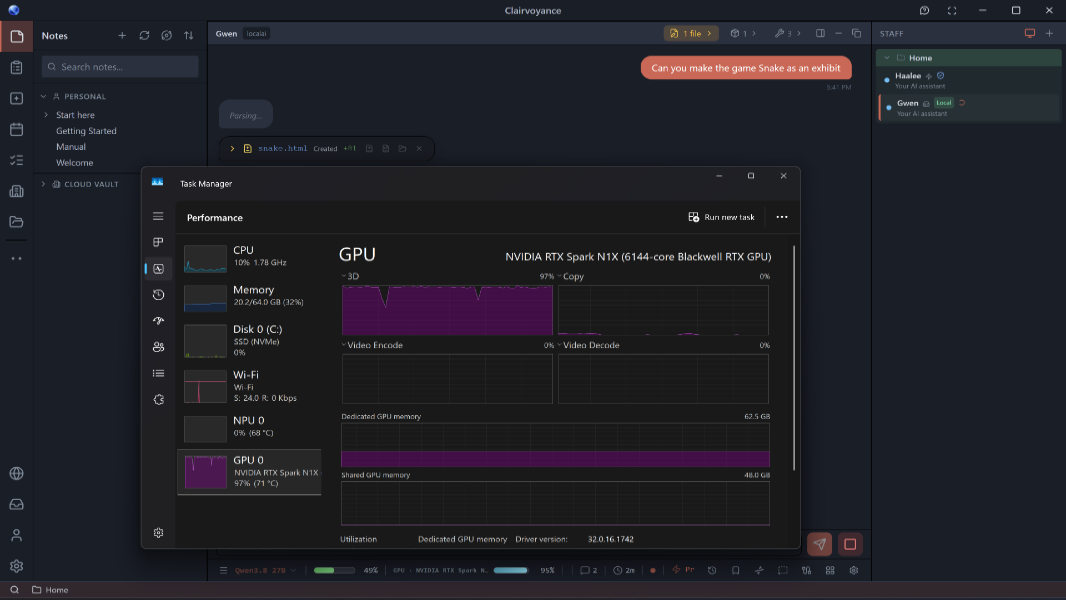
Microsoft and Nvidia are promoting RTX Spark, a new class of Windows PCs for local AI, with a top configuratio…
Microsoft AI CEO Mustafa Suleyman told employees that MAI-Base-2, announced Thursday, is a stronger pre-traine…