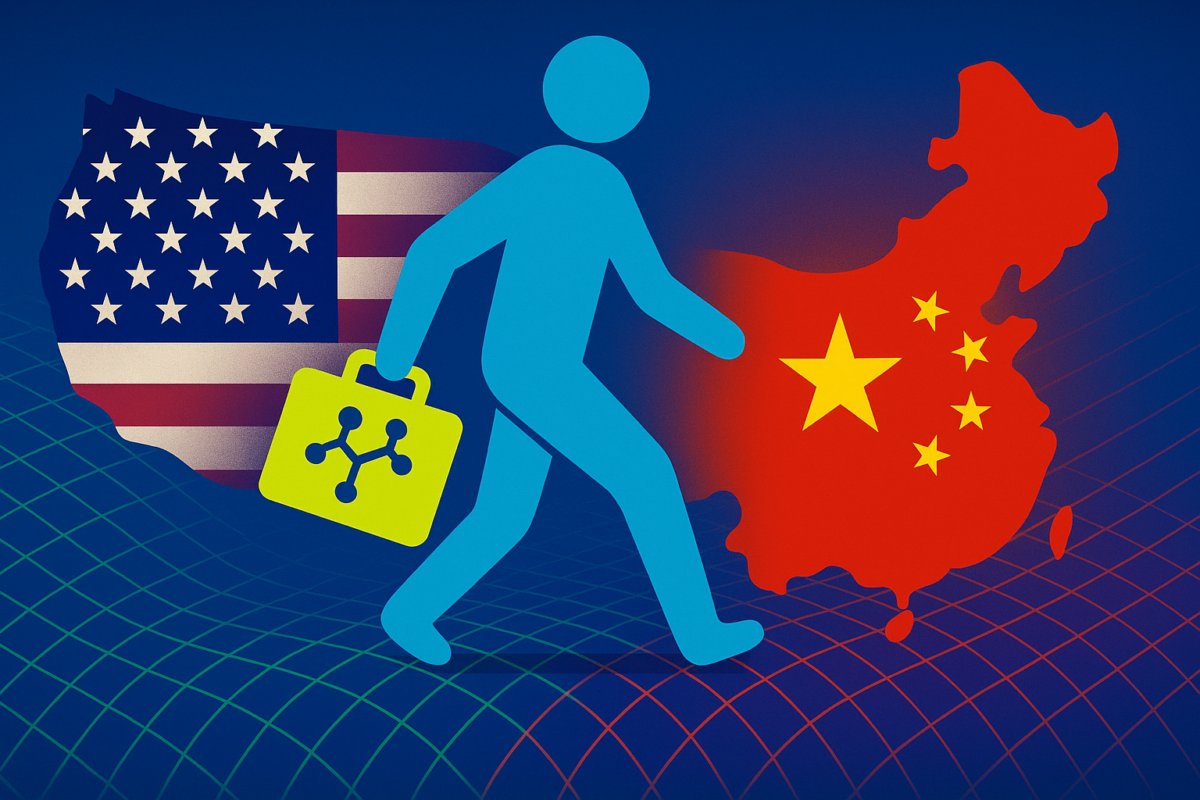
Government authorities are requiring people working on strategically important AI projects at private companies to get official permission before leaving the country, according to Bloomberg News.
The move follows a March 2025 advisory in which Beijing reportedly cautioned AI executives against traveling to the U.S. over concerns about data leaks, technology theft, and talent poaching.
China is shielding its AI industry—both software and hardware—and reducing reliance on foreign technology; Chinese chip makers now hold 41 percent of the domestic AI accelerator market, according to IDC. The government also blocked Meta's acquisition of agent startup Manus AI.
Ask the AI about this article →
For example, today's edition would include:
AI-summarized, only the topics you pick — one digest a day via Email, Slack, or Discord.
Free · takes 30 seconds · unsubscribe anytimeWhat is AIToday? →
Ask AI anything about this article. Q&As are published on this page for other readers too.
CBTS Technology Solutions LLC launched Forge Agents, a platform that turns a plain-language job description in…

Imec CEO Patrick Vandenameele said at SEMICON Taiwan 2026 that the Belgian research center is broadening its c…

Alphabet's AI Overviews now reach over 2.5 billion monthly users through Google Search, and its ad business ge…

Amazon Web Services (AWS) has integrated its fully managed data warehouse service, Amazon Redshift, with Agent…
Visual Studio Code 1.135 now includes an experimental 'Rubber Duck' feature that lets developers request a sec…

Sonos announced a new app update with generative AI features, a new soundbar called the Beam Ultra, and its se…