What happened
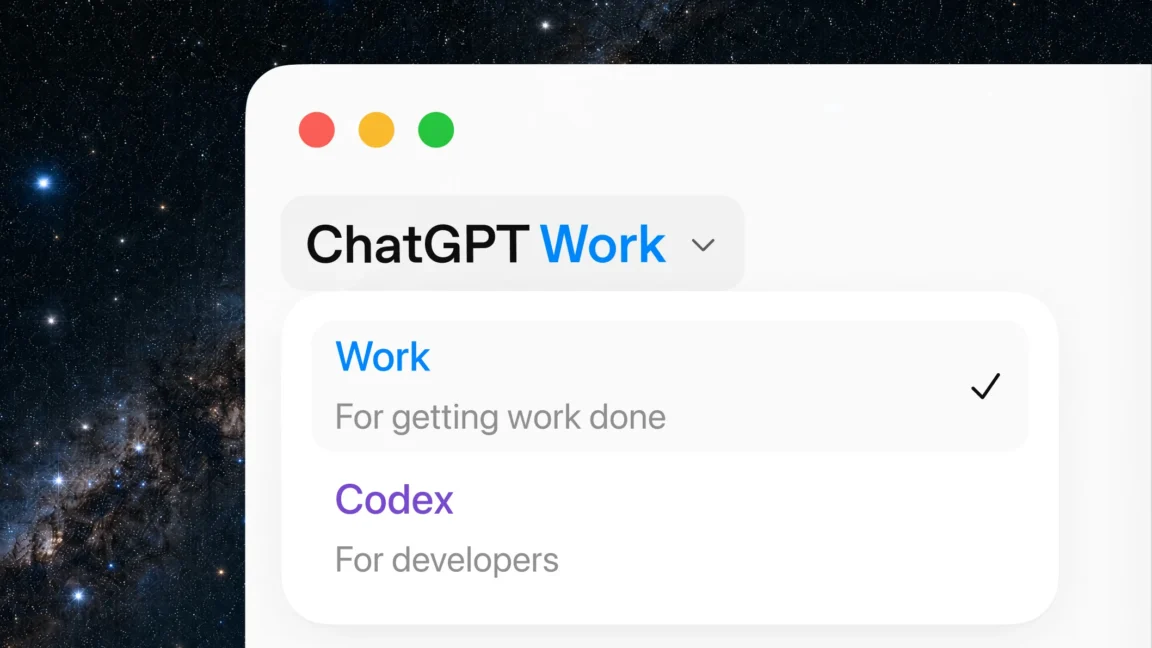
OpenAI released ChatGPT Work, a tool designed to handle extended automated tasks that can run for hours and integrate with workplace apps like Slack, Microsoft Teams, Google Drive, and SharePoint. The tool also includes Scheduled Tasks, which can execute repetitive work on a schedule or when monitored events occur, and can keep running even when you're away from your desk.
Why it matters
The release addresses a documented limitation from OpenAI's earlier Agent Mode in its Atlas web browser, which stopped after a few minutes. ChatGPT Work enables users to tackle complex multi-step workflows—such as moving from customer research through campaign briefs to localized marketing assets—while requiring human approval for important actions, potentially reducing manual work for business teams.
What to watch
OpenAI is sunsetting its dedicated Atlas web browser, less than nine months after launch. A Chrome extension update will let users perform web tasks without switching browsers. The company is inviting users to test ChatGPT Work on tasks they already know well, such as budget analysis or sales meeting prep.
Summaries like this, in your inbox every morning.
OpenAI's release of ChatGPT Work represents a refinement of its agent-based automation strategy following feedback on its earlier Atlas browser. The company had launched Atlas as a dedicated web interface for task automation, but within nine months faced user demand for longer-running, more integrated workflows. Rather than improve Atlas itself, OpenAI has consolidated the capability into ChatGPT Work and shifted the extension strategy to Chrome, signaling a pivot back to browser-native tooling rather than a standalone application.
The tool's integration with enterprise applications (Slack, Teams, Google Drive, SharePoint) and its support for scheduled background tasks suggest OpenAI is targeting business users who need to automate repetitive workflows without constant supervision. The emphasis on "wait for you to approve important actions" indicates a deliberate design choice to keep humans in the loop for consequential decisions, likely to manage liability and user trust. Scheduled Tasks, described as a souped-up version of cron jobs (a standard server automation feature), suggests the tool is aimed at knowledge workers and IT teams familiar with basic automation concepts.
Pick your industry and the AI tools you use, and get news related to your work every day.
Free · 30 seconds with Google · unsubscribe anytimeWhat is AIToday? →
Ask AI anything about this article. The AI reads this article, earlier AIToday articles, and Wikipedia, and cites its sources. Q&As are published on this page for other readers too.
Chunghwa Telecom president Rong-shy Lin said the shift from conversational AI to autonomous AI agents is resha…

CoreWeave fell 5% in premarket trading Friday and was on track to finish the week down 15%, after rebounding f…

Apple and Meta said they would jointly release a new open-weight AI model designed to run on high-end Macs, ai…

Investors put $38.5 billion into Asian startups in Q3, per Crunchbase data

A longtime Anthropic investor told Fortune he expects shares priced around $1.8 trillion, below the company's…

In Q2, billionaires or their funds sold six 'Magnificent Seven' AI stocks