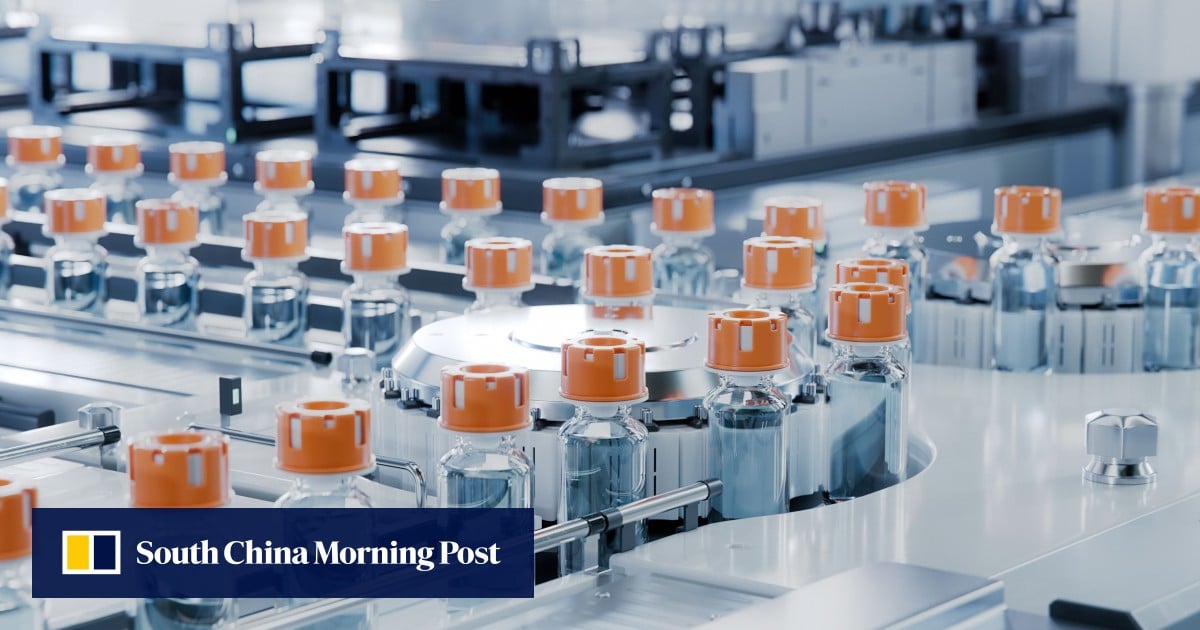
China is opening its first production line for an AI-powered personalised cancer vaccine in Beijing by October, with a total investment of about 110 million yuan (US$16.1 million(約26億円)). The vaccine, called LK101, uses AI to analyse each patient's tumour DNA to identify genetic mutations driving their cancer, with the company claiming the analysis can be completed in a day. This reflects a broader global trend in pharmaceuticals toward AI for drug discovery, clinical trials, and personalised medicine, with the global AI healthcare market projected to exceed US$1 trillion(約160兆円) by 2035.
Summaries like this, in your inbox every morning.
Sign up free →What happened
Beijing-based Likang Life Sciences is completing a new drug research and manufacturing centre by October in the Beijing Economic-Technological Development Zone, with a total investment of about 110 million yuan (US$16.1 million(約26億円)). The facility will produce LK101, a personalised cancer vaccine that uses AI to analyse each patient's tumour DNA and identify genetic mutations—a process the company says can be completed in a day.
Why it matters
Cancer is China's second-leading cause of death, and this production line reflects a global shift toward AI in pharmaceuticals. The global AI healthcare market could exceed US$1 trillion(約160兆円) by 2035, and AI adoption in drug discovery, clinical trials, and personalised treatment strategies is still in its early stages, according to Bank of America.
What to watch
The facility is expected to open by October and will house both cell therapy research laboratories and the production line for LK101, marking China's first such AI-assisted personalised tumour vaccine production facility.
No discussion yet for this article
Get curated AI news from 200+ sources delivered daily to your inbox. Free to use.
Get Started FreeFree · takes 30 seconds · unsubscribe anytime
1 minute a day. The AI essentials.
200+ sources · Email / LINE / Slack
