What happened
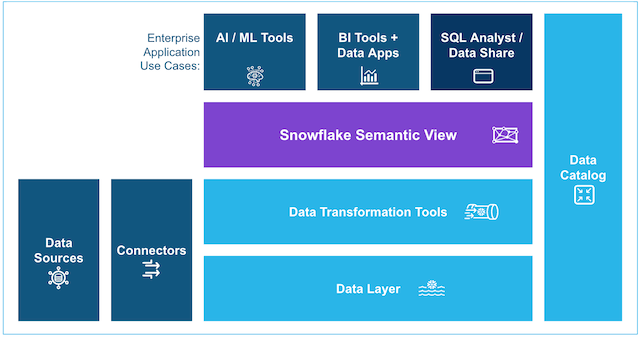
AWS and Snowflake have published a tutorial demonstrating how to use Snowflake semantic views—schema objects that attach business definitions directly to data—alongside Amazon QuickSight dashboards and Cortex Analyst natural-language queries. The integration allows both AI and BI systems to inherit the same business logic from a shared data layer.
Why it matters
Organizations typically spend more effort reconciling conflicting numbers across applications than using the data itself, eroding trust in analytics and slowing decision-making. By centralizing business definitions (metrics, dimensions, relationships) at the data layer rather than embedding them in individual applications, this approach ensures that AI agents, dashboards, and SQL queries all interpret information uniformly and significantly reduces the risk of AI hallucinations.
What to watch
The tutorial uses movie review data and is designed to take 60–90 minutes to complete; estimated combined AWS and Snowflake costs are less than $10. Snowflake semantic views have object-level access controls, allowing teams to grant or restrict usage rights across SQL, BI, and AI endpoints. The feature is available now in Snowflake on AWS.
Summaries like this, in your inbox every morning.
Pick your industry and the AI tools you use, and get news related to your work every day.
Free · 30 seconds with Google · unsubscribe anytimeWhat is AIToday? →
Ask AI anything about this article. The AI reads this article, earlier AIToday articles, and Wikipedia, and cites its sources. Q&As are published on this page for other readers too.

