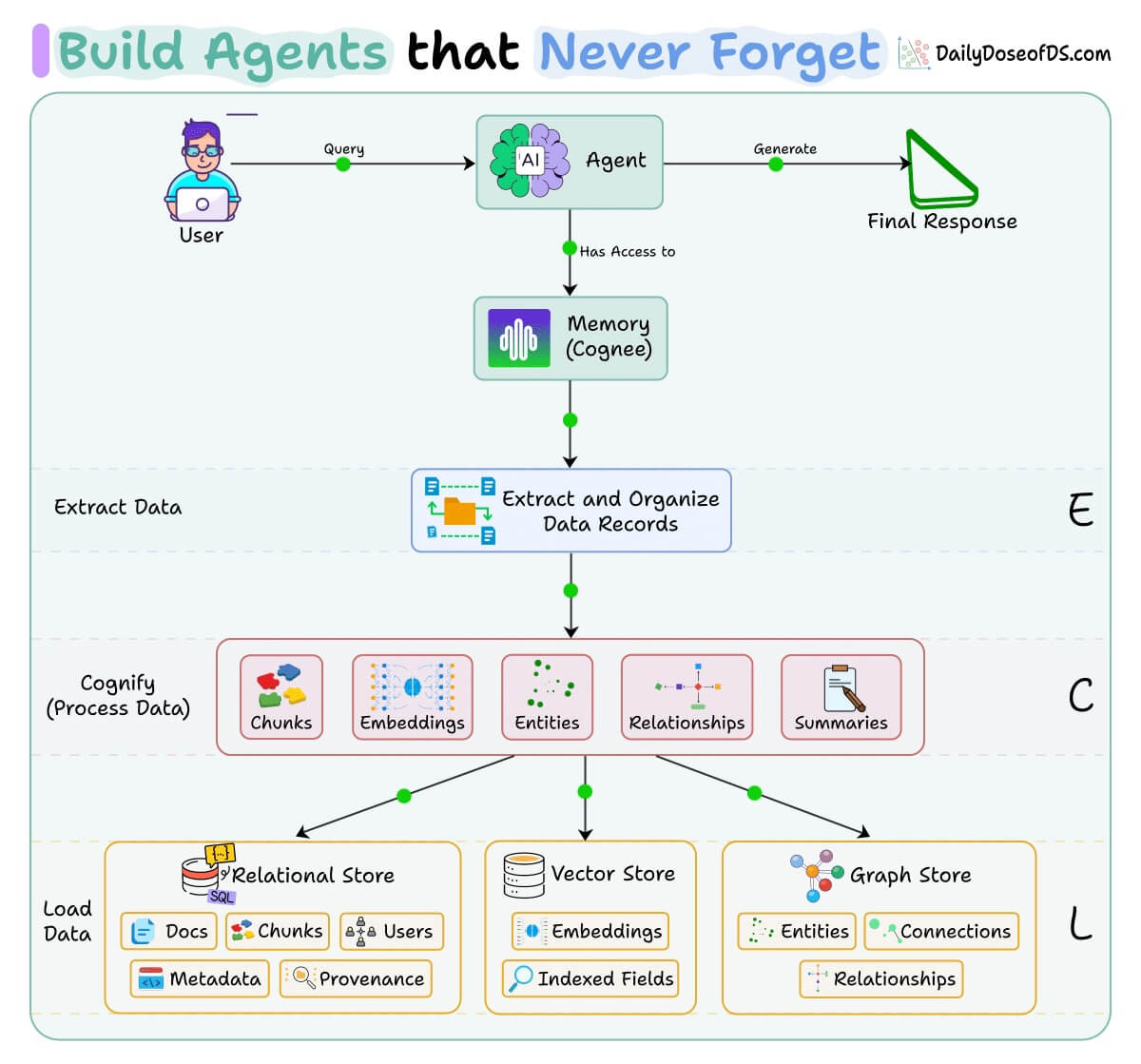
Top AI labs (Microsoft, Google, Meta) have adopted a method where AI agents (software that makes decisions and takes actions on its own) store and reuse information from past tasks to handle new ones better. The technique, called agent memory or context retention, lets these AIs learn patterns across multiple interactions instead of starting fresh each time.
The memory trick works by having agents compress what they learned — which tools worked, which failed, what users wanted — and feed that compressed history into the next task. This means an AI agent handling customer support tickets gets smarter after each interaction, recognizing issues faster and picking better solutions without retraining.
For businesses using AI agents to automate work (customer service, data analysis, coding), this matters because agents with memory make fewer mistakes, need less human supervision, and complete tasks in fewer steps — cutting operational costs. Companies still using agents without this memory are doing the equivalent of hiring someone with amnesia for each shift.
Ask the AI about this article →
For example, today's edition would include:
AI-summarized, only the topics you pick — one digest a day via Email, Slack, or Discord.
Free · takes 30 seconds · unsubscribe anytimeWhat is AIToday? →
Ask AI anything about this article. Q&As are published on this page for other readers too.

